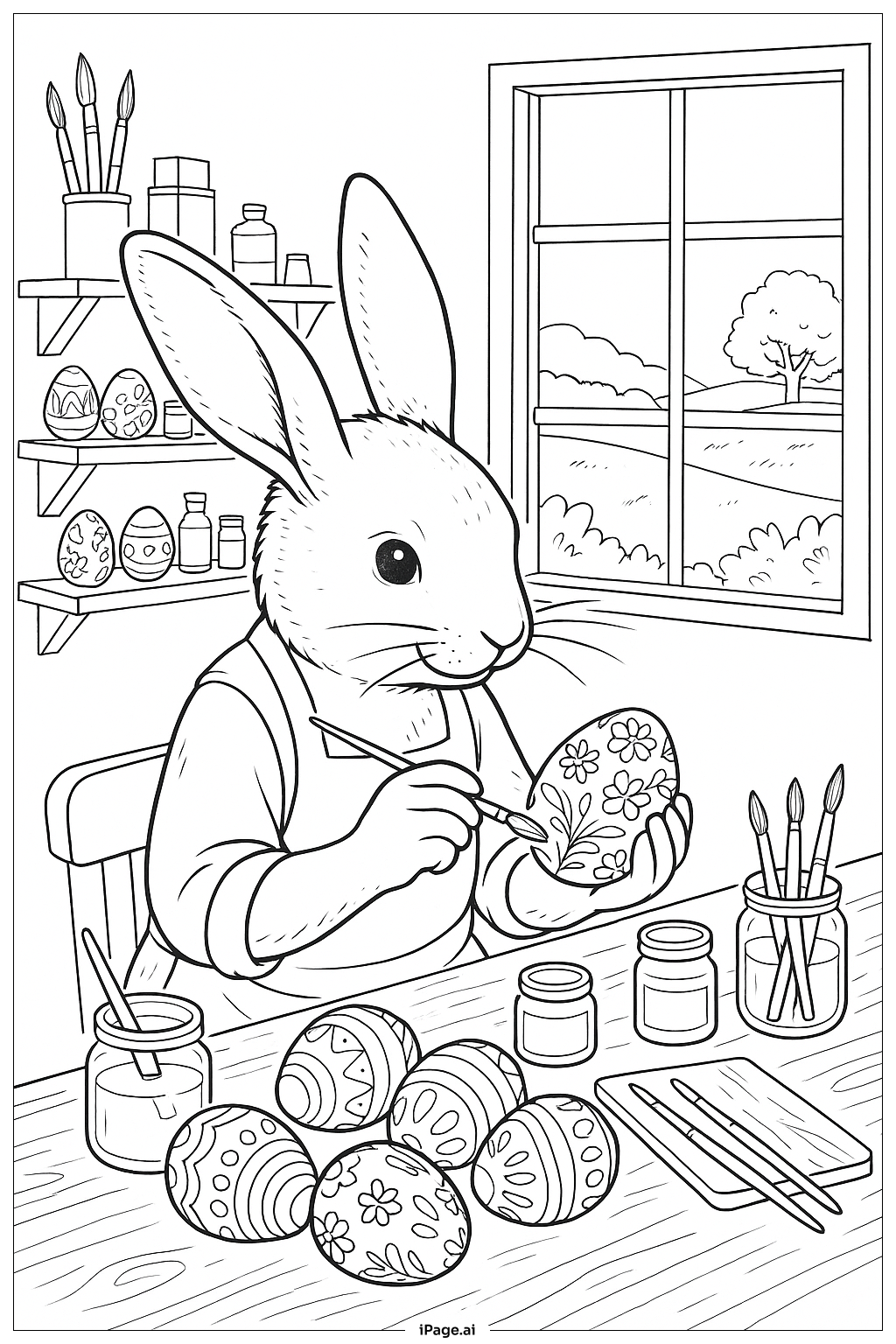
Coloring tips: How to color Easter Bunny At Art Table coloring page well?
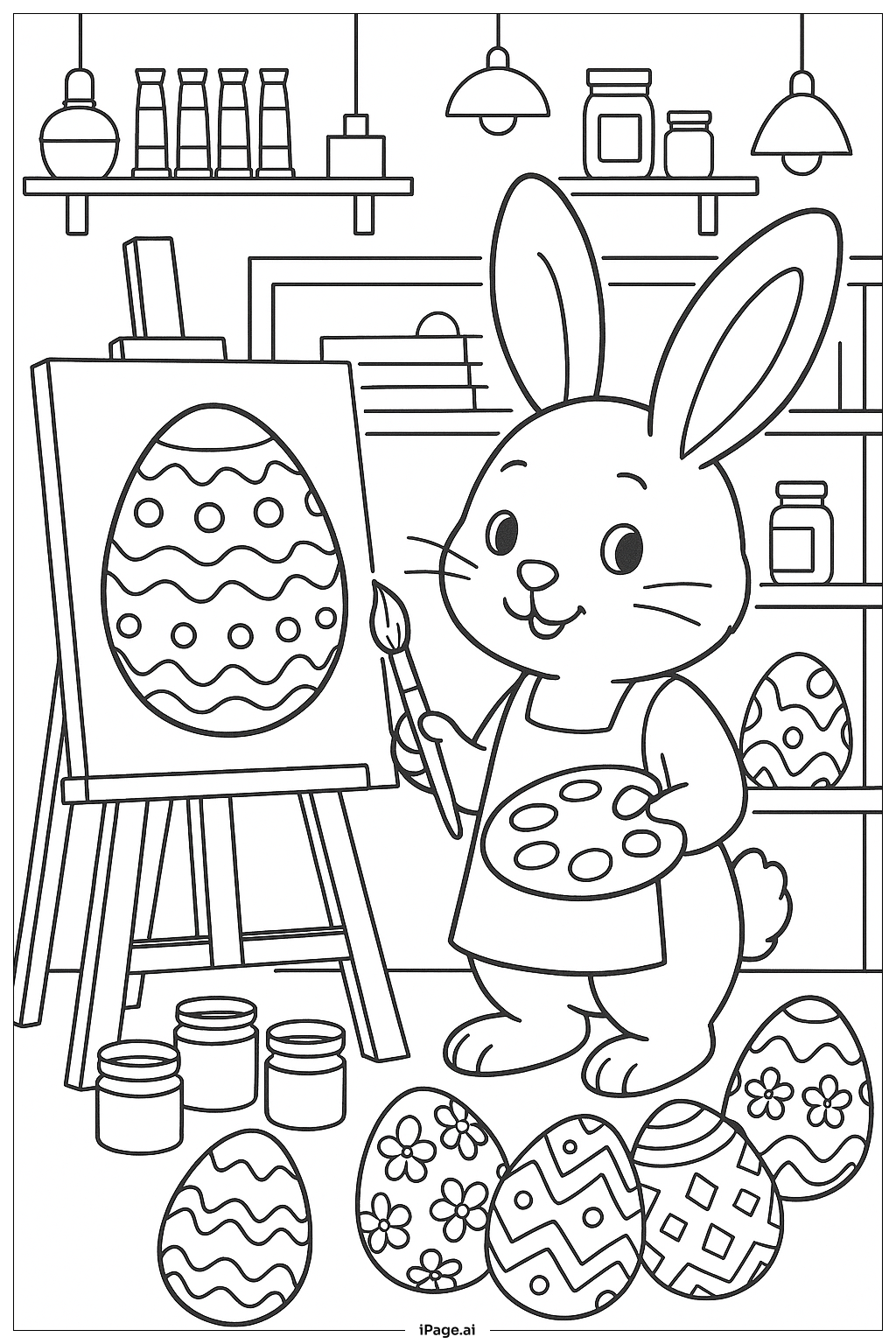
Use soft pastel colors for the bunny’s fur, like light gray or light brown. For the Easter eggs, be creative and use bright colors such as pink, yellow, blue, and green. Try to add different patterns on each egg with contrasting colors. Use light blue or light green for the outdoor scene outside the window to give a fresh feeling. The paint jars can be colored in shades of red, yellow, and blue to represent primary colors. For the table and chair, use light brown or wooden colors to keep the art studio warm and cozy.
Coloring challenges: Which parts are difficult to color and need attention for Easter Bunny At Art Table coloring page?
1. Small Patterns: The Easter eggs have many small details and patterns that need careful coloring to stay inside the lines.
2. Bunny's Fur: Coloring the bunny to look soft and natural requires blending colors without harsh lines.
3. Paintbrush and Jars: The small paintbrushes and jars need steady hands to color without going over the edges.
4. Background Details: The window and outdoor scene have thin lines and fine details that need attention.
5. Layering Colors: Balancing bright, colorful eggs with the more muted bunny and table can be challenging to keep the picture balanced.
Benefits of coloring books: Advantages of drawing Easter Bunny At Art Table coloring page
Coloring this picture helps develop fine motor skills by working on detailed patterns and small spaces. It encourages creativity through choosing colors for the eggs and the scene. It also teaches attention to detail and patience needed for the tiny sections. Kids can learn about the Easter tradition of painting eggs while enjoying a calm and fun activity. Coloring the bunny and the background can improve focus and hand-eye coordination.