Coloring tips: How to color Easter Basket With Hidden Eggs Scene coloring page well?
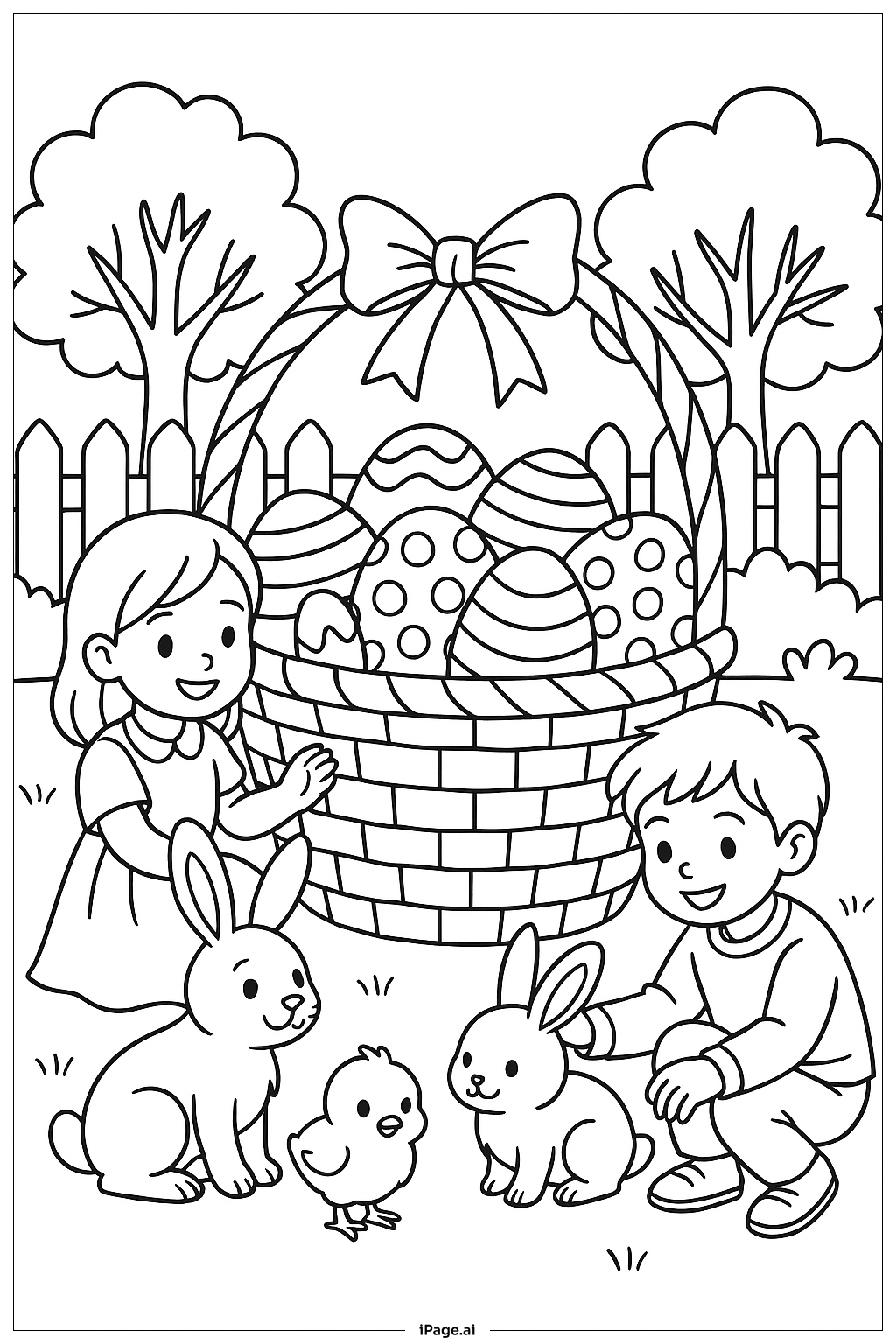
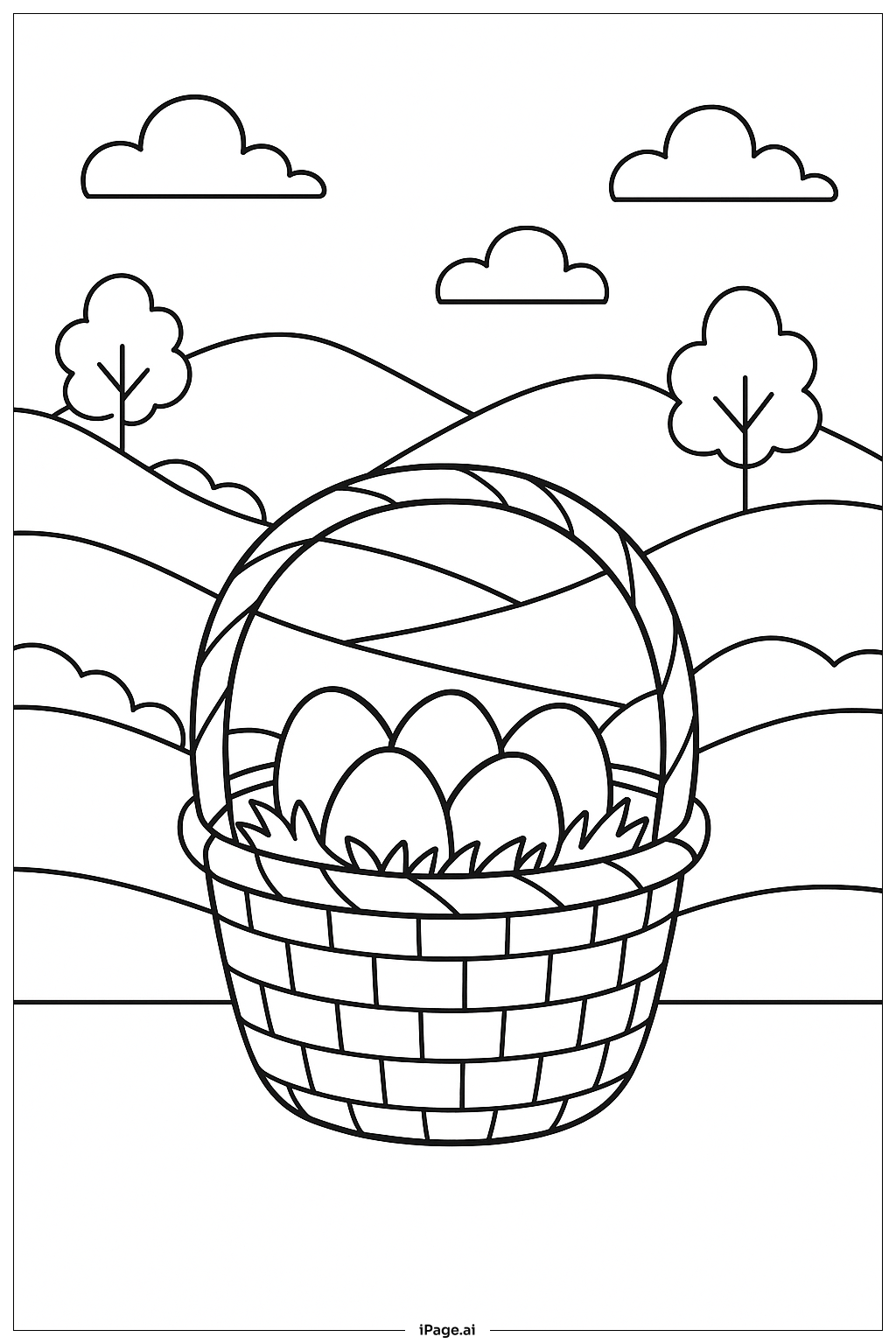
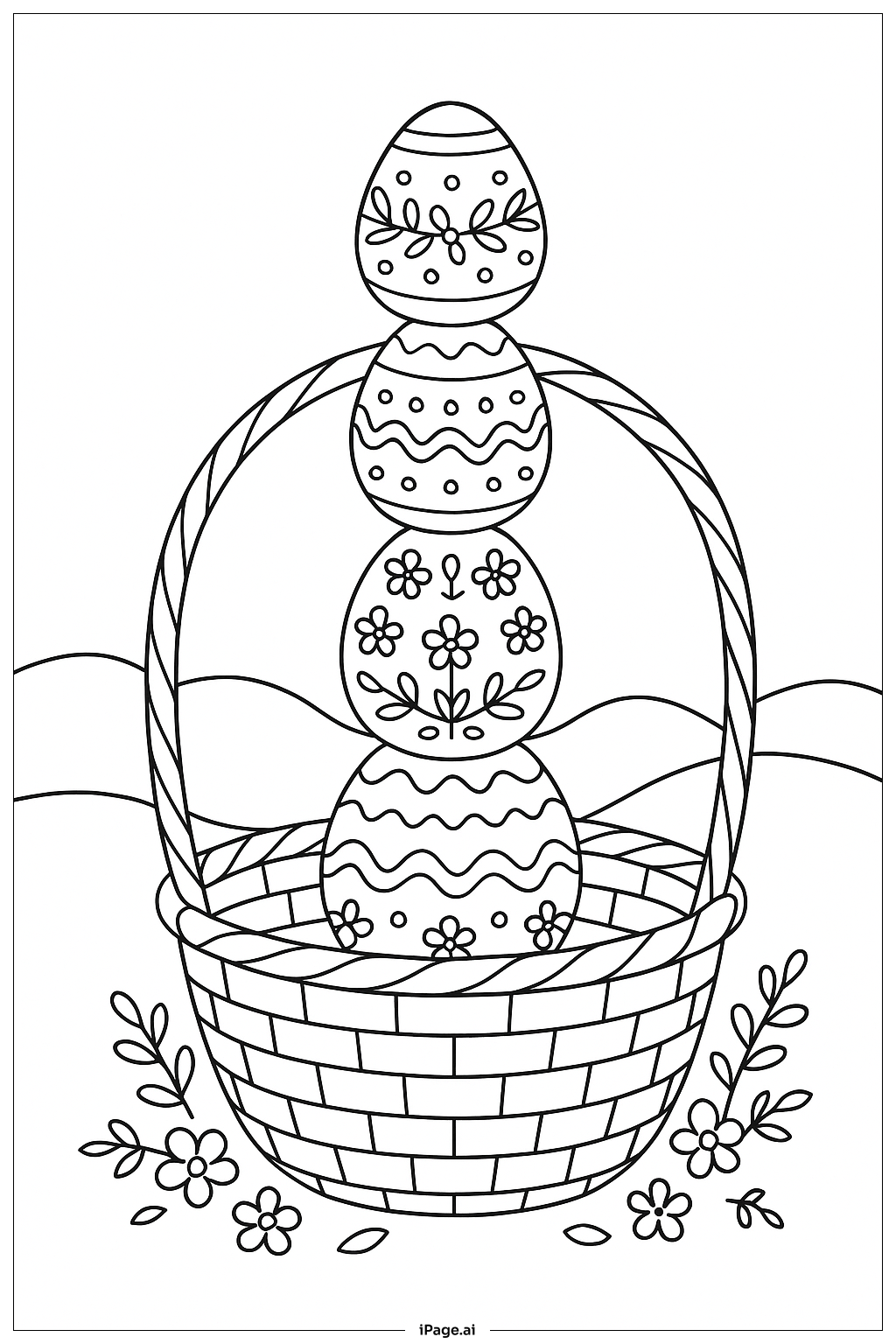
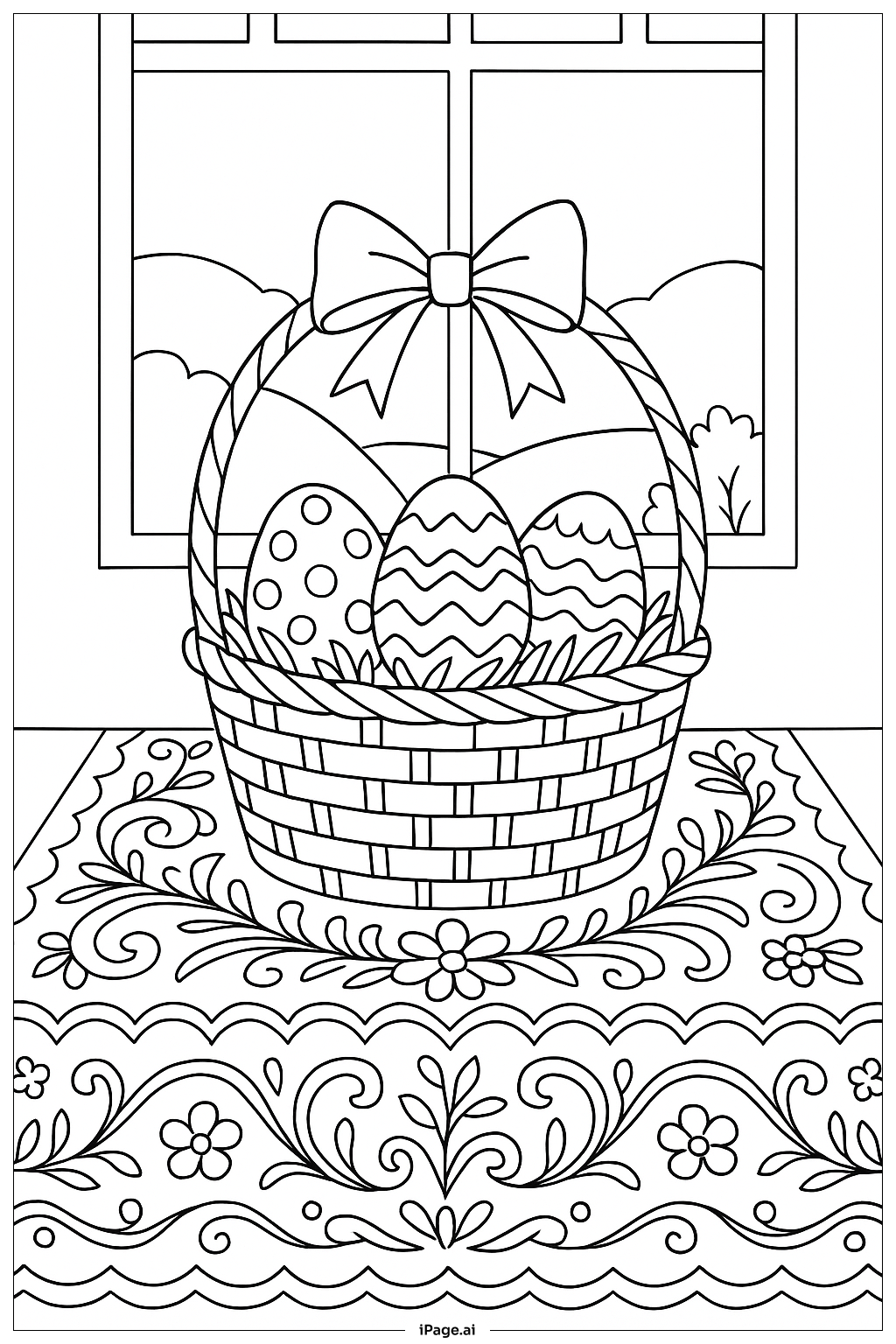
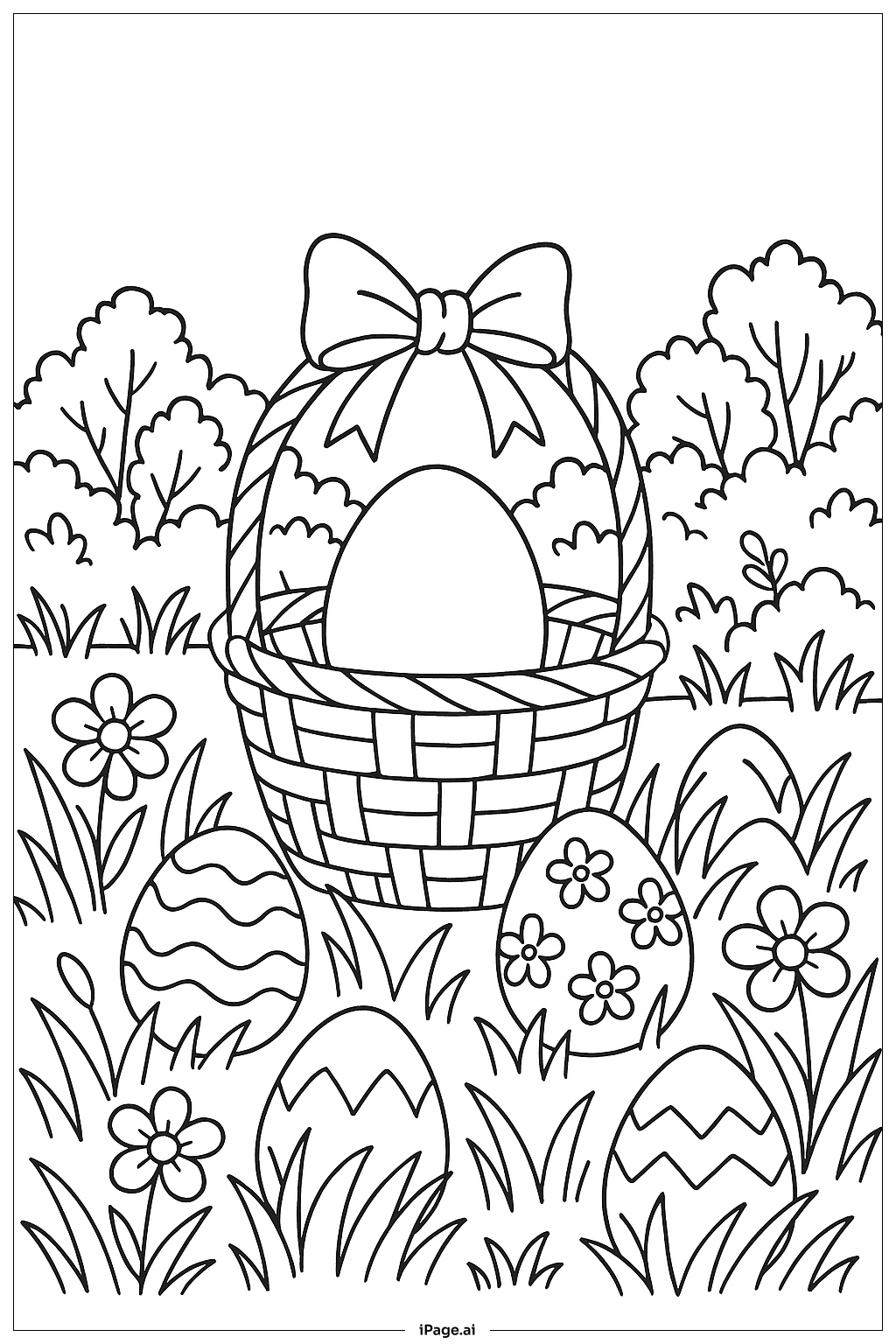
Start with the Easter basket using warm browns and tans for the woven texture. Color each egg differently using bright, festive colors like pink, purple, yellow, blue, green, and orange. Make patterns on the eggs stand out by using contrasting colors - try pastel backgrounds with bold pattern details. Use multiple shades of green for the grass and leaves to create depth. Color the flowers in cheerful spring colors like lavender, coral, and sunshine yellow. Make butterflies vibrant with combinations like orange and black or blue and yellow. Use light blue for the sky and white with gray shading for clouds. Add a cheerful yellow or golden sun. Consider using colored pencils to blend and layer colors for realistic shading, especially on the basket weave and egg surfaces.
Coloring challenges: Which parts are difficult to color and need attention for Easter Basket With Hidden Eggs Scene coloring page?
• Basket Weaving Pattern: The interlaced woven texture of the Easter basket requires careful attention to create a three-dimensional effect. Young colorists must follow the over-under pattern of the weave, using lighter and darker shades of brown to show depth. This technique helps distinguish individual strands and makes the basket look realistic rather than flat.
• Multiple Egg Patterns: Each egg features different decorative patterns including stripes, polka dots, zigzags, and swirls. The challenge lies in staying within the small pattern boundaries and choosing contrasting colors that make each design pop. Children need steady hand control to color tiny dots precisely and keep stripe edges clean without bleeding into adjacent areas.
• Hidden Eggs Among Foliage: Several eggs are partially concealed behind flowers, grass, and leaves, creating overlapping layers. Colorists must distinguish where one element ends and another begins, which requires careful observation. This layering effect demands planning to ensure hidden eggs remain visible and don't blend into the background vegetation.
• Fine Detail Work: The scene includes numerous small elements like flower petals, butterfly wings, grass blades, and decorative swirls. These delicate areas require patience and precision, especially for younger children still developing fine motor control. Using fine-tipped markers or sharp colored pencils helps achieve better results in these intricate spaces.
• Color Coordination: With so many elements competing for attention, maintaining visual harmony while using diverse colors presents a creative challenge. Colorists must balance bright egg colors with natural foliage tones and sky colors to create a cohesive scene that feels springlike without becoming overwhelming or chaotic.
Benefits of coloring books: Advantages of drawing Easter Basket With Hidden Eggs Scene coloring page
Coloring this Easter basket scene offers wonderful developmental benefits for children. It strengthens fine motor skills and hand-eye coordination through detailed work on small patterns and intricate elements. The variety of shapes and sizes helps children practice precision and control with coloring tools. This festive image encourages creativity and personal expression as children choose their own color combinations for eggs and decorations. The hunt-like quality of finding hidden eggs within the foliage promotes visual perception and attention to detail. The seasonal theme provides opportunities to discuss Easter traditions, springtime, and nature. Completing this complex scene builds patience, focus, and a sense of accomplishment. The cheerful subject matter creates a positive, joyful coloring experience that reduces stress and promotes relaxation. Working on different textures like basket weave, smooth eggs, and organic flowers teaches children to think about how various surfaces might look when colored.