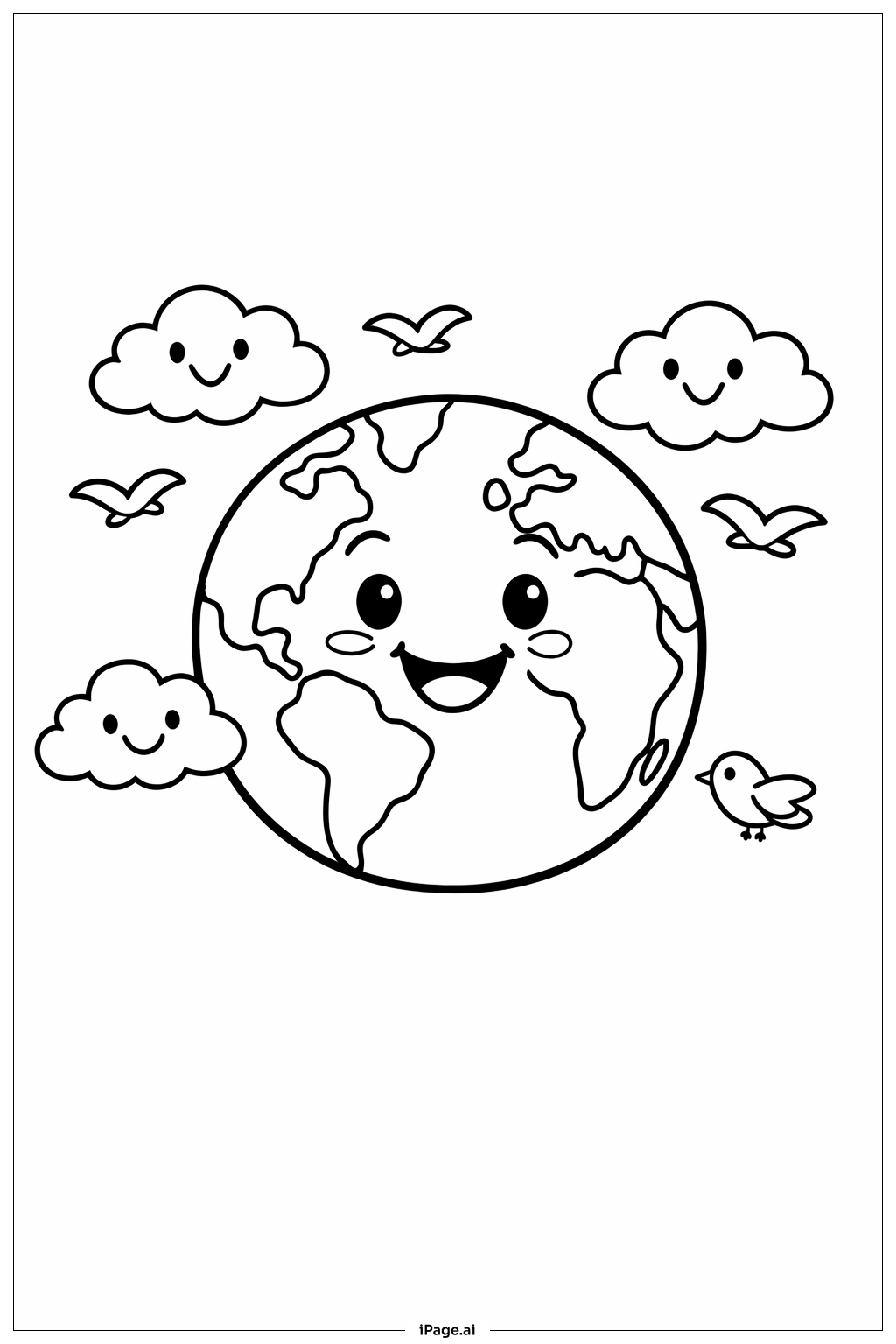
Coloring tips: How to color Earth With Happy Clouds coloring page well?
Start with the Earth by choosing blues and greens for the traditional ocean and land colors. You can use different shades of blue - light azure for shallow waters and deeper navy for ocean depths. Color the continents in various greens and browns to show forests, deserts, and mountains. For the happy clouds, classic white or light gray works beautifully, but you can also be creative with pastel pinks, purples, or yellows for a magical sky effect. Add rosy pink cheeks to both the Earth and clouds to enhance their cheerful expressions. Consider using light blue or purple for shading around the clouds to create depth. You might add yellow or orange highlights where sunlight would naturally hit the clouds. Keep the facial features simple - perhaps black or dark brown for eyes and mouths to make the expressions stand out clearly against the lighter backgrounds.
Coloring challenges: Which parts are difficult to color and need attention for Earth With Happy Clouds coloring page?
• Continental Details: The Earth features multiple landmasses with curved coastlines and irregular borders that require careful attention. Staying within these geographic boundaries while switching between ocean blue and land colors demands steady hand control and patience, especially in areas where continents have narrow peninsulas or small islands.
• Curved Surface Shading: Creating the illusion that Earth is a three-dimensional sphere requires understanding how to apply lighter and darker tones. Children may find it challenging to blend colors smoothly across the curved surface, determining where highlights should be brightest (typically the center) and where shadows naturally fall (along the edges).
• Cloud Texture Balance: While clouds appear simple, achieving a soft, fluffy appearance requires gentle coloring techniques. Pressing too hard creates harsh lines, while too light an approach may leave clouds barely visible. Finding the right pressure and possibly layering white or light gray over slightly darker undertones adds complexity.
• Multiple Character Expressions: Each cloud has its own face requiring neat, controlled coloring within small spaces. The eyes and smiles are relatively tiny compared to the larger shapes, making it tricky for younger children to color them precisely without going outside the lines or making the features look uneven.
• Color Harmony: Balancing the entire composition so the Earth stands out as the focal point while the clouds complement rather than overpower requires thoughtful color selection. Deciding which elements should be bold and which should be subtle involves artistic planning that develops with practice.
Benefits of coloring books: Advantages of drawing Earth With Happy Clouds coloring page
Coloring this Earth With Happy Clouds page offers wonderful learning opportunities. Children naturally develop geographic awareness as they identify and color different continents and oceans, building early map-reading skills. The friendly faces encourage emotional connection, making Earth feel like something precious to care for, subtly promoting environmental consciousness. Fine motor skills improve significantly as young artists navigate the curved coastlines and small facial features, strengthening the hand muscles needed for writing. The combination of large areas (oceans) and tiny details (eyes and smiles) helps children practice both broad strokes and precise control. This page also encourages color theory exploration - experimenting with how blues and greens interact, or how adding shadows creates depth. The joyful theme promotes positive feelings and can serve as a calming, meditative activity. Completing this cheerful scene builds confidence and provides a sense of accomplishment, especially when children see their colorful, happy Earth come to life.