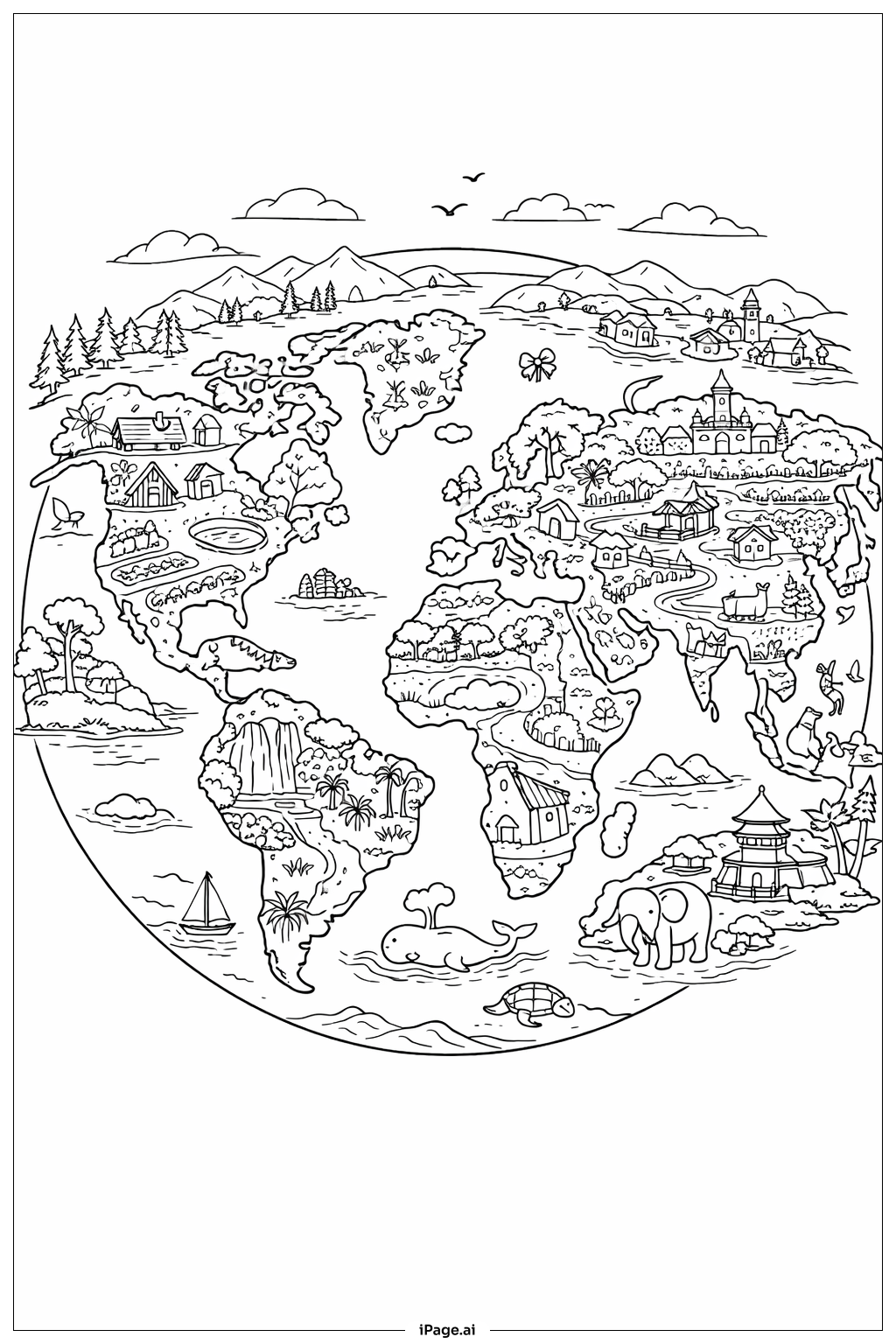
Coloring tips: How to color Earth Garden Landscape coloring page well?
Start with the sky — use light blue for the open areas and soft white or pale yellow for the clouds. Move to the background hills and trees using different shades of green to create depth. Use darker greens for leaves closer to the ground and lighter greens for the distant hills. For the flowers, have fun mixing bright colors like red, orange, yellow, pink, and purple. The path can be colored sandy brown or warm beige. Use a cool blue or teal for any water features like a pond or stream. Butterflies and birds can be colored in any bright, cheerful hues you like. Mushrooms look great in red with white spots. Try using colored pencils for small details and thicker markers or crayons for large open spaces. There are no rules — express yourself freely and make the garden your own!
Coloring challenges: Which parts are difficult to color and need attention for Earth Garden Landscape coloring page?
• Background Depth and Layering: The scene includes multiple layers — foreground plants, a middle-ground path, and background hills and sky. Keeping each layer visually distinct requires careful color planning. Using lighter, cooler tones in the distance and warmer, richer tones up front helps create a convincing sense of depth. Young colorists may find this spatial thinking challenging at first.
• Small Floral Details: The garden is filled with many small flowers, petals, and leaves packed closely together. Coloring each individual bloom without going outside the lines takes patience and a steady hand. Thin-tipped colored pencils or fine-point markers are helpful here. Rushing this section can cause colors to bleed into one another.
• Water Reflections: If the scene includes a pond or stream, recreating the shimmering surface requires blending skills. The water should reflect surrounding greens and blues in a soft, slightly blurred way. Achieving this effect with crayons or basic markers can be tricky and may require layering multiple colors gently.
• Tree Canopy Texture: The full, leafy trees in the background have rounded, complex shapes. Filling them in while still suggesting the texture of individual leaves is a fun but demanding task. Using short, circular strokes in two or three shades of green can help give the canopy a natural, full appearance.
• Consistent Light Source: Keeping the light direction consistent across the whole image — so shadows fall the same way on trees, flowers, and the path — is a subtle challenge that more experienced colorists will appreciate and beginners can explore as they grow their skills.
Benefits of coloring books: Advantages of drawing Earth Garden Landscape coloring page
Coloring this Earth Garden Landscape page offers a wide range of benefits for children and young artists of all ages. Working through a detailed natural scene helps children develop fine motor skills and hand-eye coordination as they carefully fill in flowers, leaves, and winding paths. Choosing colors for different plants, the sky, and the water encourages creative thinking and personal expression — there is no single right answer, which builds confidence. The peaceful, nature-themed subject matter also has a calming effect, making it a great activity for winding down after a busy day. As children work through the different sections of the garden, they practice focus and patience — valuable skills that carry over into school and everyday life. This image also gently introduces basic concepts about nature, ecosystems, and the environment, sparking curiosity about the world around them. For older children, the layering and depth challenges offer a chance to explore artistic techniques like shading and color blending. Whether done solo or together as a family, this coloring page creates an enjoyable, screen-free creative experience that connects young minds with the beauty of Earth's natural landscapes.