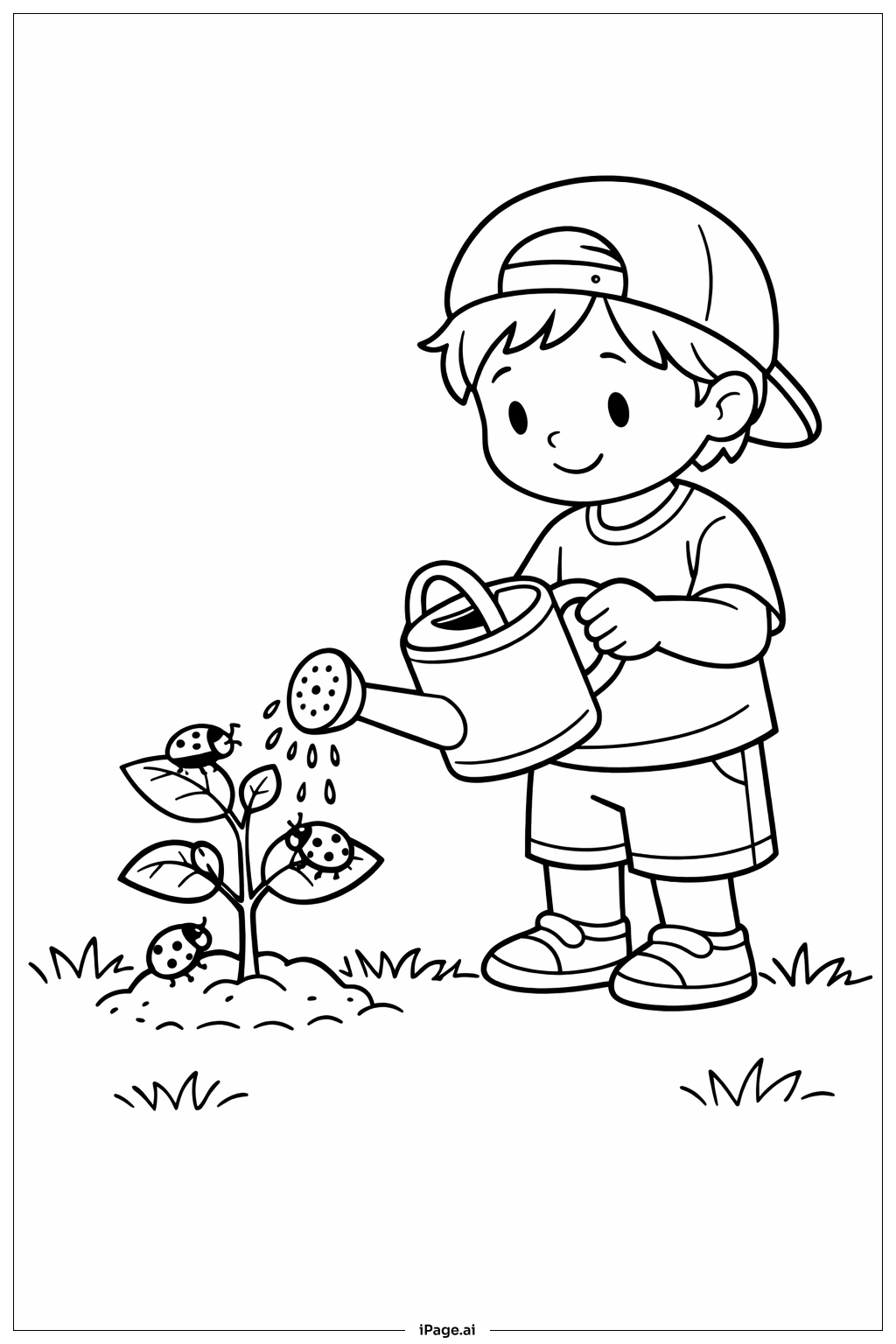
Coloring tips: How to color Earth Day Watering Sapling coloring page well?
Start with the sapling. Use bright green for the leaves and light brown for the thin stem and soil mound. For the watering can, try a cheerful color like red, yellow, or sky blue to make it pop. Color the child's clothing in fun, bright shades — mix and match your favorite colors. Use a warm golden yellow for the sunbeams streaming down from the top. Fill the background grass with two or three shades of green to add depth. Small flowers can be colored in pink, purple, orange, or yellow. If there is a butterfly or ladybug, use bold, contrasting colors to make them stand out. Keep the sky a soft, calm blue. Blending light and slightly darker tones of the same color in each section will make the whole picture feel lively and full of energy. Have fun and let your creativity grow just like the sapling!
Coloring challenges: Which parts are difficult to color and need attention for Earth Day Watering Sapling coloring page?
• Small Sapling Details: The sapling has a very thin stem and tiny delicate leaves. These small shapes are tricky to color neatly without going outside the lines. Use a fine-tipped colored pencil or a thin marker to carefully fill in each leaf separately. Take your time and work slowly around the edges.
• Watering Can Curves: The watering can has a round body, a curved handle, and a spout with small holes. Curved surfaces are harder to shade evenly. Try using slightly darker tones on the edges and lighter tones in the center to give the can a rounded, three-dimensional look.
• Sunbeam Blending: The sunbeams radiating from above can be difficult to color smoothly. Getting a natural gradient from bright yellow near the source to soft pale yellow at the edges takes practice. Try layering light strokes and gently blending two shades of yellow or adding a touch of orange near the center.
• Background Elements: The grass, flowers, and small creatures in the background are close together, making it easy for colors to bleed into one another. Work on one element at a time and let each section dry before moving to the next. Using different shades of green for the grass helps separate overlapping areas naturally.
• Soil and Ground Texture: The soil mound around the sapling has an uneven, textured surface. Using two or three shades of brown — light tan, medium brown, and a darker earthy tone — will help the ground look realistic and give the scene a natural, grounded feel.
Benefits of coloring books: Advantages of drawing Earth Day Watering Sapling coloring page
Coloring this Earth Day Watering Sapling scene offers many wonderful benefits for children of all ages. As kids carefully fill in the tiny leaves, the watering can, and the sunbeams, they practice fine motor skills and improve hand control — skills that help with writing and everyday tasks.
Choosing colors for the grass, flowers, and sky encourages creative thinking. Kids learn how colors work together and develop their own sense of artistic style. Blending shades of green or brown also introduces early lessons in color theory in a fun, low-pressure way.
This image does more than build art skills. It tells a story about caring for the Earth. As children color the child watering the little sapling, they connect emotionally with the idea of nurturing nature. This can spark conversations about plants, growth, and why taking care of our environment matters — making it a great learning moment tied to Earth Day values.
Focusing on the small details of this scene also builds patience and concentration. Sitting quietly and working through each section helps children practice mindfulness without even realizing it. The sense of pride they feel when the finished page comes together is a genuine confidence boost.
Whether colored with crayons, markers, or colored pencils, this page is a joyful, meaningful activity that connects creativity with care for our planet.



