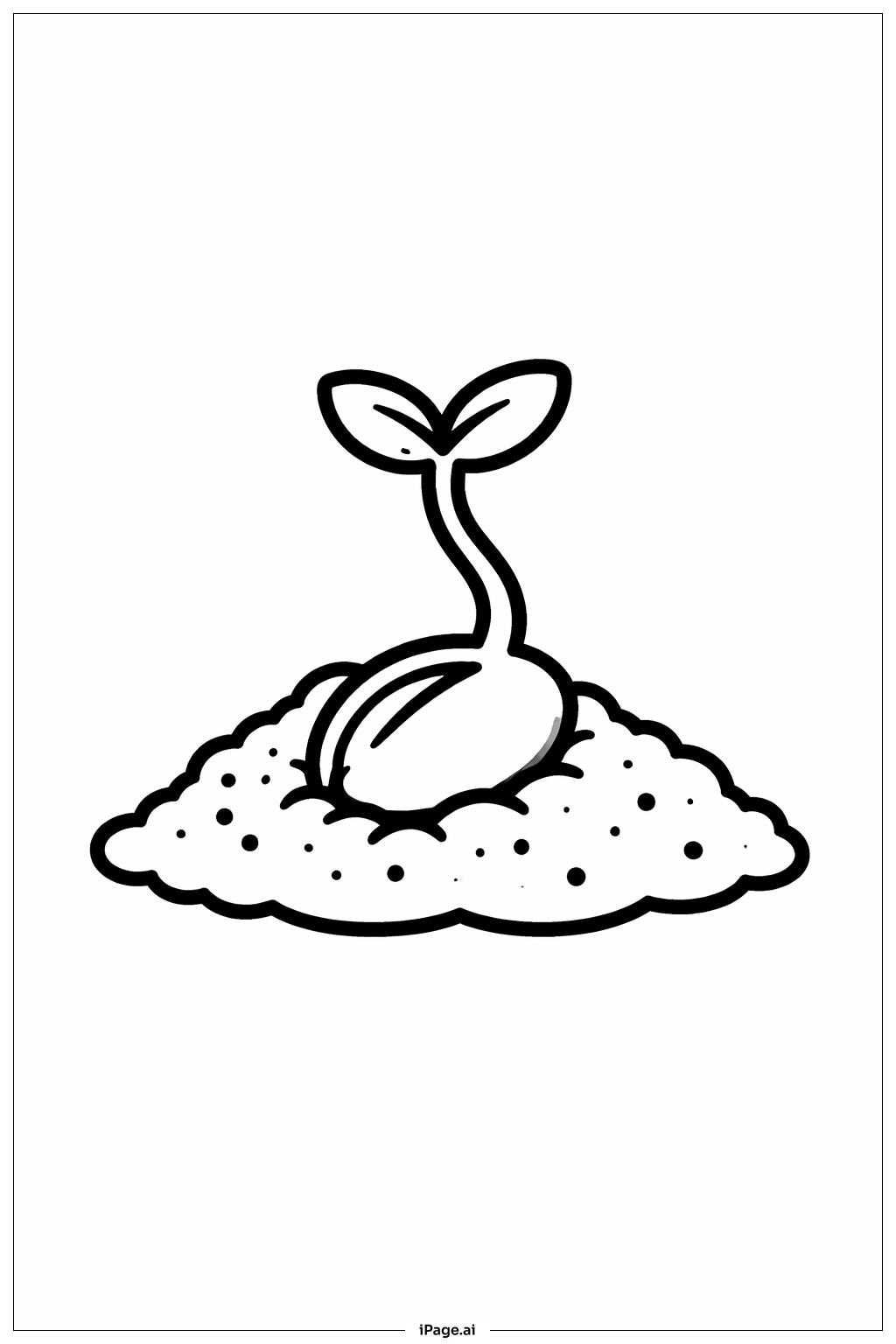
Coloring tips: How to color Earth Day Tiny Seed coloring page well?
Try using brown and dark brown shades for the soil to give it a rich, earthy look. For the seed, use light brown or tan colors to make it look natural. The sprout can be colored with bright green for the leaves and a slightly lighter green for the stem. You can add shading by using darker colors on one side to show light and shadow. Use smooth coloring strokes to keep the picture neat and simple.
Coloring challenges: Which parts are difficult to color and need attention for Earth Day Tiny Seed coloring page?
1. Coloring the small dots in the soil evenly can be tricky, as it requires careful attention to detail to avoid coloring outside the lines. 2. The thin sprout stem is narrow, so coloring it without going out of the lines might be challenging for younger children. 3. Adding shadows to the seed and sprout to give a 3D effect needs careful blending of colors, which might be hard for beginners. 4. Keeping the two leaves distinct with different shades of green needs focus to show their difference clearly. 5. Avoiding smudges while coloring small areas like the seed highlights and leaf veins can be difficult.
Benefits of coloring books: Advantages of drawing Earth Day Tiny Seed coloring page
Coloring this image helps children learn about the life cycle of plants and the importance of seeds. It encourages patience and fine motor skills development as kids carefully color small and narrow areas. Using different shades helps improve understanding of light and shadow. The image also inspires creativity while teaching respect for nature and growth. Coloring this sprout allows children to connect with Earth Day themes in a fun and educational way.