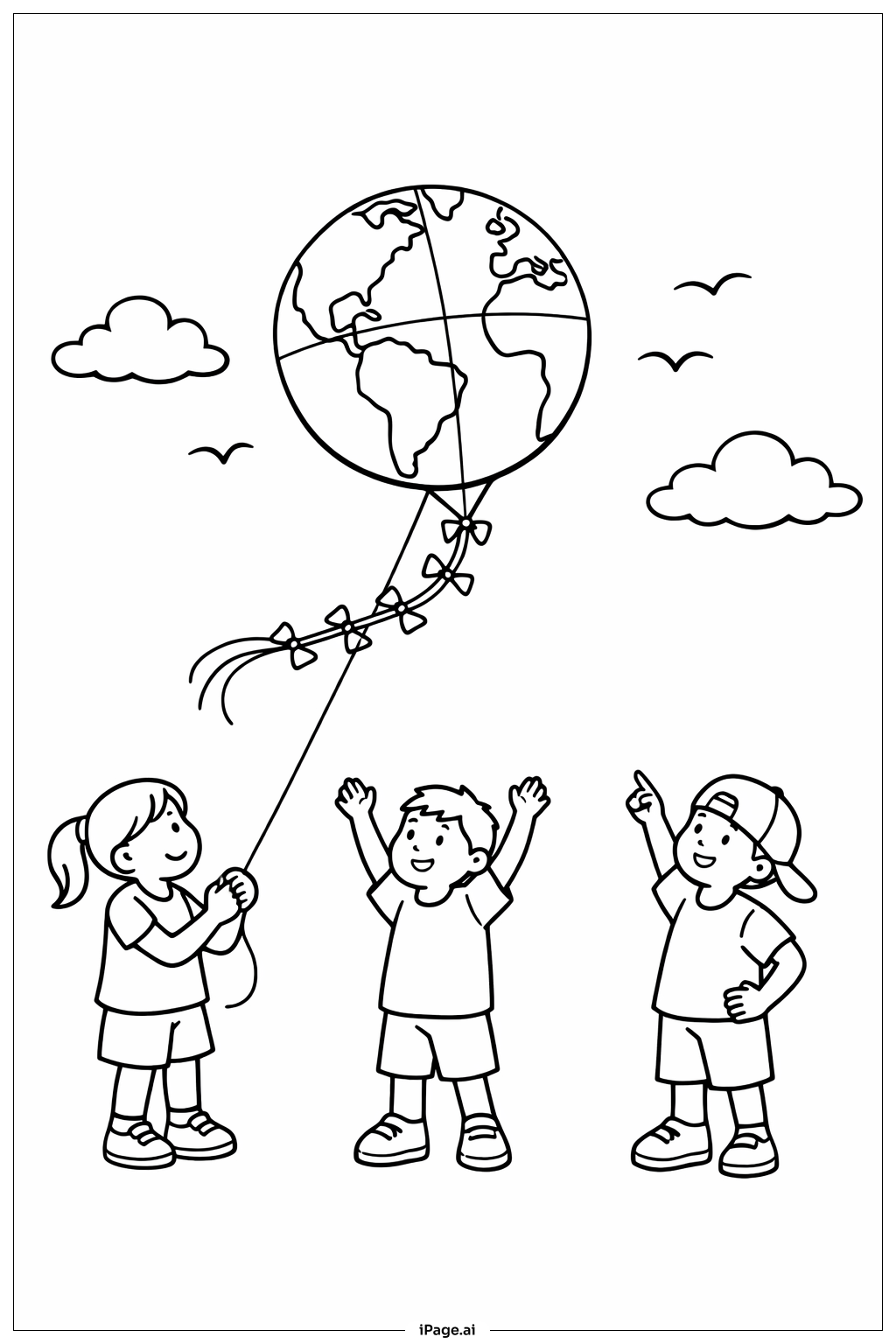
Coloring tips: How to color Earth Day Kite Fly coloring page well?
Start with the sky using light blue, blending to deeper shades near the top. Color the Earth with blues for oceans and greens and browns for continents. Make the clouds white or light gray with soft shading. For the kites, choose bright, bold colors like red, yellow, purple, and orange to make them stand out against the sky. The ribbons can be multicolored or match the kites. Color the children's clothing in cheerful spring colors. Use various shades of green for the grass and trees to add depth. Make the flowers colorful with pinks, purples, yellows, and reds. The sun can be bright yellow or orange. Add light brown or tan for the ground areas.
Coloring challenges: Which parts are difficult to color and need attention for Earth Day Kite Fly coloring page?
• Sky Gradient Challenge: Creating a smooth transition from lighter blue near the horizon to deeper blue at the top requires careful blending techniques. Young colorists may find it difficult to avoid harsh lines between color zones, especially when using crayons or colored pencils that do not blend easily.
• Earth Details: The planet Earth contains small geographical features including continents and oceans that require precision and attention to detail. Children must use different shades of blue for water and greens and browns for land masses, staying within tiny curved boundaries which can be challenging for smaller hands.
• Kite String Lines: The thin kite strings connecting the children to their kites are delicate lines that require careful coloring around. Younger children may accidentally color over these fine details or have difficulty keeping the strings visible against the background sky.
• Multiple Overlapping Elements: This scene includes many layered components such as clouds overlapping the Earth, kites in front of clouds, and children in front of landscape elements. Understanding which parts are in front and which are behind, then choosing appropriate colors to show depth, requires spatial reasoning skills.
• Grass and Nature Texture: The grass, trees, and flowers benefit from varied shading and multiple green tones to look realistic and dimensional. Flat single-color grass looks less natural, but creating texture and variety requires more advanced coloring techniques like layering, stippling, or directional strokes.
Benefits of coloring books: Advantages of drawing Earth Day Kite Fly coloring page
Coloring this Earth Day scene helps children develop fine motor skills and hand-eye coordination through detailed work on small elements like kite strings and flower petals. The image promotes environmental awareness by connecting the fun of outdoor play with caring for our planet. Children learn about color mixing and blending while creating realistic skies and landscapes. The scene encourages creativity as kids choose their own color combinations for kites and clothing. Working on overlapping elements helps develop spatial reasoning and understanding of foreground and background. The cheerful subject matter promotes positive feelings about nature and outdoor activities. Completing this detailed page builds patience, focus, and a sense of accomplishment, especially when tackling challenging areas like the Earth's geographical features.