Coloring tips: How to color Earth Day Happy Globe coloring page well?
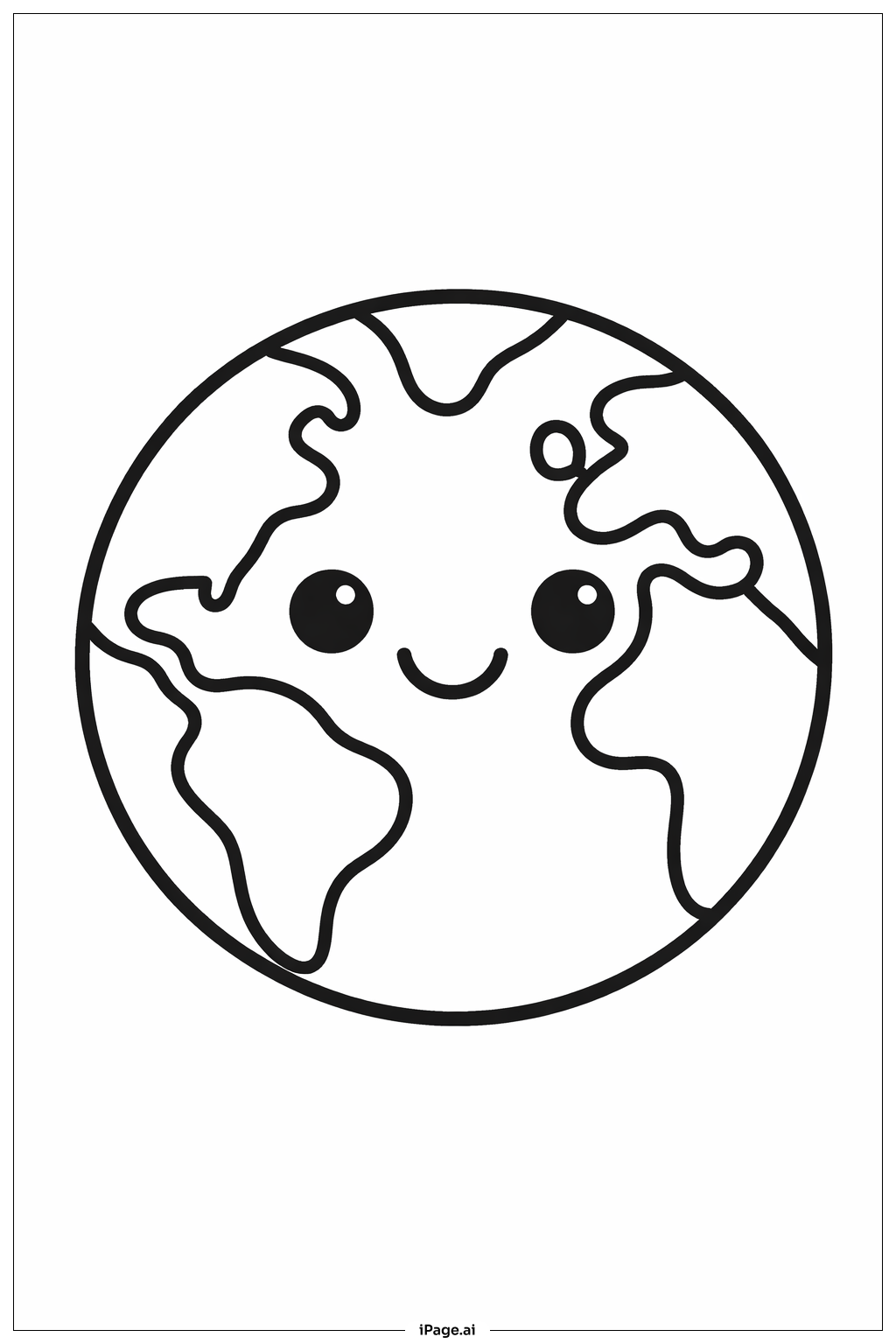
Use blue shades for the oceans to show water, such as light blue, medium blue, or even turquoise. For the continents, use various green colors to represent forests and grasslands. You can also add touches of brown to show mountains or dry areas. The eyes can be colored black with white highlights left for a shiny effect. Feel free to add bright colors around the planet, like yellow or orange, to create a glowing or sunny background. Try to stay inside the lines to make the picture neat. Have fun mixing colors and making the Earth look happy and lively!
Coloring challenges: Which parts are difficult to color and need attention for Earth Day Happy Globe coloring page?
1. Coloring inside the small and curved shapes of the continents can be tricky, especially for younger children.
2. Balancing different shades of blue and green to make the Earth look natural requires some attention to detail.
3. Making the smile and eyes neat without coloring outside their edges needs careful control.
4. Deciding where to place different colors for land, water, and features might be confusing for beginners.
5. Keeping the colors bright and clear without mixing them too much can be a challenge.
Benefits of coloring books: Advantages of drawing Earth Day Happy Globe coloring page
Coloring this happy Earth image helps children learn about geography and the planet. It encourages creativity and fine motor skills by practicing careful coloring. The friendly face on the globe makes environmental care fun and relatable. Kids develop patience and attention to detail while filling in different areas. This activity promotes appreciation for Earth Day and inspires kids to think about protecting the environment.