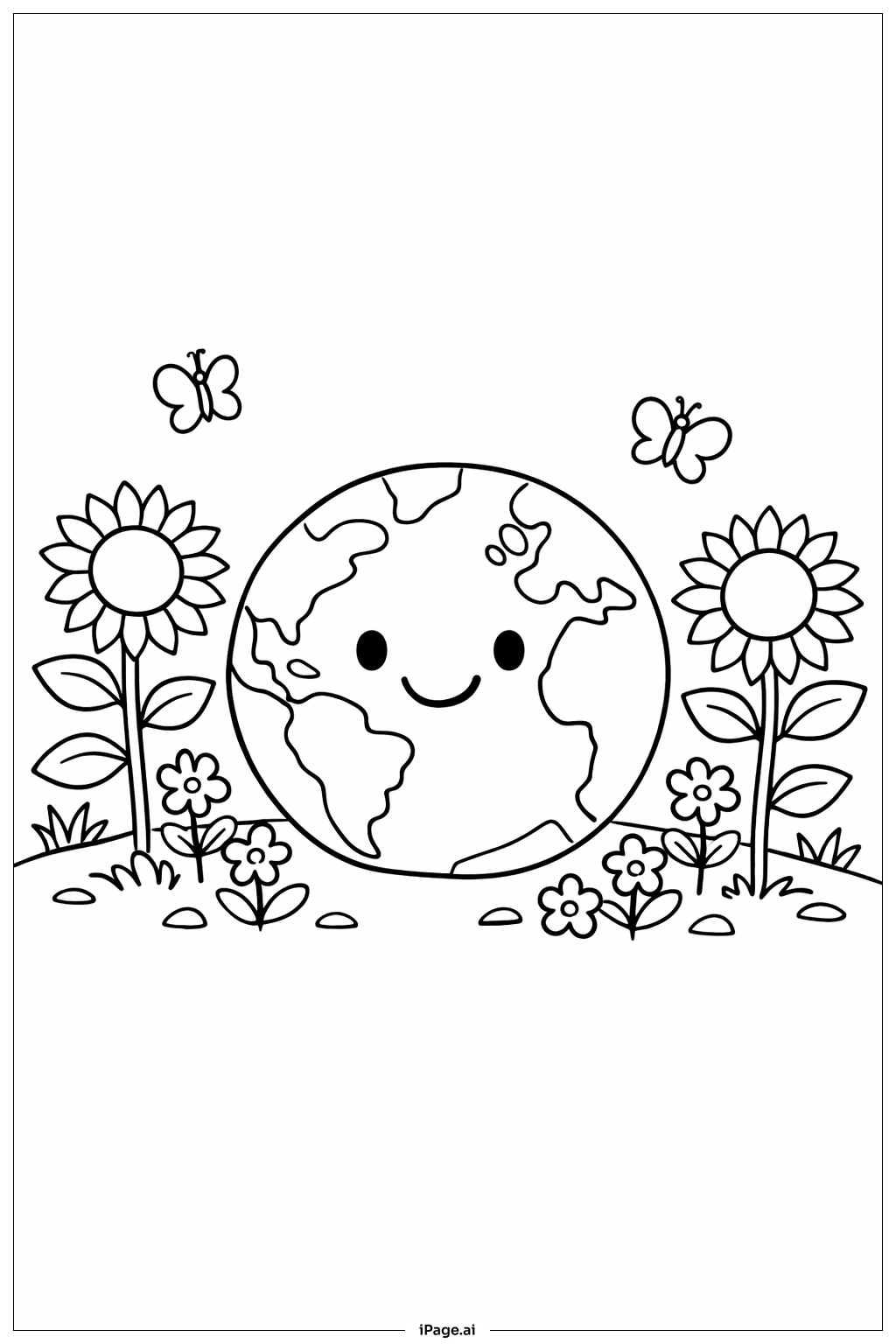
Coloring tips: How to color Earth Day Garden Globe coloring page well?
Use green for the Earth’s land and blue for the water to show the planet's natural colors. Color the sunflowers with bright yellow petals and brown centers. Use different shades of green for the leaves and grass to create variety. The small flowers can be colored in pink, red, purple, or orange for a lively garden. Butterflies can be colorful with patterns of blue, orange, or yellow to make them stand out. Choose light blue or white for the sky background to keep it fresh and cheerful.
Coloring challenges: Which parts are difficult to color and need attention for Earth Day Garden Globe coloring page?
1. Coloring the Earth requires careful separation of land and water areas to keep the colors neat and clear. 2. Small flowers and leaves demand precision because of their tiny size and close grouping. 3. The butterflies’ small wings mean coloring inside small spaces without going outside the lines. 4. Keeping the sunflowers vibrant yet within the lines can be challenging because of their detailed petals. 5. Blending multiple colors on the grass to create a natural effect might be tricky for beginners.
Benefits of coloring books: Advantages of drawing Earth Day Garden Globe coloring page
Coloring this page helps children learn about Earth Day and nature. It improves fine motor skills by requiring careful coloring of small parts like flowers and butterflies. The task encourages creativity through choosing colors for the Earth and garden elements. It also teaches focus and patience as kids work through detailed sections. Finally, coloring a happy and positive Earth image promotes kindness and respect for our planet.