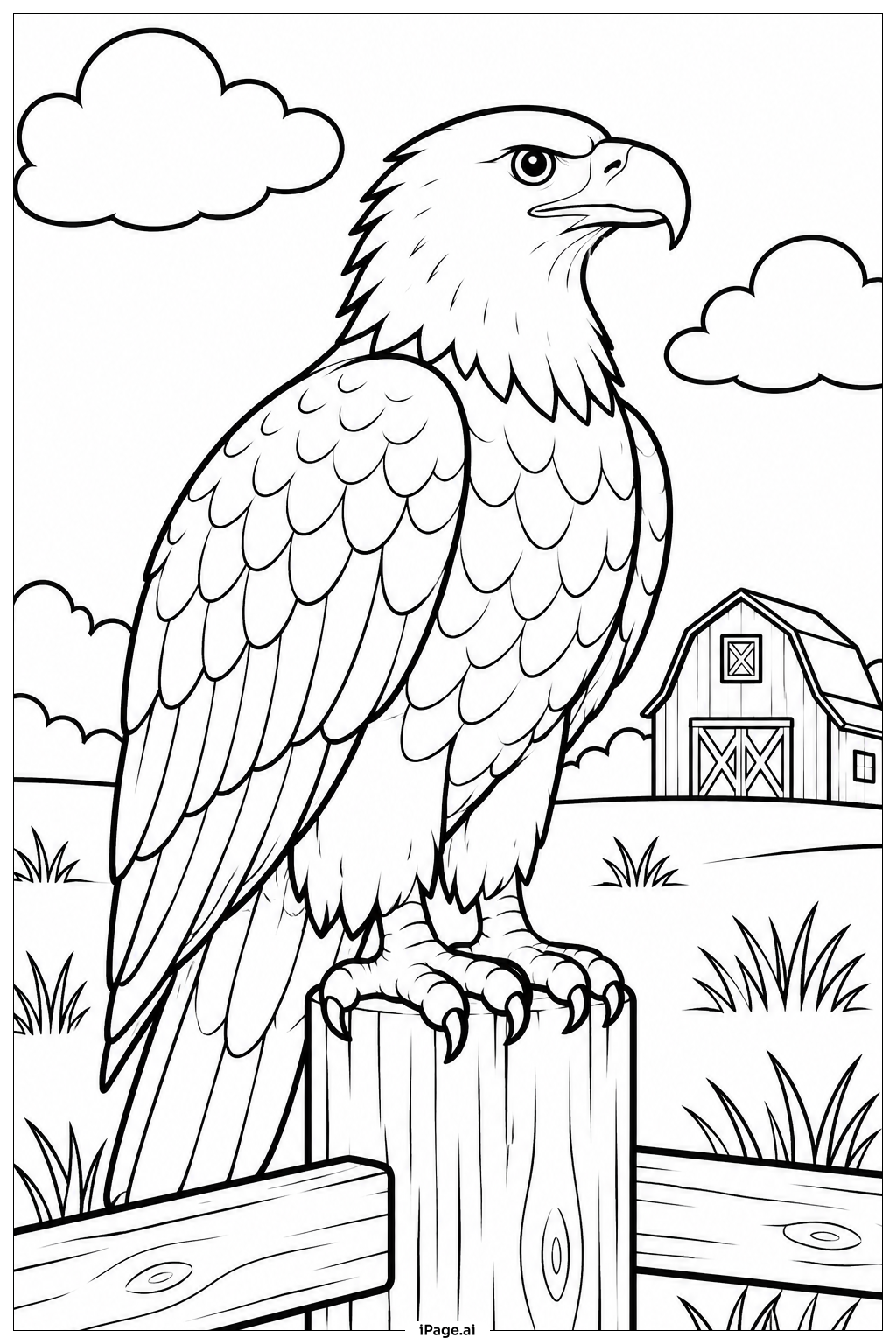
Coloring tips: How to color Eagle On Fence coloring page well?
Start with the eagle's head. Use white or pale yellow for the head and neck area, which is common for bald eagles. For the body and wings, use dark brown or black tones to show the eagle's powerful feathers. Add lighter brown highlights on the edges of the wing feathers to give them depth. The beak and talons should be bright yellow or golden. Use a warm tan or orange to make them stand out.
For the wooden fence, use shades of brown, gray, or tan. Add darker lines to show the wood grain and texture. This makes the fence look more realistic.
For the background sky, try a soft blue with hints of white. You can blend in light purple or pink tones to suggest early morning or late afternoon light.
Use darker shades to add shadows under the wings and along the fence. This gives the whole image a three-dimensional feel. Take your time with the feathers. Layering different shades of brown will make the eagle look truly lifelike and stunning.
Coloring challenges: Which parts are difficult to color and need attention for Eagle On Fence coloring page?
• Feather Layering: The eagle's body is covered in many overlapping feathers. Each feather has its own shape and direction. Coloring them one by one takes patience. You need to use multiple shades of brown and black to show depth and dimension. Rushing this step can make the feathers look flat and dull instead of rich and textured.
• Head and Beak Contrast: The eagle's white head must sit cleanly next to the dark brown body. Keeping a sharp, clean edge between these two areas is tricky. If the colors bleed into each other, the eagle can lose its distinct look. Use a fine-tipped tool and work slowly along the border between the head and body.
• Talon and Beak Details: The talons and beak are small but very important parts of the image. They need a strong, bright yellow or golden color. Because these areas are narrow and detailed, staying inside the lines requires a steady hand and a sharp coloring tool.
• Wood Texture on the Fence: The fence looks best when it has a natural wood grain feel. Simply using one flat brown color will make it look uninteresting. You need to add darker streaks and lighter patches to mimic real wood. This requires blending skills and careful attention to the direction of the grain.
• Background Balance: The sky in the background should feel open and airy. Choosing colors that are too bright or too dark can overpower the eagle. The background must support the main subject without stealing attention from it. Soft, gentle blending works best here.
Benefits of coloring books: Advantages of drawing Eagle On Fence coloring page
Coloring this eagle image brings many wonderful benefits for kids and beginners alike.
First, it builds focus and patience. The eagle's detailed feathers require careful attention. Sitting quietly and working through each section helps train the mind to concentrate for longer periods.
Second, it develops fine motor skills. Staying inside small areas like the beak, talons, and individual feathers strengthens the small muscles in the hands and fingers. This is especially helpful for younger children who are still developing their grip and control.
Third, it sparks creativity. Choosing colors for the sky, fence, and feathers lets each person express their own artistic vision. There is no single right answer, which makes coloring a joyful and personal activity.
Fourth, it teaches color awareness. Blending shades of brown, yellow, and blue helps children understand how colors work together. This is a fun and natural way to learn basic art skills.
Finally, it builds knowledge about nature. As children color the eagle, they learn about what this bird looks like and why it is seen as a symbol of strength and freedom. Coloring becomes a creative way to explore the natural world. It is both educational and relaxing for all ages.



