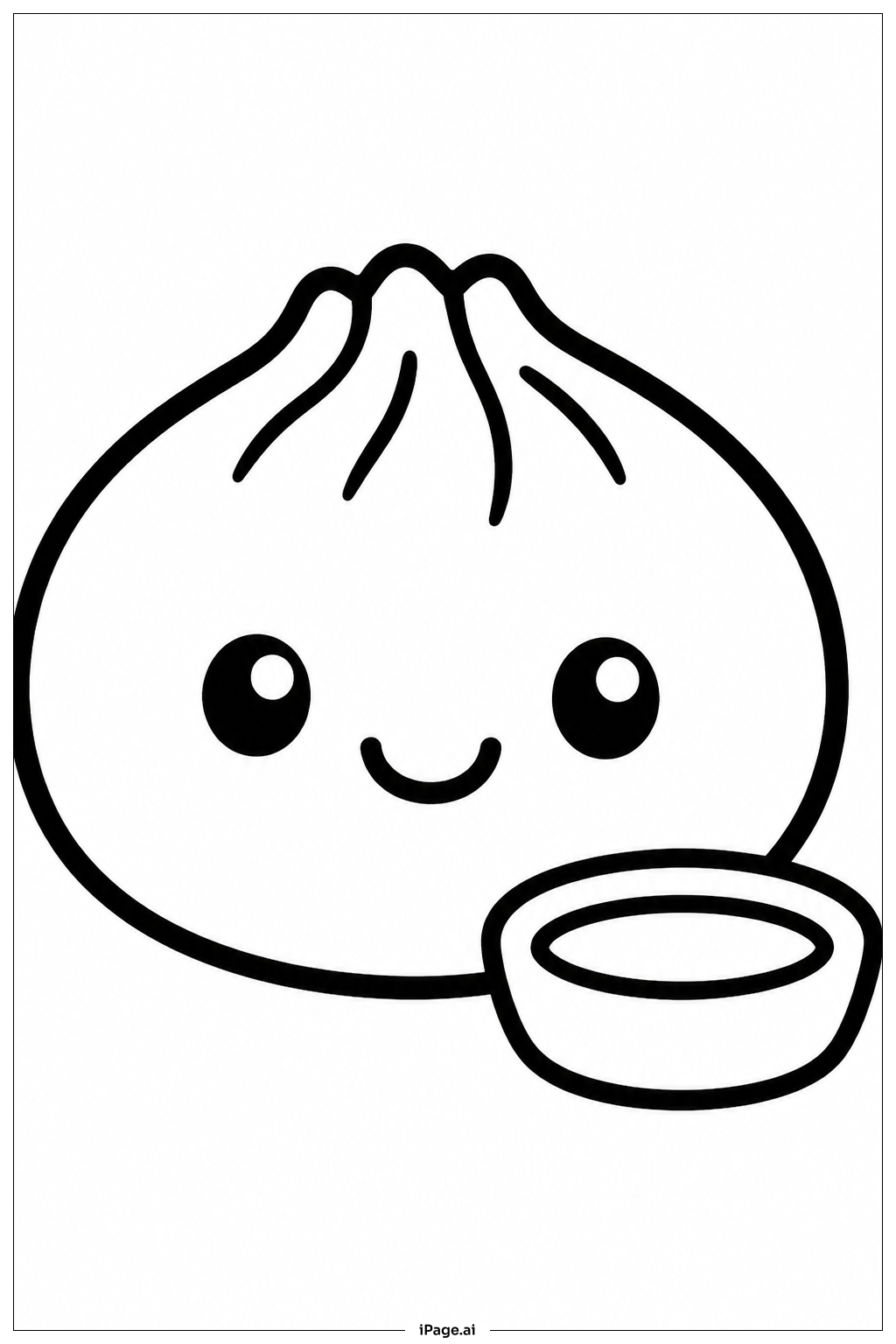
Coloring tips: How to color Dumpling With Sauce coloring page well?
Start with the dumpling's wrapper. Use a warm cream or pale yellow to give it a freshly cooked look. You can add a light golden-brown shade along the bottom to show where it was pan-fried. For the pleated folds on top, try a slightly darker shade of the same color to create depth. The dipping sauce in the bowl looks great in a rich soy-brown or deep amber. Add a touch of red for chili oil swirls on the sauce surface. The bowl itself can be white, blue, or a fun bright color of your choice. Use light blue or soft gray for any shadow areas under the dumpling to make it look round and three-dimensional. Feel free to add sesame seed dots on the sauce for extra detail. Keep the background simple with a pastel tone so the dumpling stays the star of the page.
Coloring challenges: Which parts are difficult to color and need attention for Dumpling With Sauce coloring page?
• **Pleated folds on the dumpling:** The crimped seam along the top of the dumpling has many small, closely spaced folds. Coloring each fold individually with slightly varied shades requires a fine-tipped colored pencil or marker. Rushing through this area can make the folds look flat, so take your time and work slowly from one end to the other.
• **Creating a rounded, three-dimensional shape:** A dumpling is a smooth, puffy shape. To make it look truly round rather than flat on the page, you need to blend colors carefully — lighter in the center and gradually darker toward the edges. This kind of shading can be tricky, especially for younger colorists who are still learning how light and shadow work.
• **The sauce surface details:** The dipping bowl contains a liquid sauce with ripples and possibly small droplets. Capturing the glossy, wet look of a sauce requires layering colors and leaving small white highlights. Blending warm browns with hints of red or orange while keeping some areas bright takes patience and a steady hand.
• **Small splashes and droplets:** Tiny sauce droplets scattered around the bowl are very small details. Filling them in neatly without going outside the lines demands good control of your coloring tool. Using a fine-tip marker or a sharpened colored pencil works best here.
• **Balancing the overall color harmony:** Choosing colors that look good together — the dumpling, the sauce, the bowl, and the background — is a creative challenge in itself. If the colors are too similar, the image can look muddy. Picking contrasting but complementary tones helps each element stand out clearly.
Benefits of coloring books: Advantages of drawing Dumpling With Sauce coloring page
Coloring this Dumpling With Sauce page is a wonderful activity for kids and adults alike. It helps children practice fine motor skills as they carefully color inside the small pleated folds and tiny droplets. Staying within the lines builds hand-eye coordination and concentration. Choosing colors for the dumpling, sauce, and bowl encourages creative thinking and decision-making. Kids learn about color relationships — like how warm browns and creamy yellows work together to look delicious and realistic. This image also sparks curiosity about food and different cultures, making it a great conversation starter about Asian cuisine and cooking traditions. For older children and adults, the shading challenges offer a satisfying way to practice blending techniques and develop patience. The familiar, comforting subject matter makes the coloring experience feel relaxed and enjoyable rather than stressful. Completing the page gives a real sense of accomplishment, boosting confidence and self-expression. Whether you color it quickly for fun or take your time perfecting every detail, this page delivers a calm, focused, and rewarding creative experience.