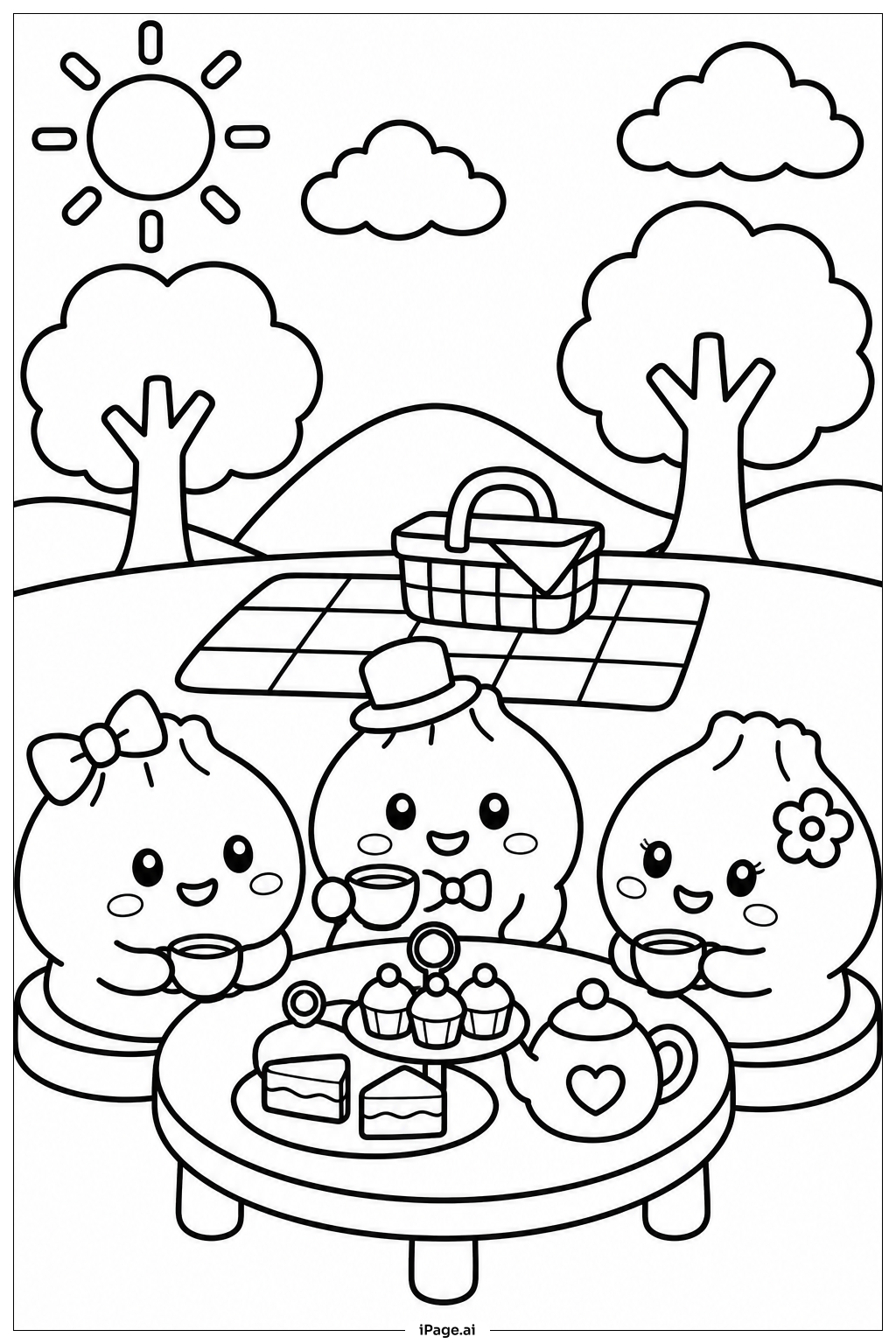
Coloring tips: How to color Dumpling Tea Party Group coloring page well?
For the dumpling characters, try soft peachy or pale yellow tones to give them a freshly steamed appearance, with rosy pink cheeks to enhance their cute expressions. Color the teapot in classic ceramic white with delicate blue or pink patterns on the hearts. The teacups can match the teapot or use complementary pastel shades like mint green or lavender. Make the treats on the stands look delicious with warm browns for cookies, soft pinks for macarons, and golden yellows for cakes. Use a variety of bright, cheerful colors for the flowers like reds, purples, oranges, and yellows to create a festive garden atmosphere. The tablecloth could be a soft cream or pale pink with decorative edges in a contrasting color. Keep the hearts in shades of red or pink to maintain the loving, friendly theme of the gathering.
Coloring challenges: Which parts are difficult to color and need attention for Dumpling Tea Party Group coloring page?
• Character Faces and Expressions: Each dumpling has small facial features including eyes, mouths, and cheeks that require careful coloring to maintain their distinct personalities. Young children may find it challenging to stay within these tiny areas while keeping each character's expression clear and expressive. Using fine-tipped markers or sharp colored pencils can help achieve better control in these detailed sections.
• Intricate Floral Details: The flowers surrounding the tea party have multiple petals, centers, and stems with overlapping elements that create complex areas to color. Distinguishing between foreground and background flowers while maintaining a cohesive color scheme requires planning and attention. Children should decide on their flower colors before starting and work slowly to avoid accidentally coloring into adjacent petals.
• Teapot and Teacup Patterns: The heart decorations on the teapot and the delicate designs on the cups present fine detail work that demands precision. These small pattern elements can be tricky for younger children who are still developing fine motor control. Taking breaks and using the right coloring tools will help maintain accuracy throughout these decorative features.
• Layered Treats and Food Items: The tiered stands hold various treats that overlap and stack, creating depth challenges. Children need to decide which items are in front and which are behind, then color accordingly to maintain the three-dimensional effect. Shading techniques can enhance this depth but require some practice and understanding of light and shadow.
Benefits of coloring books: Advantages of drawing Dumpling Tea Party Group coloring page
Coloring this charming dumpling tea party scene helps children develop important fine motor skills through the detailed work required for small facial features and intricate patterns. The various elements of different sizes allow kids to practice control with both broad strokes and precise coloring. This image encourages creativity as children choose color combinations for the characters, flowers, and tea party elements, learning about color harmony and how different shades work together. The friendly, social theme of the tea party promotes positive emotions and can spark imagination about friendship, celebrations, and sharing special moments. Working through the moderately complex details builds patience, concentration, and a sense of accomplishment when completed. The combination of cute characters and decorative elements makes this an engaging activity that holds children's attention while providing a relaxing, mindful coloring experience.