Coloring tips: How to color Dumpling Squishy On Bicycle coloring page well?
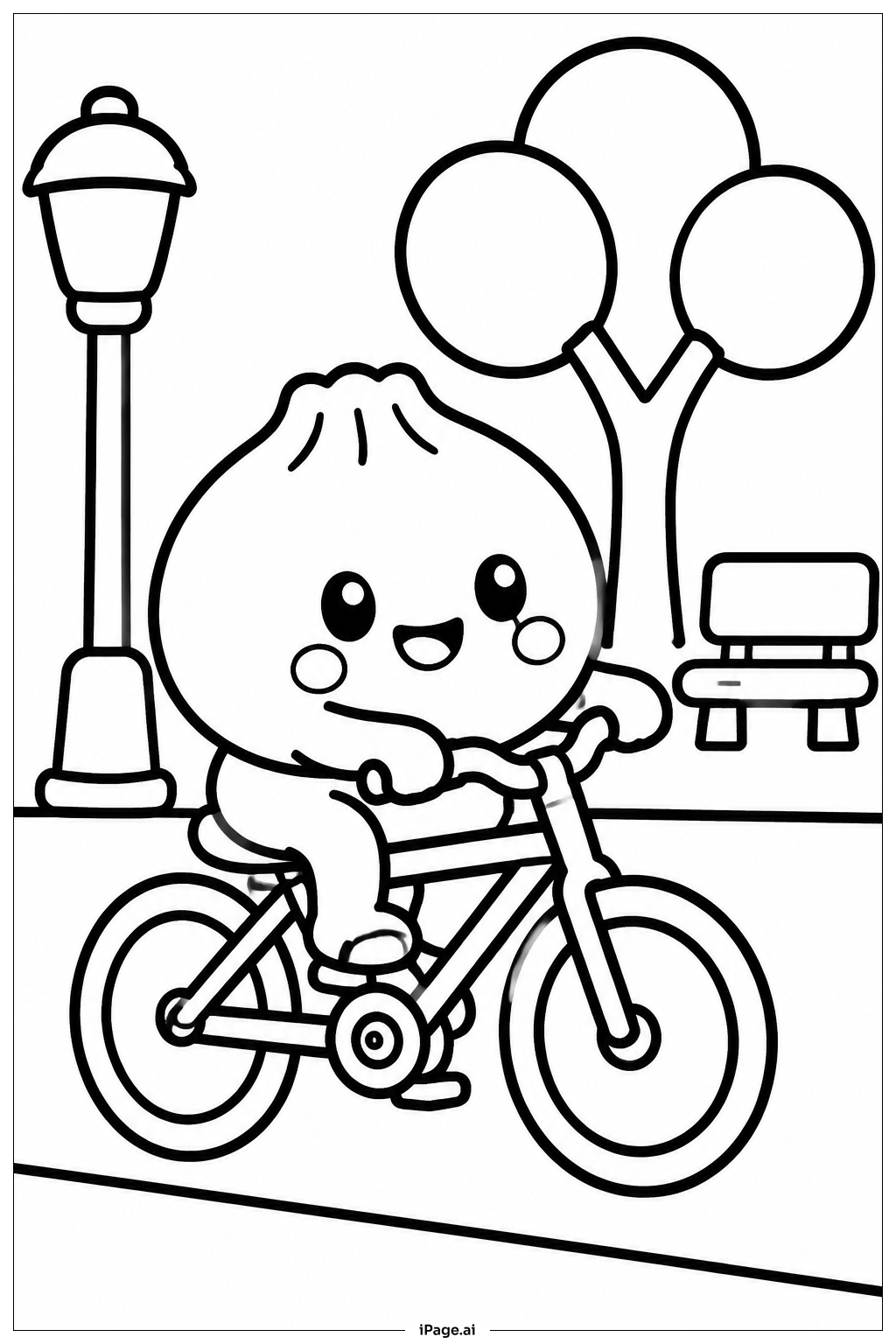
For coloring this image, start by giving Dumpling Squishy a soft, warm color like pale yellow or light beige to reflect its dumpling shape. The hat can be bright red or blue to add a pop of color. The bicycle could be painted in cheerful shades such as bright red, blue, or green to make it stand out. Use darker tones like brown or black for the bike's wheels and pedals for contrast. For the background, gentle greens for the grass and light gray for the pavement will create a nice outdoor setting. Don’t forget to color Dumpling Squishy’s face with cheerful pink cheeks and twinkling eyes to bring it to life. Feel free to try combinations of pastel and vivid colors to create an inviting and happy atmosphere.
Coloring challenges: Which parts are difficult to color and need attention for Dumpling Squishy On Bicycle coloring page?
• Small detailed parts like the bicycle chain, pedals, and handlebars require careful coloring to stay within the lines and maintain clarity.
• The rounded shape of Dumpling Squishy demands smooth, even coloring to capture its soft and squishy appearance without harsh edges.
• Balancing colors between the bicycle and Dumpling Squishy can be tricky—using colors that complement each other helps avoid a busy or overwhelming look.
• The subtle background elements, like grass and pavement lines, need lighter or muted colors to keep focus on the main subject without losing detail.
• Coloring facial features such as eyes and mouth requires precision to keep Dumpling Squishy’s joyful expression clear and expressive.
Benefits of coloring books: Advantages of drawing Dumpling Squishy On Bicycle coloring page
Coloring this image helps children improve hand-eye coordination and fine motor skills as they carefully fill in small and detailed areas. It encourages creativity by inviting kids to explore color choices for both the character and the bicycle. The friendly and playful scene promotes positive emotions and can boost concentration and patience. By focusing on smooth coloring techniques for rounding shapes and tiny parts, children enhance their attention to detail. Overall, this picture is a fun way to combine imaginative play with skill-building, making it ideal for young artists aged 4 to 16.