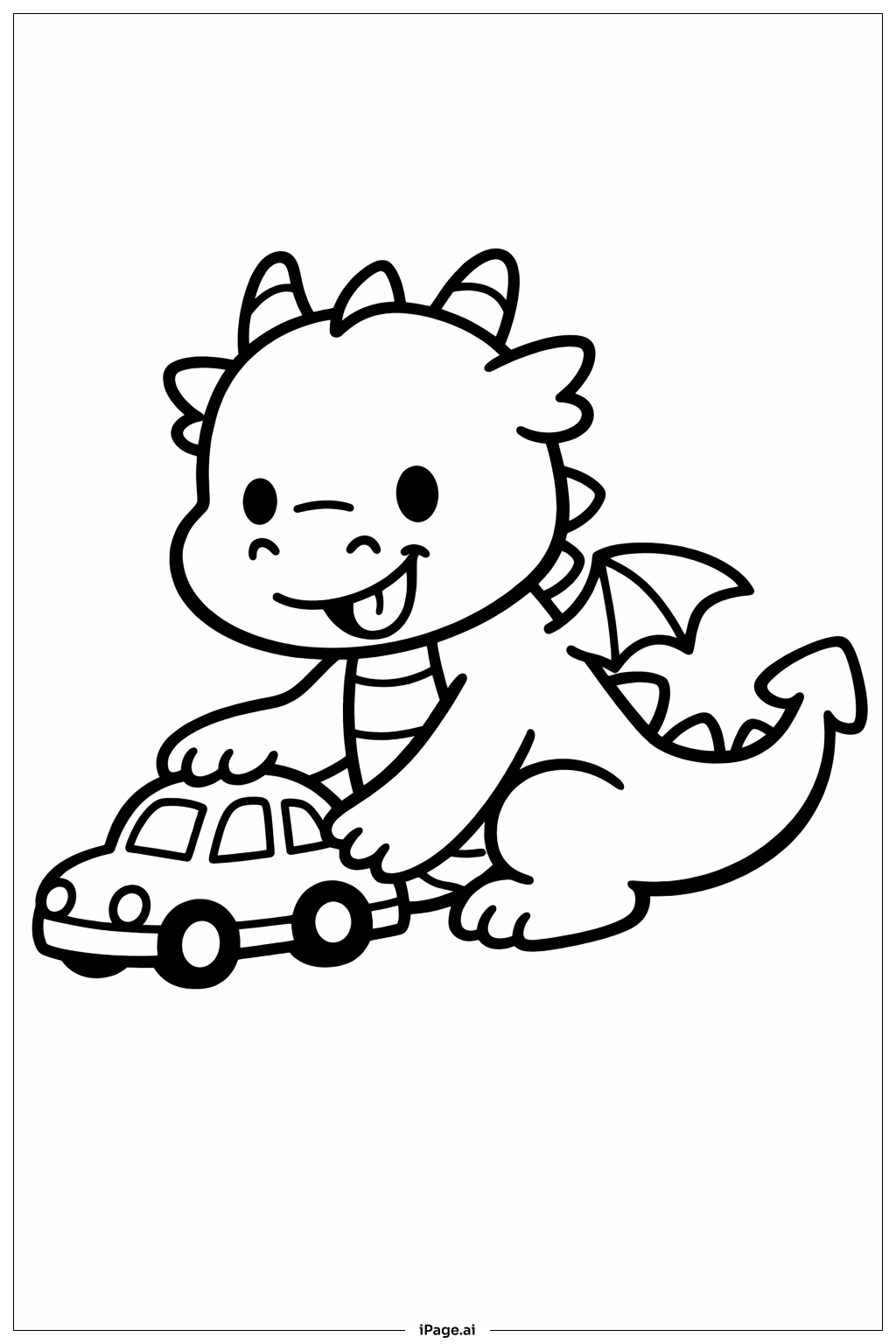
Coloring tips: How to color Dragon with Toy Car coloring page well?
For the dragon, consider using vibrant colors like emerald green, sapphire blue, or royal purple for the body scales. You can add lighter shades on the belly and inner wings to create dimension. The horns could be colored in contrasting shades like ivory, gold, or silver. Make the eyes bright and lively with colors like amber, blue, or green, adding white highlights to make them sparkle. The toy car offers great opportunities for bold, cheerful colors. Try classic red, sunny yellow, or bright blue for the car body. The wheels can be black or dark gray with silver hubcaps. Windows could be light blue or gray to suggest glass. Consider adding small details like racing stripes or patterns to make the car more interesting. The background can be kept simple or you can add a soft color wash to make the characters stand out.
Coloring challenges: Which parts are difficult to color and need attention for Dragon with Toy Car coloring page?
• Dragon Scale Texture: The dragon's body is covered in overlapping scales that require patience and attention to detail. Each scale needs careful coloring to maintain consistency while creating a realistic reptilian texture. Children may find it challenging to color within each small scale without going outside the lines. Using different shades of the same color family can help create depth and make the scales look three-dimensional, but this requires color blending skills that younger children are still developing.
• Small Details and Tight Spaces: This image contains numerous small areas that require precision, including the dragon's claws, the space between fingers and toes, the inner portions of the wings, and the toy car's windows and wheels. These tight spaces are difficult for younger children who are still developing fine motor control. Keeping colors within these small boundaries without smudging or crossing lines requires steady hands and concentration.
• Creating Dimension and Depth: To make both the dragon and toy car look realistic and three-dimensional, colorists need to understand light and shadow concepts. The dragon's round body, curved tail, and folded wings all require shading techniques to appear solid rather than flat. Similarly, the toy car needs darker tones on one side and lighter highlights on the other to look like a real three-dimensional object. This level of advanced coloring technique may be challenging for beginners.
• Maintaining Consistent Color Patterns: Deciding on and maintaining a consistent color scheme throughout the image requires planning and visual memory. Children need to remember which colors they chose for different parts and apply them consistently, especially when coloring repetitive elements like scales or stripes on the car.
Benefits of coloring books: Advantages of drawing Dragon with Toy Car coloring page
Coloring this dragon and toy car page offers wonderful developmental benefits for children. It helps improve fine motor skills and hand-eye coordination as they carefully color within the detailed scales and small spaces. The combination of organic shapes in the dragon and geometric forms in the car helps children practice different coloring techniques and understand various shapes. This image encourages creativity and imagination, allowing children to choose their own color combinations and bring their personal vision to life. The friendly, non-threatening nature of the scene promotes positive feelings and can help reduce stress and anxiety. Completing this moderately detailed page builds confidence and provides a sense of achievement. The whimsical subject matter of a dragon playing with a toy car sparks storytelling opportunities, encouraging verbal expression and narrative thinking. This coloring activity also promotes patience and concentration as children work through the various elements of the composition.