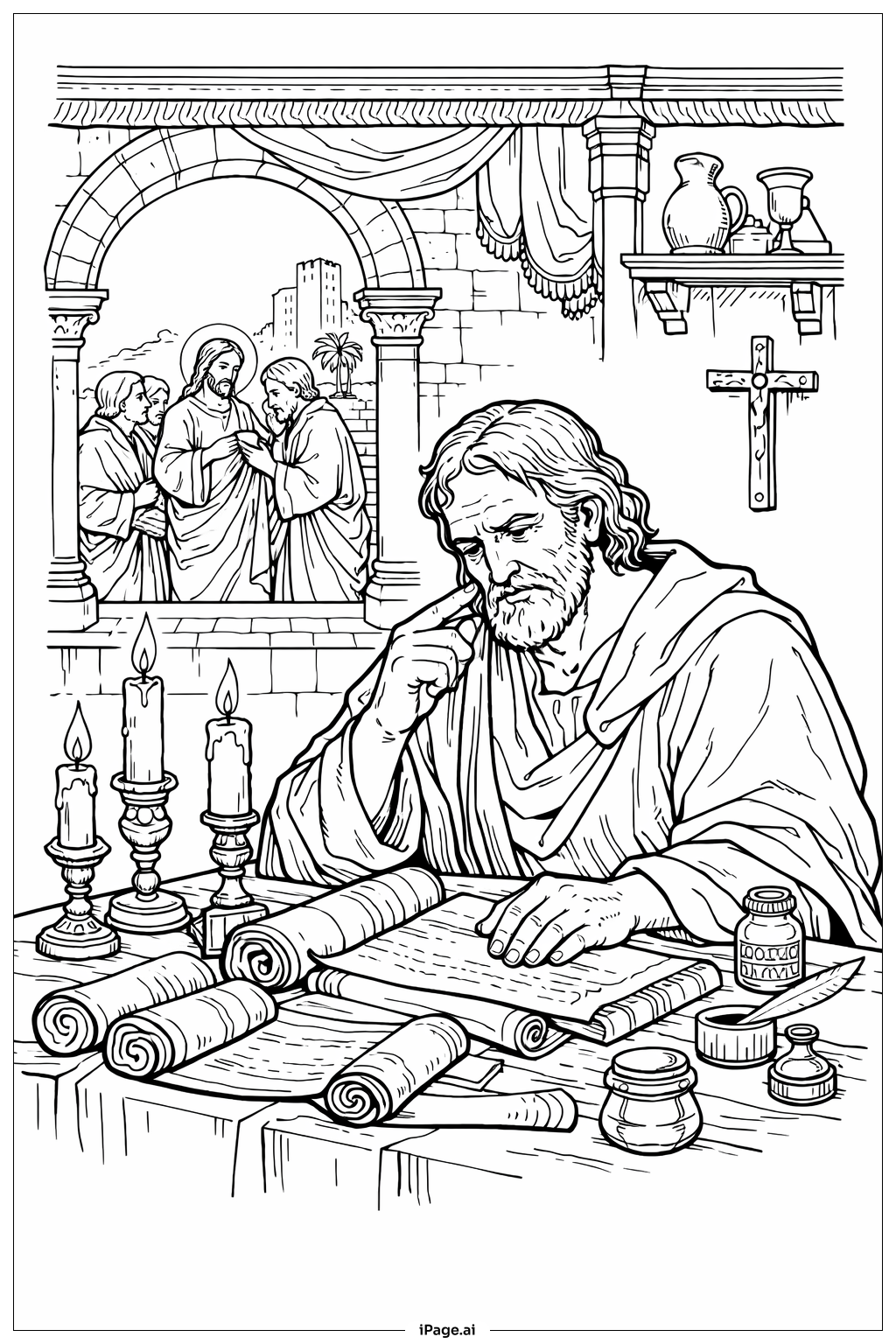
Coloring tips: How to color Doubting Thomas Reflective Study Scene coloring page well?
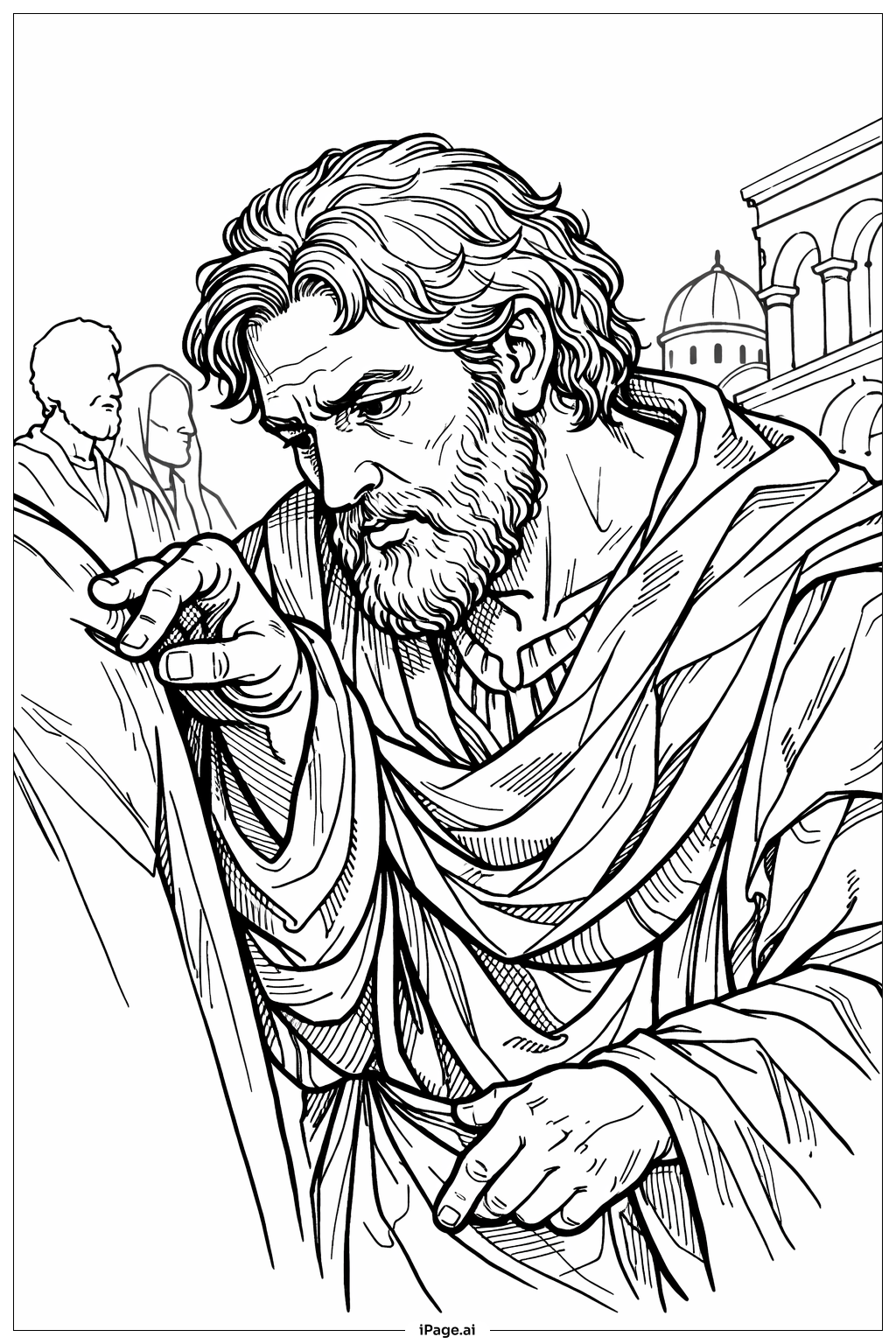
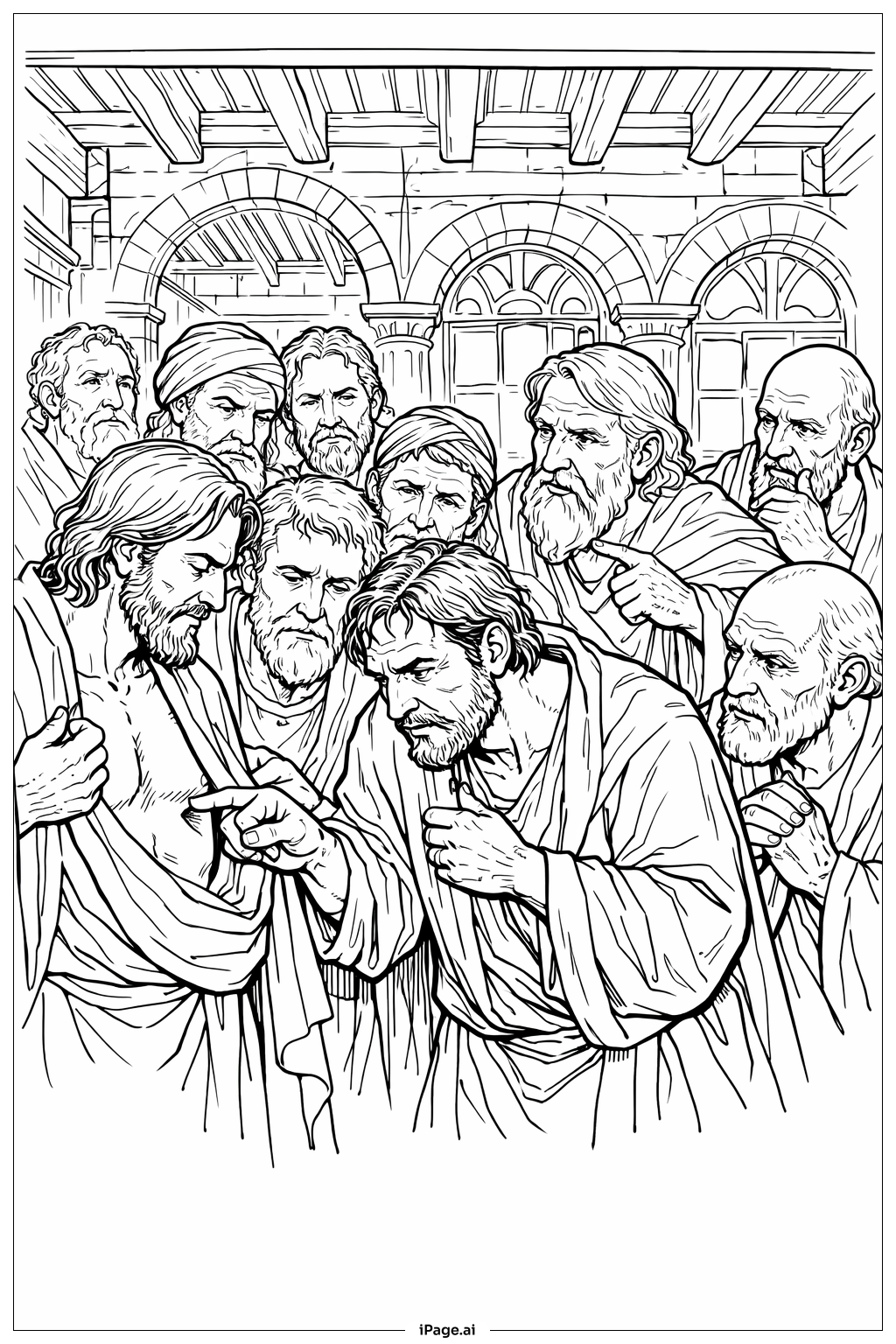
For Jesus's robes, consider using traditional white or cream tones to symbolize purity and resurrection, with soft purple or burgundy accents for the inner garment. Thomas's clothing could be colored in earthy browns, deep blues, or olive greens to represent his humanity and initial doubt. Use gentle skin tones with warm peachy or tan shades for both figures. The background can be kept light with soft yellows, pale golds, or gentle blues to create a heavenly atmosphere. Add subtle shading to the fabric folds using darker versions of your chosen colors to create depth. Consider leaving some highlights uncolored or very light to show where divine light touches the figures, emphasizing the spiritual nature of this moment.
Coloring challenges: Which parts are difficult to color and need attention for Doubting Thomas Reflective Study Scene coloring page?
• Fabric Drapery and Folds: The flowing robes contain numerous intricate folds and overlapping fabric layers that require careful attention to maintain consistent light and shadow patterns. Children may find it challenging to decide which areas should be darker to show depth and which should remain lighter to indicate raised surfaces or light reflection.
• Facial Features and Expressions: Both Thomas and Jesus have detailed facial features including eyes, beards, and hair that demand precision coloring within small spaces. Capturing the emotional expressions through subtle color variations in skin tones while staying within fine lines can be difficult for younger colorists.
• Anatomical Details of Hands: The hands are prominently featured, showing Thomas reaching toward Christ's wounds. The fingers, palms, and wound details contain small areas that require steady hand control and careful color selection to differentiate between skin, shadows, and the sacred wounds themselves.
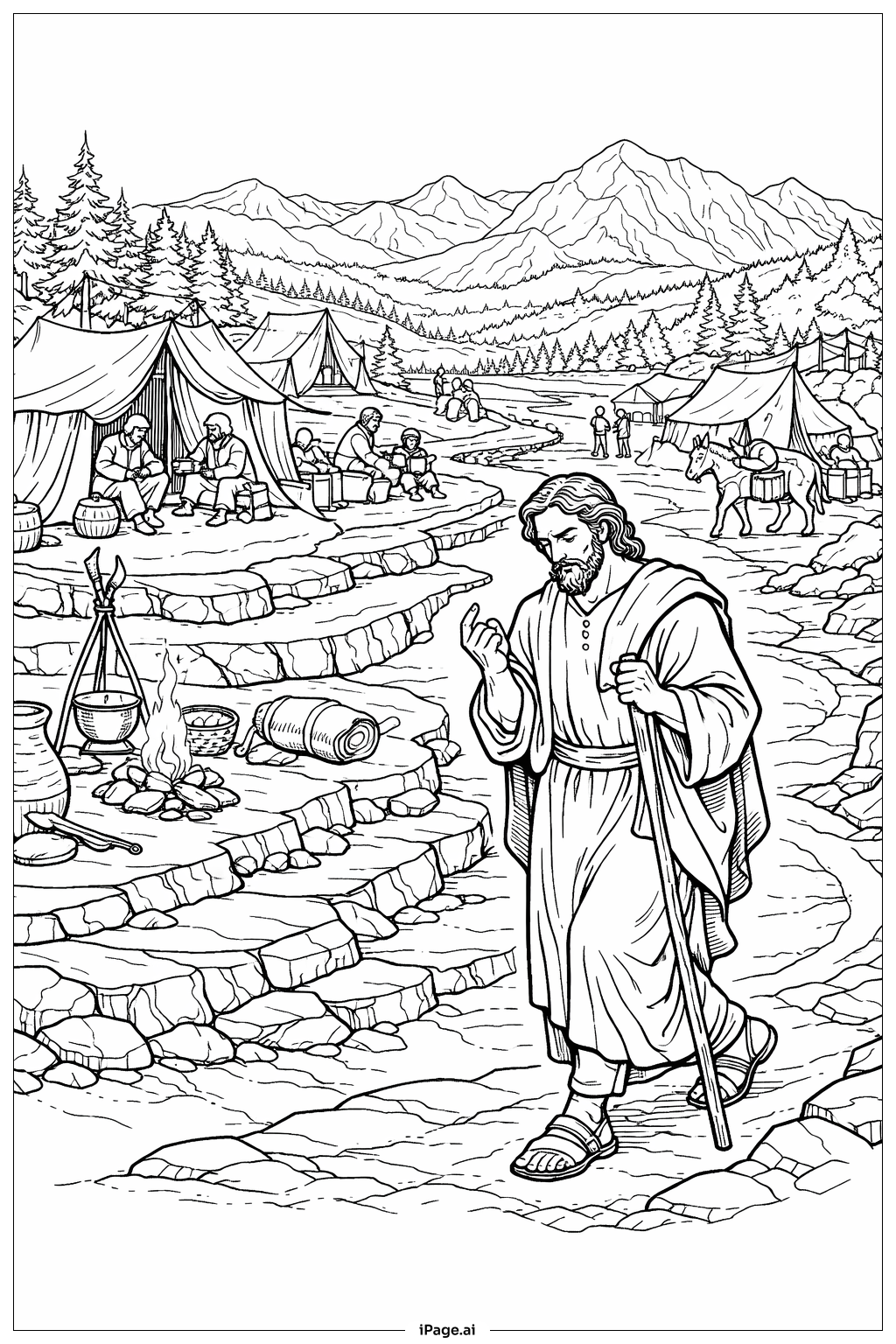
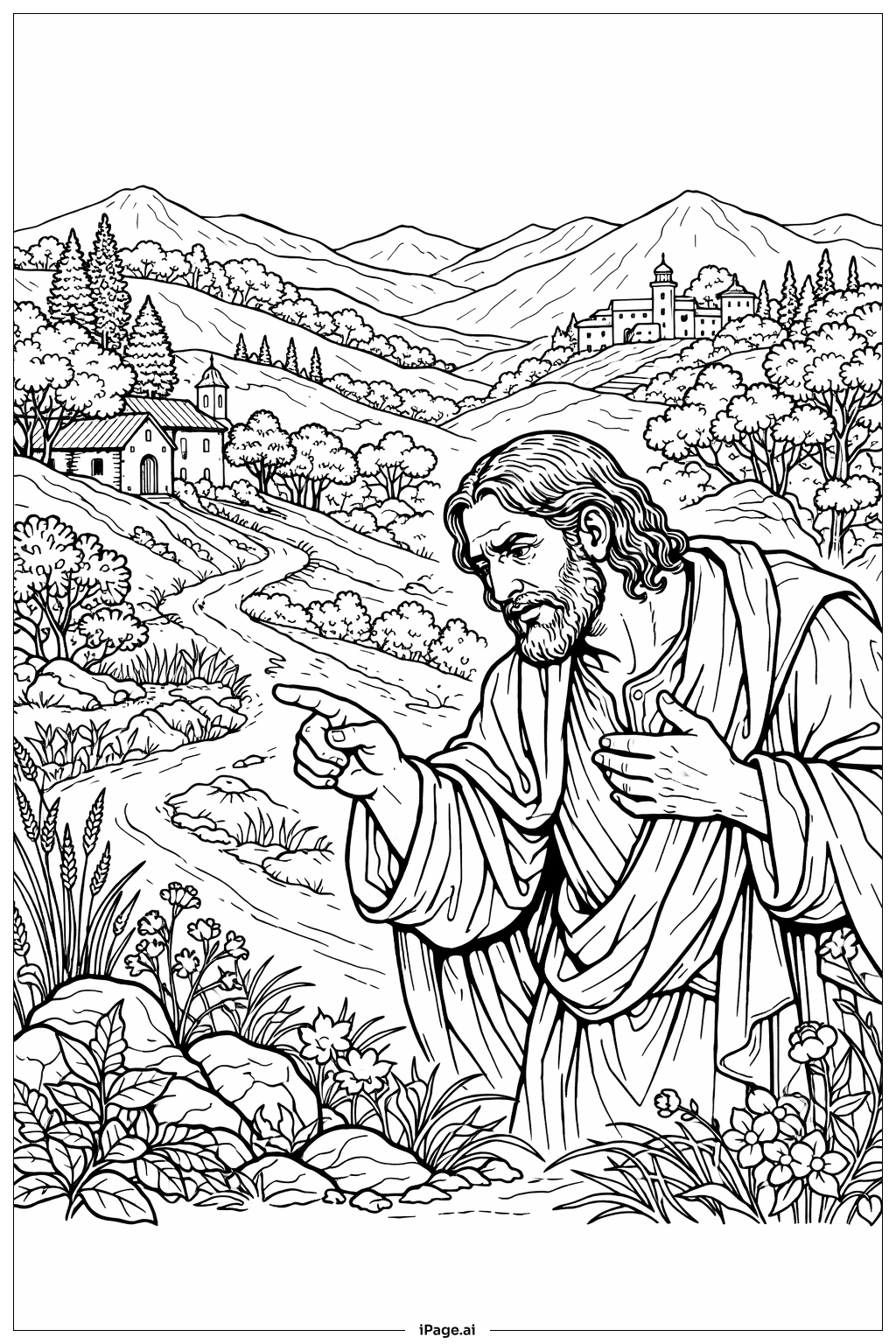
• Background Depth Creation: Creating a sense of distance between the foreground figures and background architectural elements requires understanding of perspective and color intensity. Knowing when to use lighter, softer colors for distant areas versus bolder colors for closer elements can be conceptually challenging.
• Maintaining Consistent Lighting: The scene implies a single light source that affects both figures similarly. Keeping track of where highlights and shadows should fall across multiple fabric surfaces and two separate figures requires planning and spatial awareness throughout the coloring process.
Benefits of coloring books: Advantages of drawing Doubting Thomas Reflective Study Scene coloring page
Coloring this meaningful biblical scene helps children develop fine motor skills through the detailed line work in the robes and facial features. It encourages patience and focus as they carefully work through the intricate drapery folds and small details. This image provides an excellent opportunity to learn about light and shadow, helping young artists understand how to create depth and dimension through color choices. The religious subject matter opens conversations about faith, doubt, and belief, making it both an artistic and educational experience. Working with the flowing fabrics teaches children about texture and movement in art. The scene's emotional depth encourages thoughtful color selection to match the mood, developing emotional intelligence alongside artistic skills. Completing this detailed coloring page builds confidence and a sense of accomplishment while connecting children to an important story of transformation from doubt to faith.