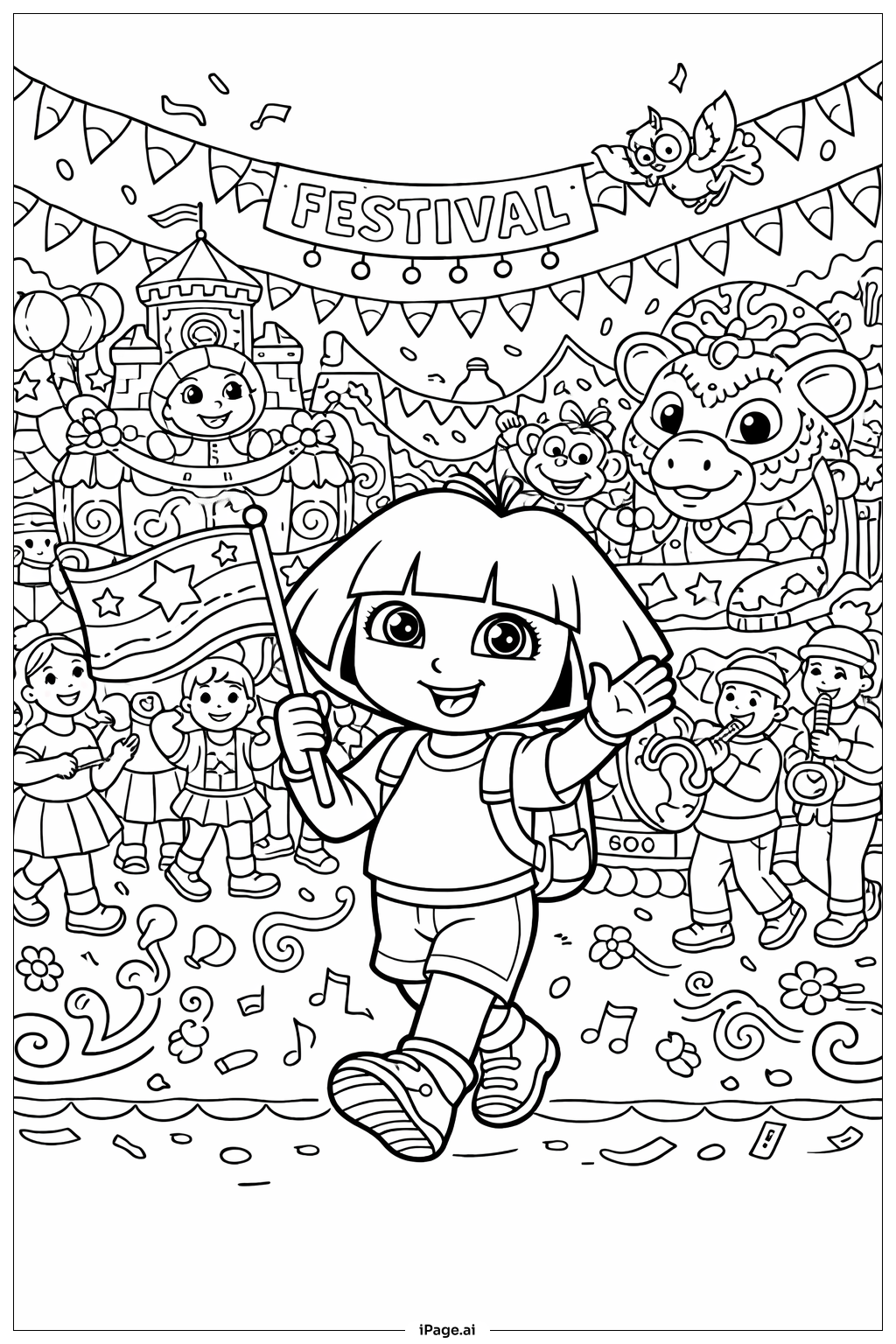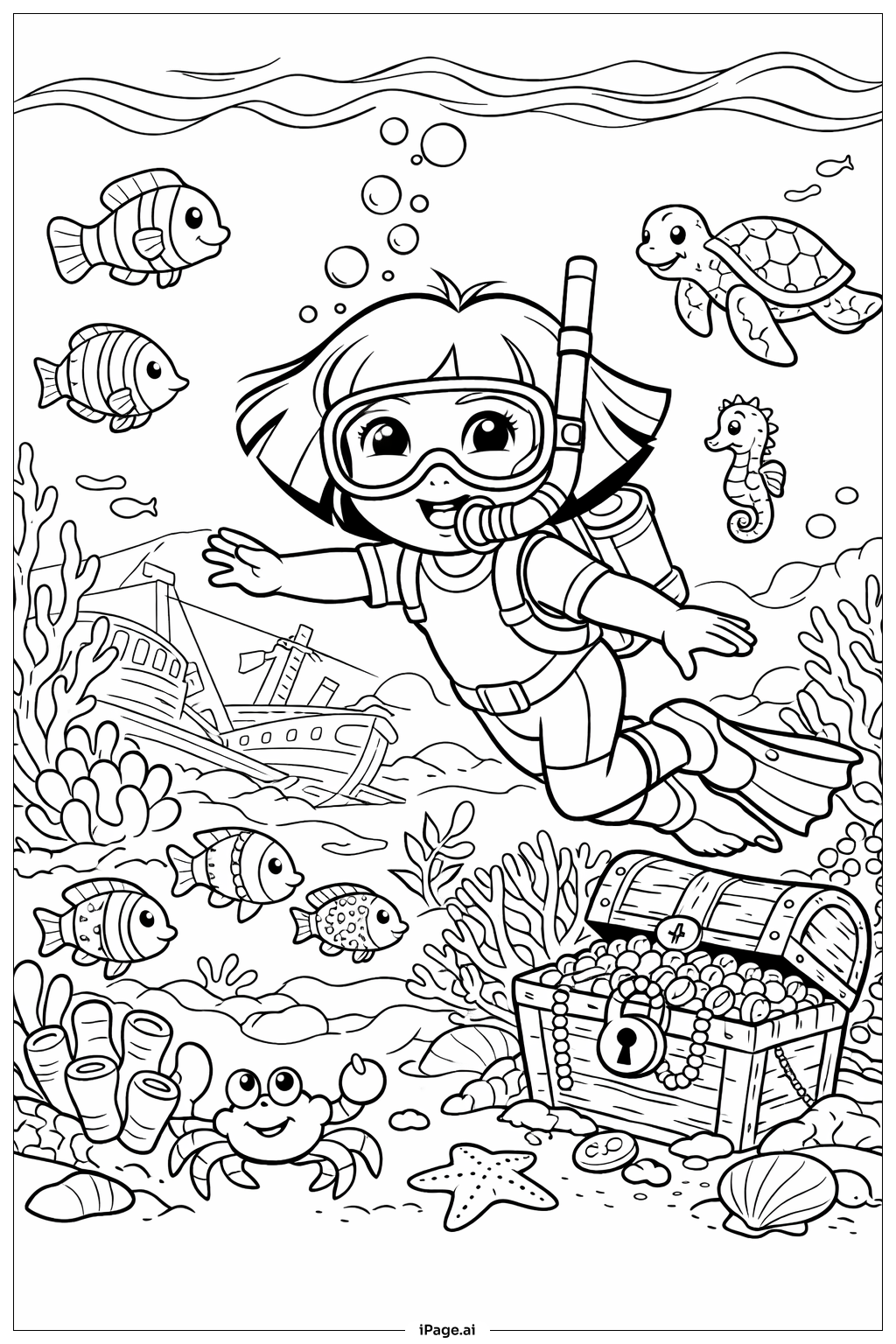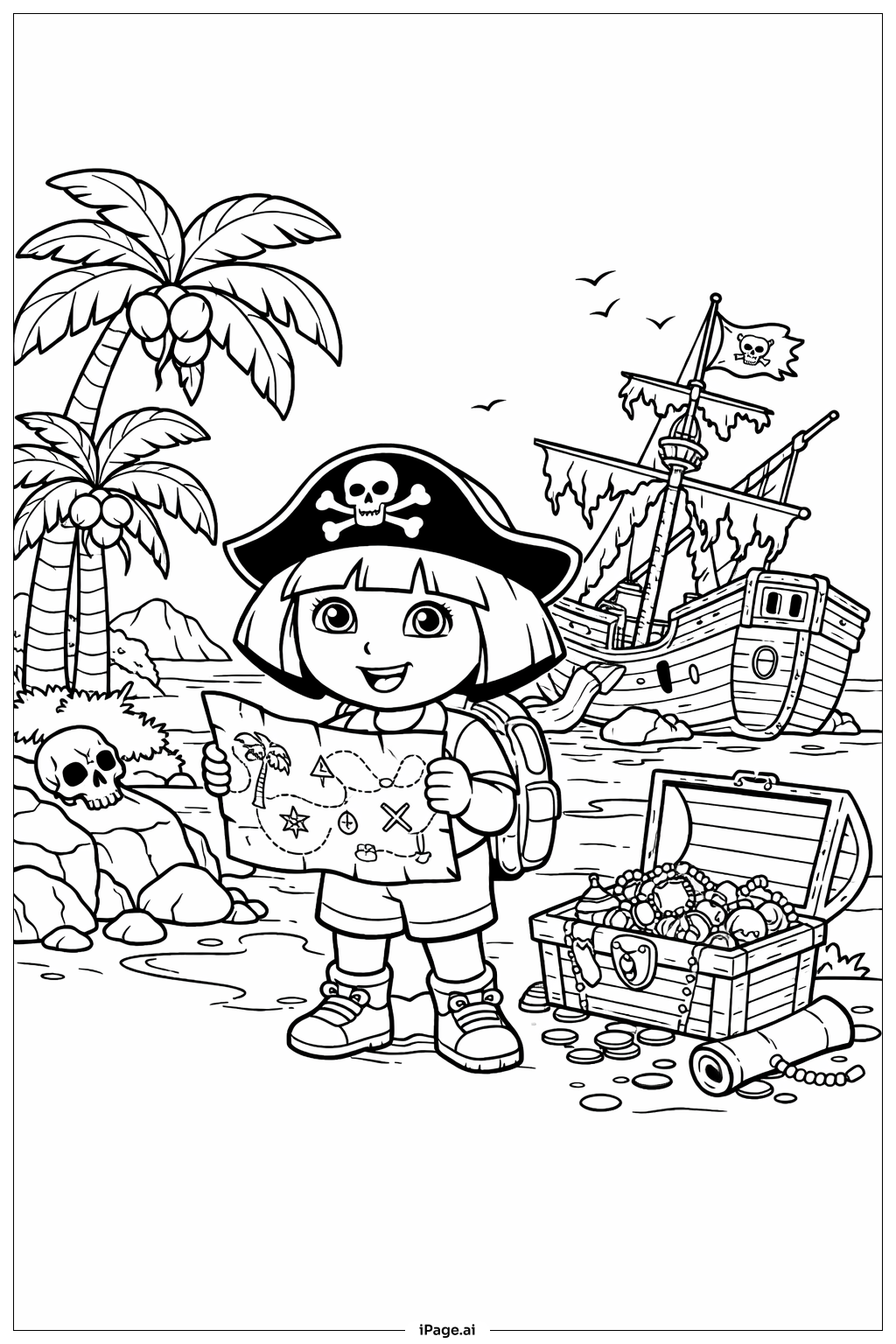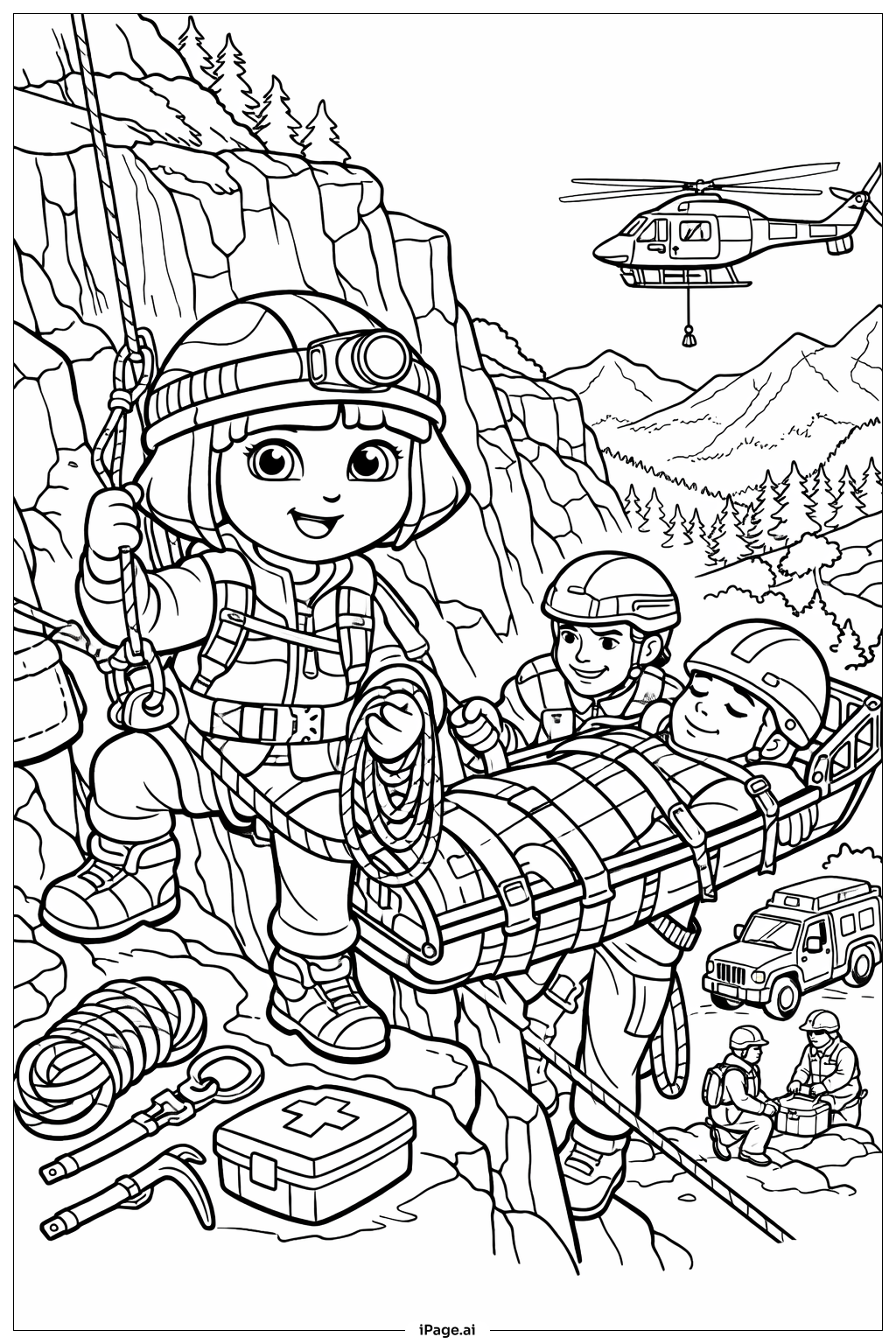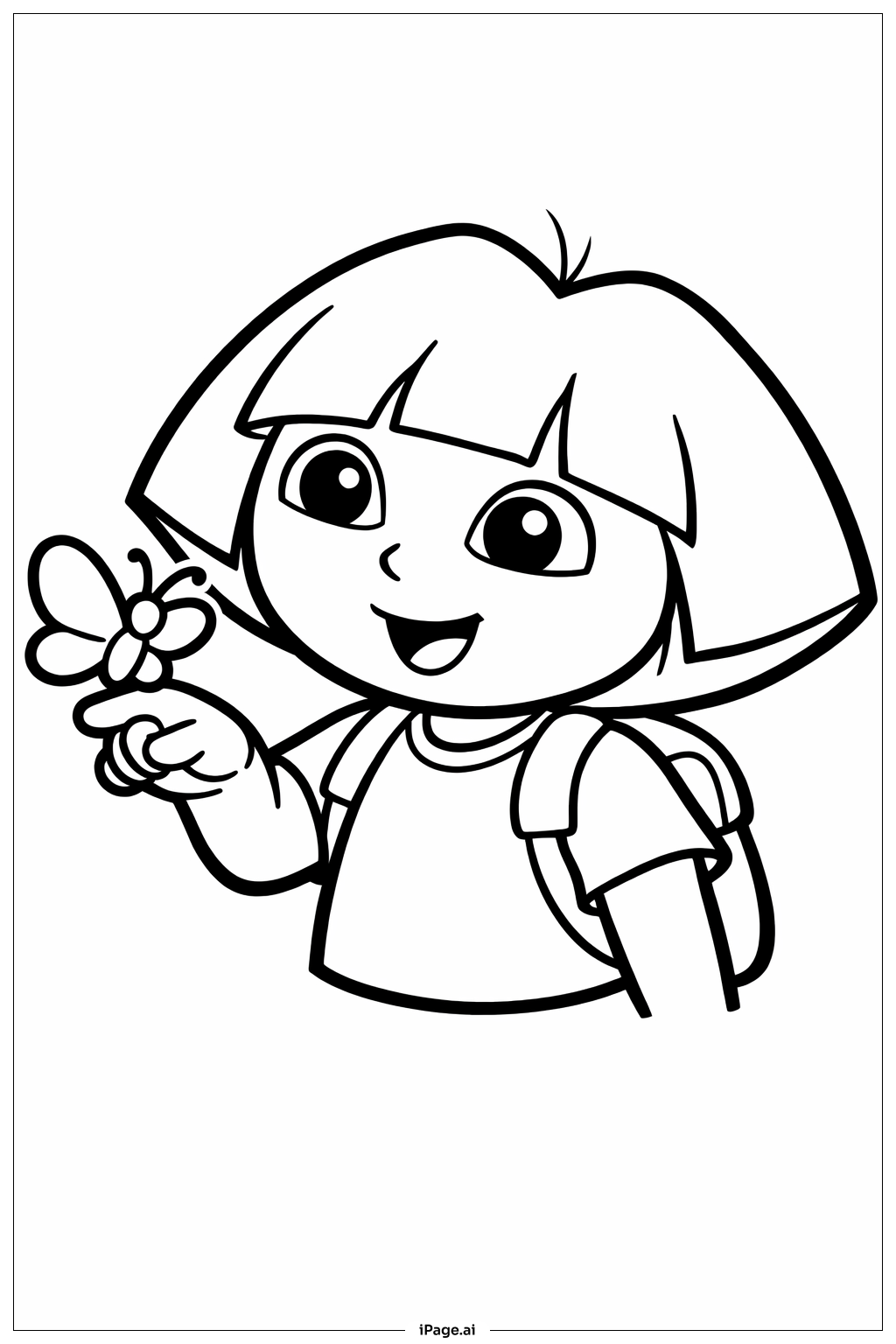
Coloring tips: How to color Dora With Butterfly coloring page well?
Start with Dora's skin using a peachy or light brown tone to bring her to life. Color her hair a rich dark brown or black. For her shirt, use a bright pink or magenta, staying true to her classic look. Her shorts can be orange, and don't forget her yellow backpack if visible. The butterfly offers a wonderful opportunity for creativity. Try using vibrant colors like purple, blue, yellow, and orange for the wings. You can create symmetrical patterns or mix colors for a rainbow effect. Add darker shades along the wing edges to create depth. For the background, consider soft greens for grass, light blue for sky, or leave it simple to keep focus on Dora and her butterfly friend. Use colored pencils for smooth blending or markers for bold, bright results.
Coloring challenges: Which parts are difficult to color and need attention for Dora With Butterfly coloring page?
• Butterfly Wing Details: The butterfly wings contain intricate patterns with small sections and delicate lines that require careful coloring. Young children may find it challenging to stay within these tiny spaces. Using fine-tipped markers or sharp colored pencils can help achieve clean results. Take your time with each section and consider using lighter pressure to avoid bleeding into adjacent areas.
• Symmetry and Pattern Matching: If you want the butterfly wings to look realistic, both sides should mirror each other in color and pattern. This requires planning before you start coloring. It can be tricky to remember which colors you used on one side when moving to the other. Consider coloring both wings simultaneously, switching sides after each section to maintain consistency.
• Facial Features: Dora's face includes small details like eyes, eyebrows, mouth, and possibly a nose that need precision coloring. The eyes especially require steady hands to color the pupils without going outside the lines. Younger children might need help with these fine details to keep the expression clear and recognizable.
• Color Transitions and Shading: Creating realistic skin tones and adding dimension to clothing and the butterfly requires blending techniques. Deciding where to add shadows under the hair, on the face, or in the clothing folds can be challenging. Beginners may produce flat colors, while more advanced colorists can experiment with layering lighter and darker shades for a three-dimensional effect.
Benefits of coloring books: Advantages of drawing Dora With Butterfly coloring page
Coloring this Dora With Butterfly page offers numerous developmental benefits for children. It helps improve fine motor skills and hand-eye coordination as kids carefully color within the lines and navigate small details like the butterfly wings. The activity encourages focus and concentration, helping children practice patience as they complete each section. Choosing colors for Dora's outfit and the butterfly's wings stimulates creativity and decision-making skills. Children learn about color combinations and can experiment with realistic or imaginative palettes. The familiar character of Dora provides comfort and engagement, making the coloring experience more enjoyable. Additionally, this activity can spark conversations about nature, butterflies, and outdoor exploration, connecting art with learning. Coloring also serves as a calming activity that reduces stress and promotes mindfulness, allowing children to express themselves artistically while developing essential skills that support their overall growth and learning.