Coloring tips: How to color Dolphin And Rainbow Wave coloring page well?
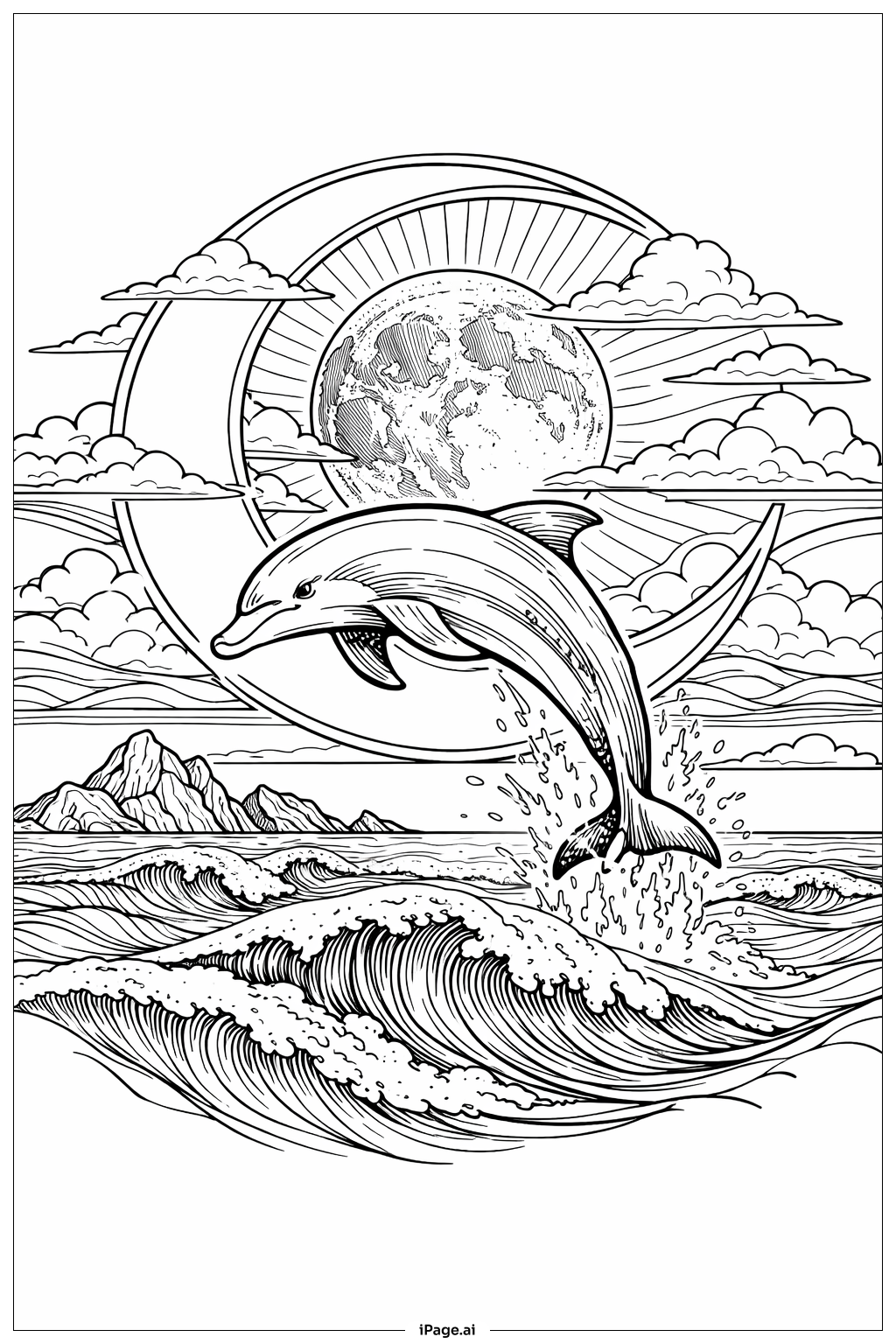
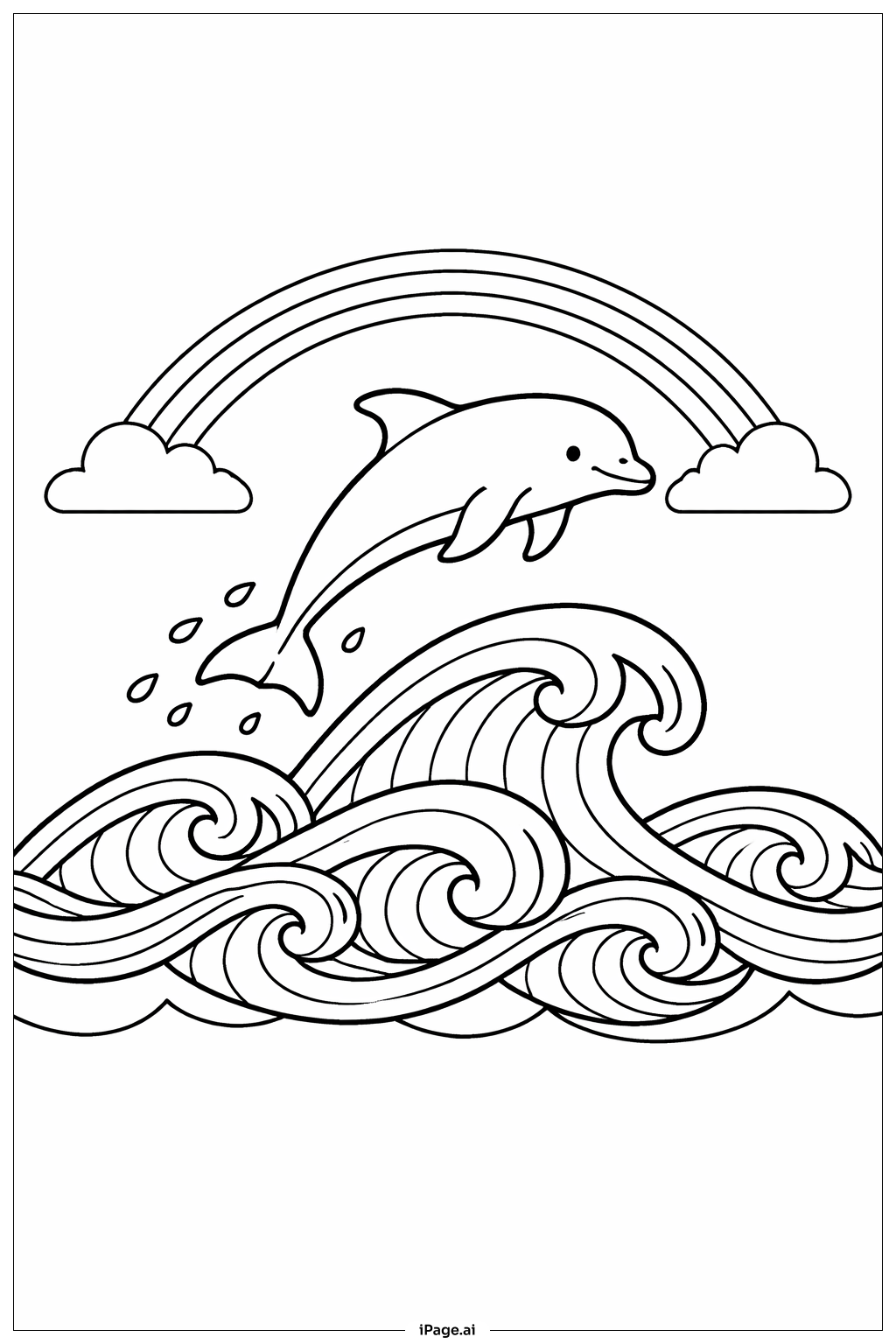
For the dolphin, use shades of gray or blue-gray for the body, with a lighter cream or white belly to create natural contrast. The wave can be colored in various shades of blue and turquoise, using darker blues in the shadowed areas and lighter aqua tones where light hits the water. For the rainbow, follow the traditional color sequence: red, orange, yellow, green, blue, indigo, and violet from outer to inner arcs. You can make multiple rainbows slightly different in intensity to add depth. The water splashes and droplets can be colored in light blues and whites to suggest foam and mist. Consider adding subtle purple or pink tones to the sky background to enhance the magical feeling. Use colored pencils or markers to blend colors smoothly, especially on the wave's curves.
Coloring challenges: Which parts are difficult to color and need attention for Dolphin And Rainbow Wave coloring page?
• Rainbow Band Precision: The rainbow features multiple narrow, curved bands that require staying within tight boundaries. Children may find it challenging to keep each color separate and distinct, especially when following the natural arc. Using fine-tipped markers or sharp colored pencils will help maintain clean edges between red, orange, yellow, green, blue, indigo, and violet bands.
• Wave Texture and Shading: The curling wave has complex curves, foam patterns, and dimensional areas that need different color intensities to look realistic. Younger colorists may struggle with understanding where to place darker blues for depth and lighter shades for highlights. The splashing water droplets scattered around also require careful attention to create the illusion of movement and transparency.
• Dolphin Body Contours: The dolphin's curved, three-dimensional body requires gradual shading to show its rounded form. Children need to understand how to blend from darker gray or blue on top to lighter shades on the belly. The fins and tail also have subtle details that benefit from careful color gradation rather than flat, single-tone coloring.
• Small Detailed Areas: The water splashes, droplets, and the dolphin's eye are small spaces that require precision and control. Younger children with developing fine motor skills may find these tiny areas frustrating to color without going outside the lines or leaving white gaps.
Benefits of coloring books: Advantages of drawing Dolphin And Rainbow Wave coloring page
Coloring this dolphin and rainbow wave image offers wonderful developmental benefits for children. It enhances fine motor skills and hand-eye coordination as they carefully fill the curved rainbow bands and intricate wave patterns. The variety of shapes and sizes helps children practice pencil control and precision. This image also encourages color recognition and understanding of natural color sequences, especially with the rainbow's traditional spectrum. Children learn about ocean life and weather phenomena while expressing creativity. The joyful, magical theme promotes positive emotions and relaxation, reducing stress and anxiety. Completing this detailed page builds patience, focus, and a sense of accomplishment. The combination of realistic elements like the dolphin and wave with fantastical rainbows sparks imagination and storytelling. This coloring activity provides a screen-free, calming experience that children can enjoy independently or share with family.