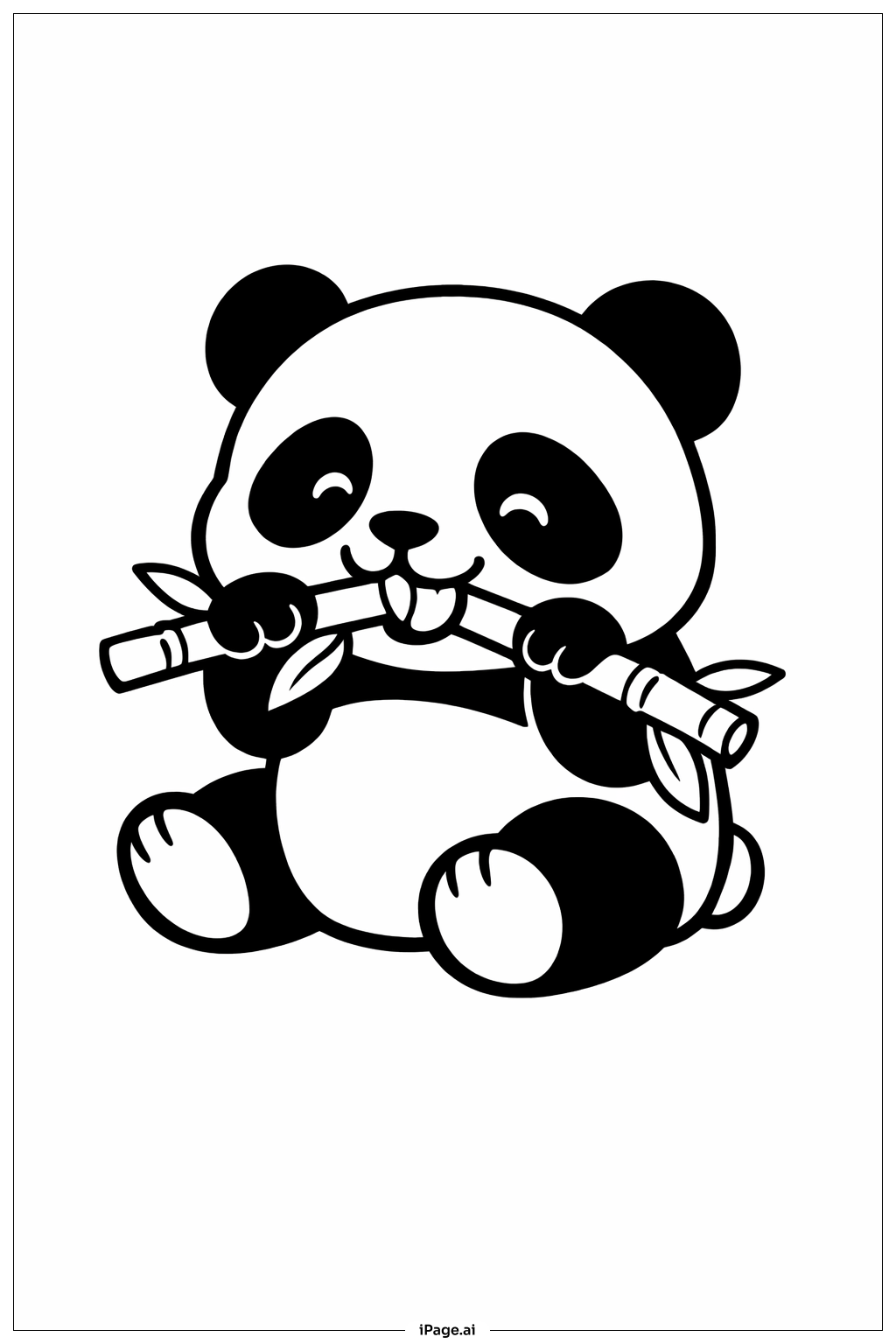
Coloring tips: How to color Cute Panda Eating Bamboo coloring page well?
Start with the panda's body using white or very light gray for the main areas. Use black or dark gray for the eye patches, ears, arms, and legs — these classic markings are what make a panda recognizable. For the eyes, try adding a soft brown or dark hazel to bring warmth and life to the face. Color the bamboo stalks in fresh green shades, mixing light and medium greens to add depth. The leaves can be a slightly deeper green to stand out from the stalks. Add a pale yellow-green highlight on the bamboo to suggest a shiny surface. For the background, soft greens or a light sky blue work beautifully to frame the panda. Keep the belly area white or cream to keep it looking fluffy and soft. Young colorists can keep things simple with solid colors, while older kids can try adding light shading to give the panda a rounder, more three-dimensional look. Most importantly, have fun with it!
Coloring challenges: Which parts are difficult to color and need attention for Cute Panda Eating Bamboo coloring page?
• Panda's Black-and-White Pattern Placement: One of the trickiest parts is keeping the panda's iconic markings accurate. The black patches go around the eyes, on the ears, and across the arms and legs, while the chest and belly stay white. Staying inside the lines and placing the right color in each section takes patience and careful attention, especially for younger colorists.\n\n• Small Eye Details: The panda's face has expressive eyes with round dark patches and small highlights inside. Coloring such a small area neatly can be challenging. Using a fine-tip colored pencil or a thin marker helps achieve a clean, lively look without accidentally coloring over nearby areas.\n\n• Bamboo Texture and Depth: Bamboo stalks have a natural segmented texture and subtle shading. Simply using one flat green can make them look dull. To make the bamboo feel real and lively, try layering two or three shades of green and leaving thin light streaks to suggest shine and dimension. This level of detail may take some practice.\n\n• Overlapping Paws and Bamboo: Where the panda's paws grip the bamboo, the lines overlap and blend together. It can be easy to lose track of which area belongs to the paw and which belongs to the stalk. Lightly sketching the boundary before coloring, or using contrasting colors, helps keep each element clear and distinct.\n\n• Consistent Fur Texture: Giving the panda a soft, fluffy appearance means avoiding harsh, flat color fills. Using gentle circular strokes or light layering mimics the look of real fur and adds a cozy, dimensional quality to the finished piece.
Benefits of coloring books: Advantages of drawing Cute Panda Eating Bamboo coloring page
Coloring this cute panda page offers a wonderful range of benefits for kids and beginners alike. First, it builds fine motor skills. Carefully filling in the panda's small details, like its eye patches and tiny paws, helps children develop hand control and pencil grip. These are skills that directly support writing and drawing. Second, it encourages focus and patience. Staying within the lines and choosing the right colors for each section trains the mind to slow down and pay close attention — a great habit for school and everyday life. Third, it sparks creativity. While pandas are known for their black-and-white look, colorists are free to experiment with fun or imaginative color combinations, building confidence and creative thinking. Fourth, it introduces nature awareness. As kids color the bamboo and the panda's natural setting, they naturally learn a little about wildlife and the environment, making the activity both fun and quietly educational. Fifth, it's a relaxing and joyful experience. The panda's round, friendly face and playful pose create a warm, happy mood that makes coloring feel like a treat rather than a task. Whether done solo or with friends, this page is a simple and rewarding creative activity for all ages.