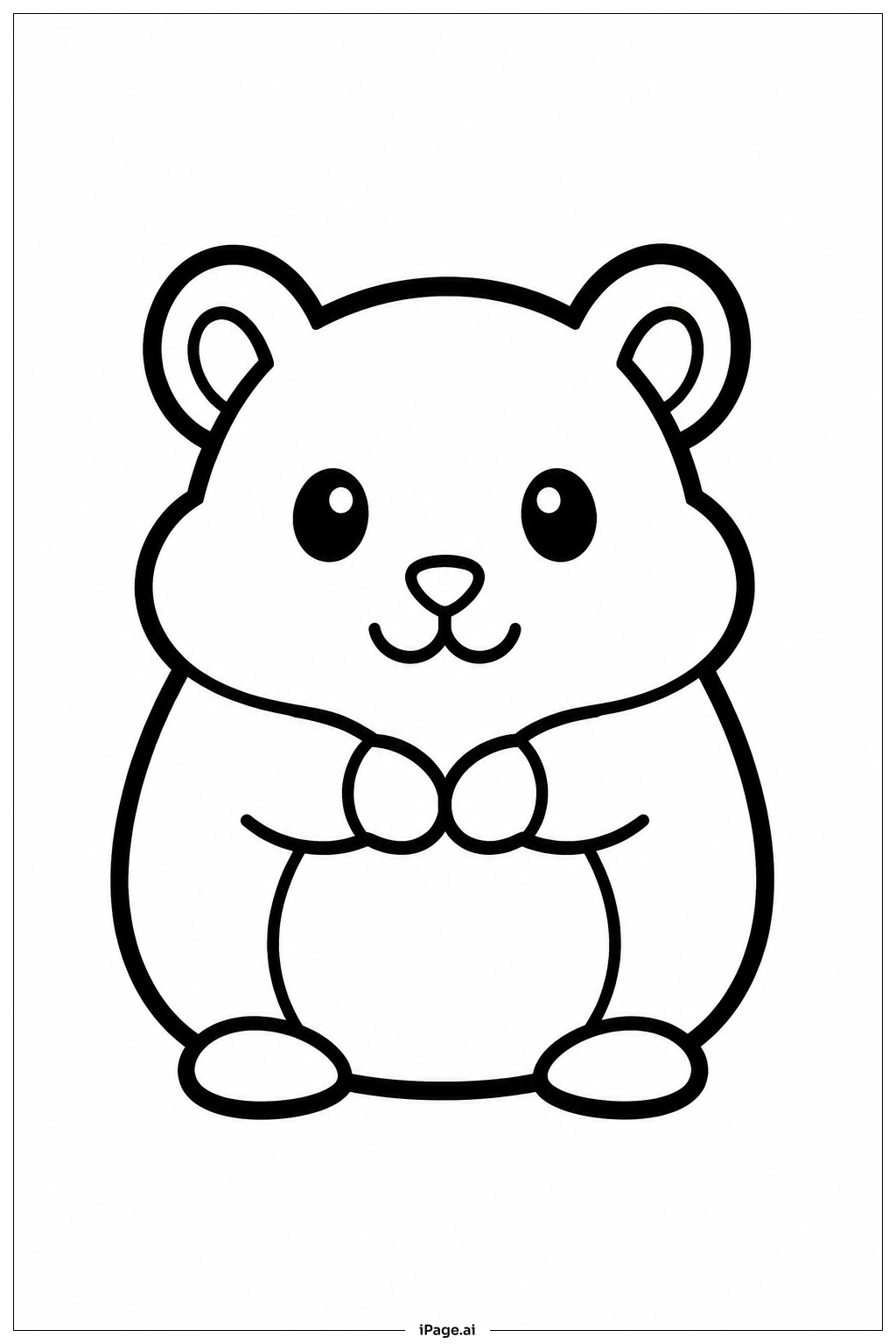
Coloring tips: How to color Cute Animal Little Hamster coloring page well?
Start with the lightest colors first and work your way to the darker shades. Use a warm golden brown or honey color for the hamster's back and sides. Leave the belly area a soft cream or pale yellow to show the lighter underfur. Color the big round eyes dark brown or black, and add a tiny white dot to make them look shiny and alive. Use a soft pink for the nose, inner ears, and paw pads. The cheeks can be given a gentle rosy blush to make the hamster look extra cute and chubby. Try blending two shades of brown together for a fluffy, realistic fur effect. You can use colored pencils, crayons, or watercolors — all work great for this sweet little character!
Coloring challenges: Which parts are difficult to color and need attention for Cute Animal Little Hamster coloring page?
• Tiny Facial Features: The hamster's face has very small details, including a tiny nose, dot-sized eyes, and thin whiskers. Coloring these areas neatly can be tricky, especially for younger children. Using a fine-tipped marker or a sharpened colored pencil will help you stay within the lines and bring the face to life without smudging.
• Fur Texture and Blending: Creating a soft, fluffy look for the hamster's fur requires layering and blending different shades of brown, tan, and cream. Simply using one flat color can make the hamster look flat and lifeless. Try using light strokes that follow the direction of the fur to give it depth and a natural feel.
• Color Transition on the Belly: The hamster has a lighter belly compared to its darker back. Getting a smooth, gradual transition between these two areas without harsh lines takes practice. Gently feathering the colors where they meet will create a more natural and realistic appearance.
• Small Ear Details: The inner ear is a small, curved space that needs a different color from the outer ear. Filling this tiny area with pink or light rose without going outside the lines requires a steady hand and a fine coloring tool.
• Keeping Colors Consistent: Since the hamster's body is round and compact, it can be easy to accidentally use too many colors and make it look patchy. Planning your color choices ahead of time and sticking to a simple, warm color palette will keep the finished result looking polished and cute.
Benefits of coloring books: Advantages of drawing Cute Animal Little Hamster coloring page
Coloring this cute little hamster offers a wonderful range of benefits for children and beginners alike. First, it helps build fine motor skills. Carefully filling in small areas like the ears, eyes, and paws trains the hand muscles and improves pencil control, which also supports handwriting development. Second, it encourages creativity. Choosing colors, experimenting with shading, and deciding how to bring the hamster to life sparks imaginative thinking and personal expression. Third, it promotes focus and patience. Staying within the lines and blending colors smoothly requires concentration, helping children practice sitting still and working carefully toward a goal. Fourth, it is a calming activity. The gentle, repetitive motion of coloring has a soothing effect that can reduce stress and anxiety, making it a great quiet-time activity after a busy day. Finally, finishing the page gives children a real sense of accomplishment and pride. Seeing the hamster come to life in their own chosen colors boosts self-confidence and motivates them to keep creating. It is a simple, joyful activity that supports both emotional and developmental growth.