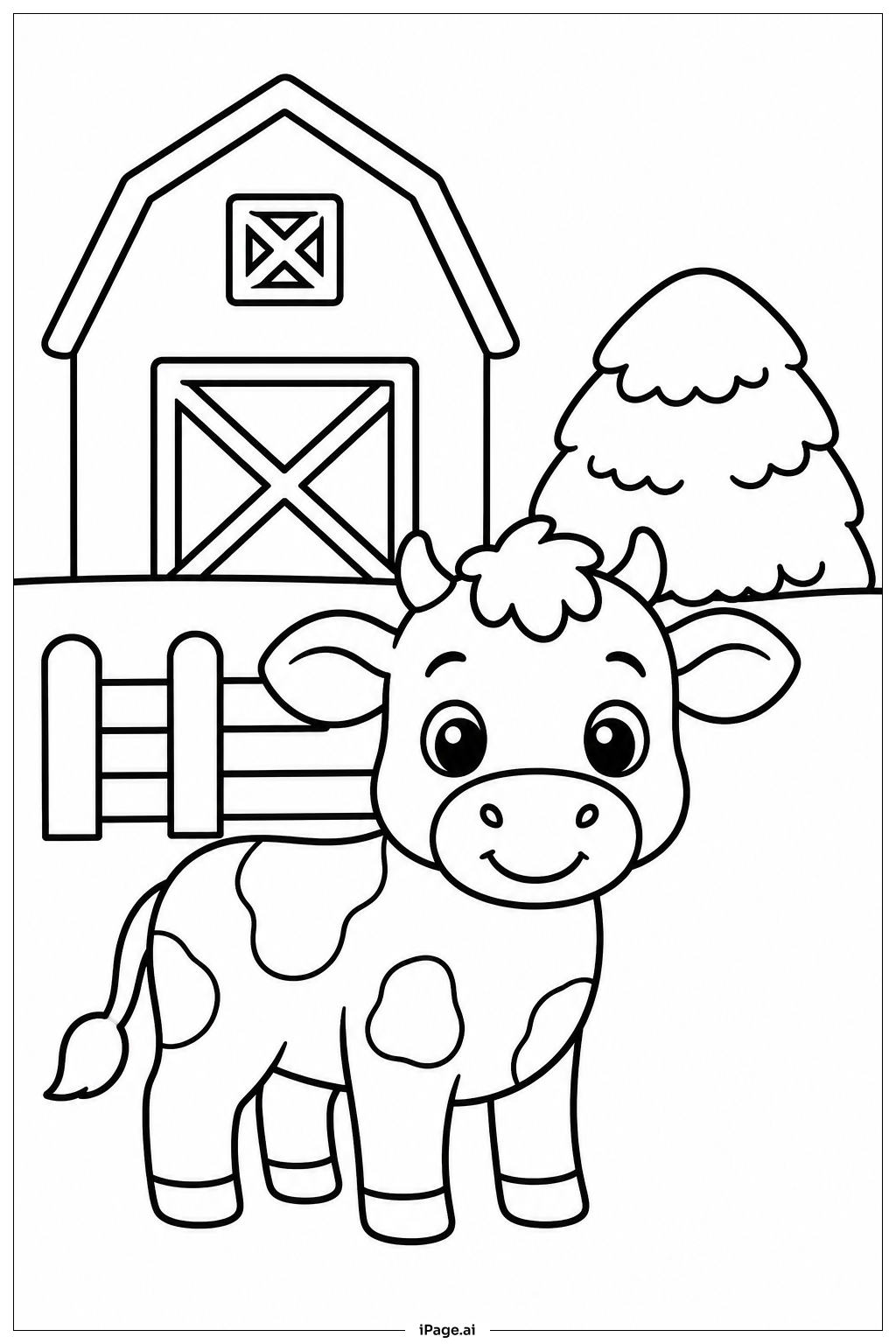
Coloring tips: How to color Cute Animal Farmyard Team coloring page well?
You can use soft browns and creamy whites for the cow’s body, making its spots stand out with darker shades. The pig is great for shades of pink, from light blush to brighter rose colors. The fluffy sheep looks perfect with white or light gray wool, and you can add hints of blue or green for shadow effects. The duck works well with bright yellow or orange, highlighting its cheerful wings. For the little chick, try warm yellows or gold tones. Don’t forget the grass can be any green you like, from light lime to deep forest green. Use browns for the fence and add simple sky blues or soft pastels in the background to complete the farm scene.
Coloring challenges: Which parts are difficult to color and need attention for Cute Animal Farmyard Team coloring page?
• Animal Details: Some animals have small features like the cow’s eyes and pig’s snout which need careful coloring to keep them neat but expressive.
• Mixed Textures: The fluffy wool of the sheep contrasts with the smooth skin of the pig and the soft feathers of the duck, requiring different coloring techniques to show texture.
• Close Placement: The animals are drawn close together, so colors shouldn’t bleed over to neighboring shapes. Coloring inside the lines will take attention.
• Shading: To make the animals look three-dimensional, subtle shading is useful but tricky for beginners who may find blending colors difficult.
• Background Simplicity: The background has fewer lines but balancing the colors between the colorful animals and the natural farm setting can be challenging for color choices.
Benefits of coloring books: Advantages of drawing Cute Animal Farmyard Team coloring page
Coloring this Cute Animal Farmyard Team page helps children practice fine motor skills as they carefully fill in small and different shapes. It encourages creativity as kids decide what colors to use for each animal and the scene around them. The image also boosts concentration and patience since coloring within the lines and shading takes focus. Engaging with familiar farm animals may stimulate learning by connecting what kids know about animals with art. Lastly, the cheerful friendly animals can bring joy and calm, making the coloring activity a relaxing and rewarding experience for kids aged 4–16.