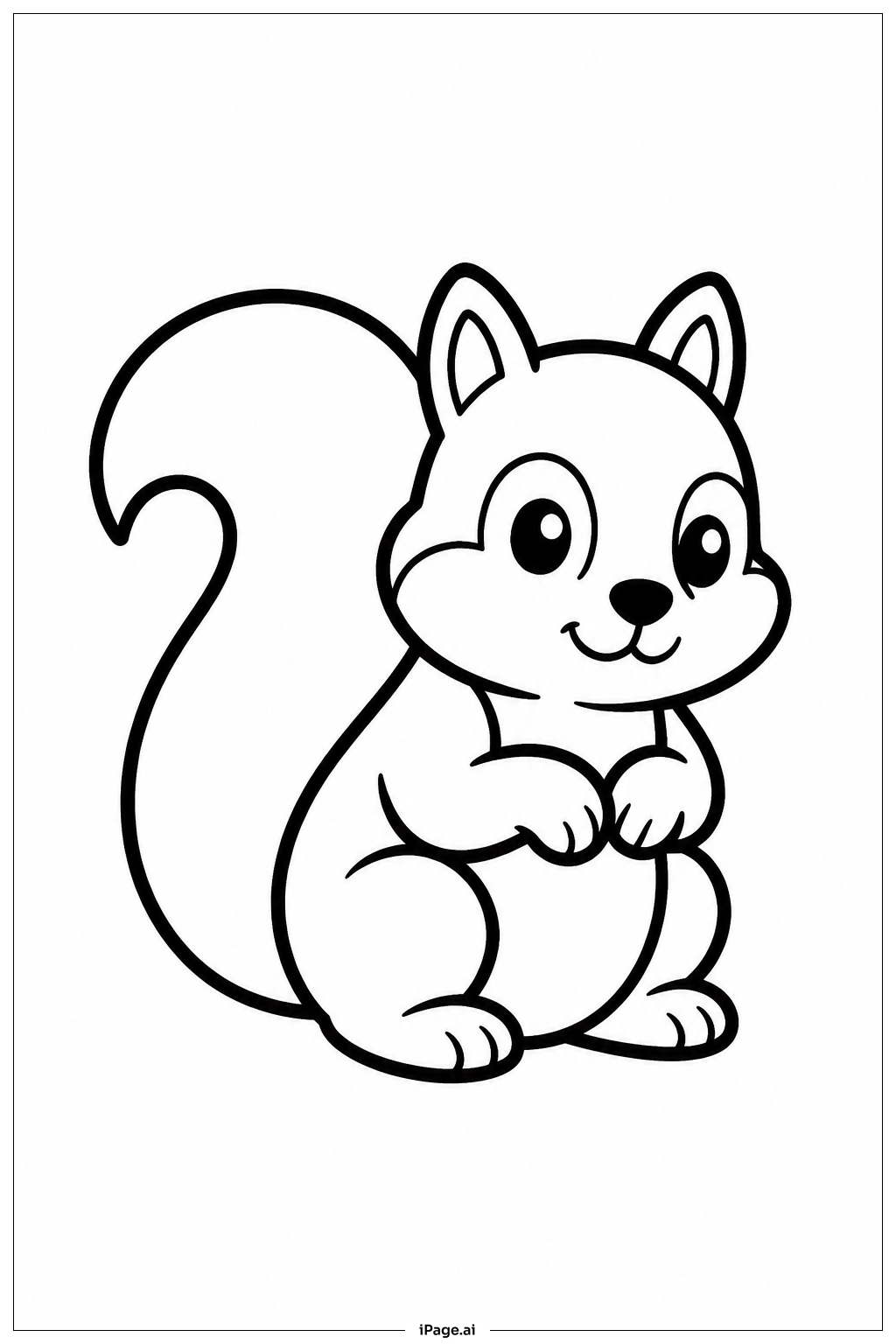
Coloring tips: How to color Cute Animal Curious Squirrel coloring page well?
When coloring this image, consider using warm brown tones for the squirrel’s fur to bring out its natural look. Light and dark shades of brown can add depth, especially on the tail and body to show fluffiness. The acorn can be a deep brown with a different shade for its cap. For the eyes, use black with a small white highlight to make them sparkle. The background leaves and plants are opportunities to use vibrant green, yellow, or even autumn colors like orange and red. Adding shading around the edges of the squirrel will make it pop from the scene. Don’t be afraid to use your imagination and bright colors to create a lively forest environment!
Coloring challenges: Which parts are difficult to color and need attention for Cute Animal Curious Squirrel coloring page?
• Fine Details: The squirrel’s fur lines and the tiny claws require careful coloring to stay within narrow spaces without smudging. This can be challenging for younger colorers.
• Tail Texture: The bushy tail has many small lines that suggest softness. It takes patience to add shading and different browns to make it look realistic.
• Small Objects: The acorn and leaves need precise coloring since they are small but important elements for enhancing the natural feel.
• Contrast Balance: Adding enough contrast between the squirrel and the background can be tricky, requiring careful use of light and dark colors.
• Eye Reflection: Coloring the eyes realistically means creating a highlight effect that can be hard to do neatly but helps bring the squirrel to life.
Benefits of coloring books: Advantages of drawing Cute Animal Curious Squirrel coloring page
Coloring this Cute Animal Curious Squirrel image helps children and adults improve fine motor skills, especially hand-eye coordination from working on detailed areas. It encourages observation by focusing attention on natural patterns like fur and leaves. Engaging with this image sparks creativity as colorers choose and mix tones to create a realistic or imaginative woodland scene. This activity also promotes patience and concentration because of the small details. Finally, coloring animals strengthens a connection with nature and fosters appreciation for wildlife through art.