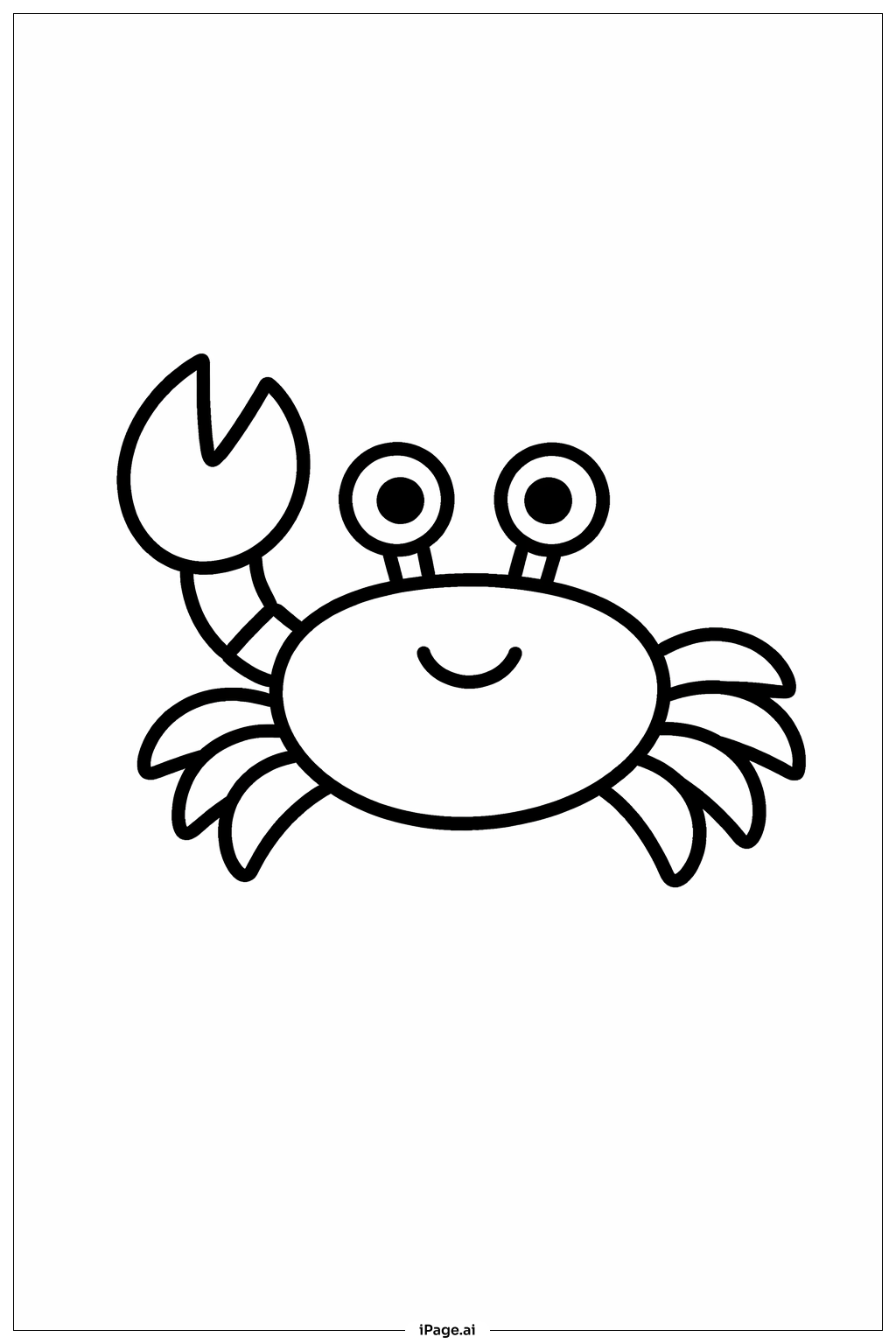
Coloring tips: How to color Crab Waving Claw coloring page well?
Use bright, warm colors like red, orange, or yellow for the crab's body to make it lively. The eyes can be colored white with black pupils. You can try different shades for the legs and claws, maybe a bit lighter or darker than the body. Add blue or green for the background to represent water or seaweed. Feel free to add small details like sand or bubbles around the crab to make the picture more interesting. Try using crayons or markers to get nice bold colors.
Coloring challenges: Which parts are difficult to color and need attention for Crab Waving Claw coloring page?
1. Coloring inside the small areas like the eyes and the lines near the claw can be tricky and needs careful control. 2. The curved shape of the crab’s body means shading needs attention if you want to add depth and make it look 3D. 3. Keeping the color uniform in bigger spaces like the body while avoiding streaks might require patience and layering. 4. Balancing colors between the claw and the legs to keep the crab looking natural can be challenging for beginners. 5. Creating a realistic sea background while keeping focus on the crab needs thoughtful color choices.
Benefits of coloring books: Advantages of drawing Crab Waving Claw coloring page
Coloring this friendly crab helps improve hand-eye coordination and fine motor skills as kids carefully color within the lines. It encourages creativity by letting children choose their favorite colors and design the background. Coloring also teaches patience and focus, especially with small details like the eyes and claws. Additionally, kids learn about sea creatures and can spark interest in marine life. This fun activity supports relaxation and self-expression, making it great for children’s development and enjoyment.



