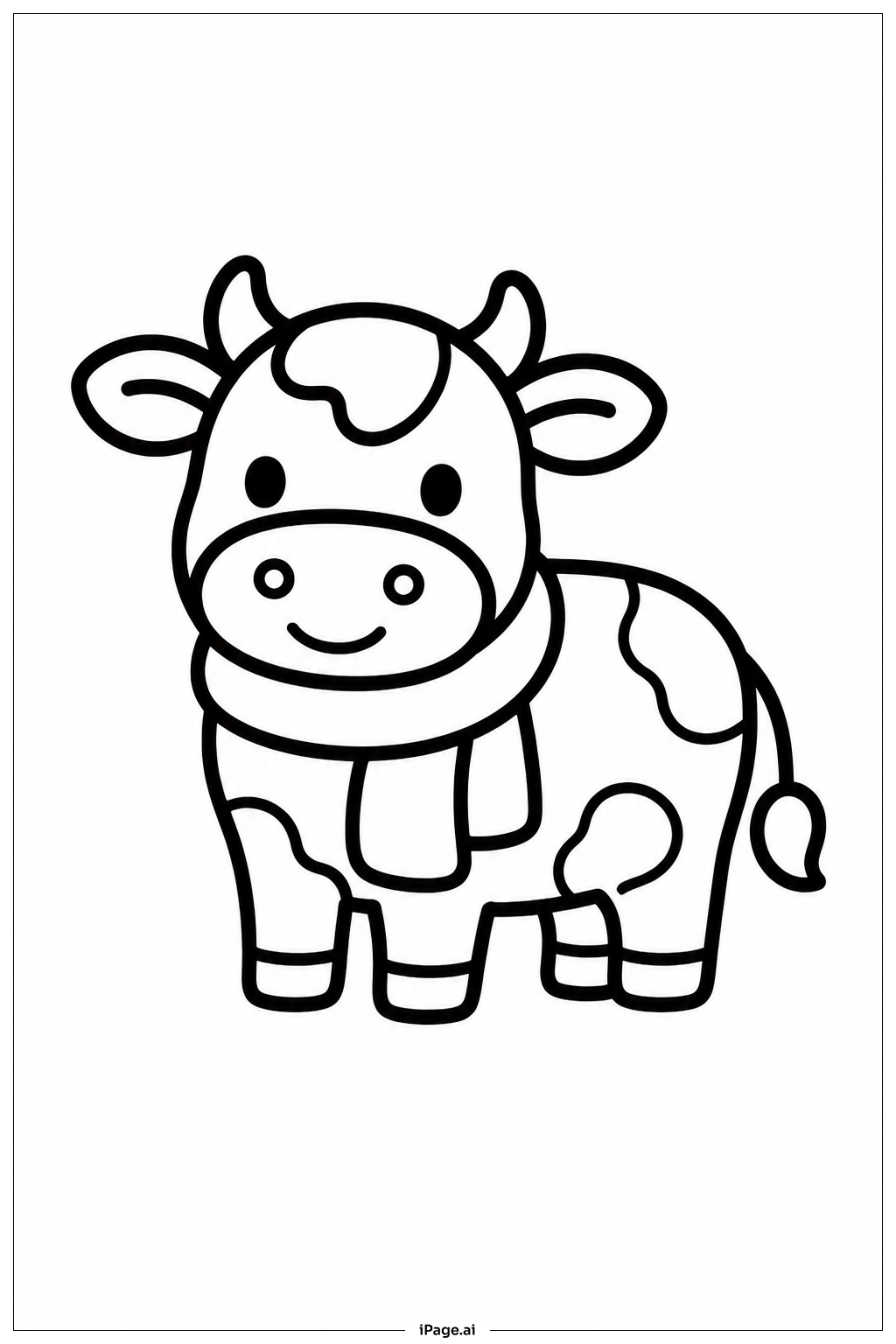
Coloring tips: How to color Cow Wearing Scarf coloring page well?
For this Cow Wearing Scarf, you can use natural colors like brown, white, or black for the Cow’s body. Try using soft shades like light brown or cream to keep it gentle and realistic. The scarf is the perfect chance to be creative—use bright colors like red, blue, or green, or even mix patterns like stripes and dots. You can add shading around the folds of the scarf to make it look fluffy. Don’t forget to color the Cow’s eyes with dark brown or black, adding a little white spot to make them look shiny and lively. The background can be light and simple with soft blues or greens to suggest a chilly day.
Coloring challenges: Which parts are difficult to color and need attention for Cow Wearing Scarf coloring page?
• Small Details on the Scarf: The folds and drapes of the scarf have narrow areas that may be tricky for younger children to color inside without going outside the lines. Patience is needed for neat coloring. • Facial Features: The Cow’s eyes, nostrils, and mouth are delicate parts that require precision to highlight its gentle expression well. Coloring these small features neatly can be challenging. • Smooth Body Curves: The Cow’s rounded body needs even coloring to avoid patchy or streaky areas. Blending colors smoothly helps achieve a soft look but takes practice. • Horns and Ears: These parts are close to the scarf, so careful coloring is needed to avoid mixing colors and maintaining clear borders. • Pattern on the Scarf: If a child chooses to add patterns like stripes or dots, maintaining consistent size and spacing can be difficult but will improve fine motor skills.
Benefits of coloring books: Advantages of drawing Cow Wearing Scarf coloring page
Coloring this Cow Wearing Scarf helps children practice hand-eye coordination and fine motor control by working on small details and smooth curves. It encourages creativity in choosing colors for both the Cow and its scarf, promoting imagination and color awareness. Coloring the scarf’s folds can teach patience and careful attention to detail. The friendly animal subject can also build emotional connection and empathy through art. Overall, it offers a relaxing and rewarding activity that supports cognitive and artistic skills in an enjoyable way.