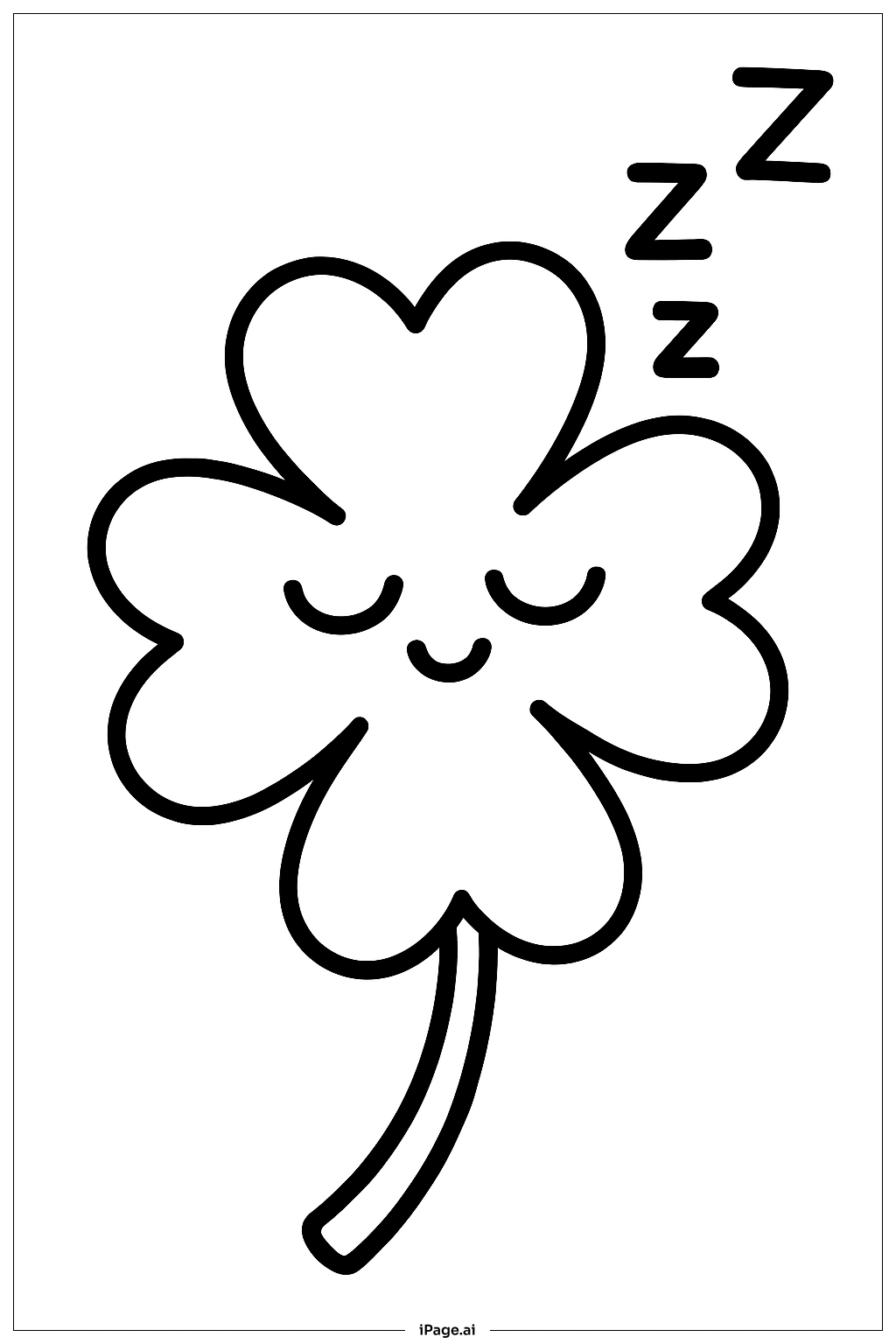
Coloring tips: How to color Sleeping Clover coloring page well?
Use different shades of green for the clover leaves to create a natural look. You can use a lighter green for some leaves and a darker green for others. Color the stem with green or brown to make it realistic. For the face, gentle colors like soft pink or light peach can bring a sweet touch. The Z’s can be colored with blue or purple to show calmness and sleep. Try using crayons, colored pencils or markers for smooth coloring.
Coloring challenges: Which parts are difficult to color and need attention for Sleeping Clover coloring page?
1. Staying within the small face details like the eyes and mouth can be tricky for young kids. 2. Coloring the heart-shaped leaves evenly without overlapping the edges may need careful attention. 3. Blending different greens well to make the clover look natural can be challenging for beginners. 4. Coloring the thin stem without crossing lines requires steady hand control. 5. Making the 'Z' shapes colorful while keeping them neat might be a little tough for younger children.
Benefits of coloring books: Advantages of drawing Sleeping Clover coloring page
Coloring this sleeping clover helps kids practice fine motor skills by controlling crayons or pencils inside small spaces. It encourages creativity with color choices for the leaves and face. The peaceful image can inspire calmness and relaxation during the activity. Kids will also learn about nature and the shape of clover leaves. Overall, it is a fun and gentle way to improve focus and hand-eye coordination.