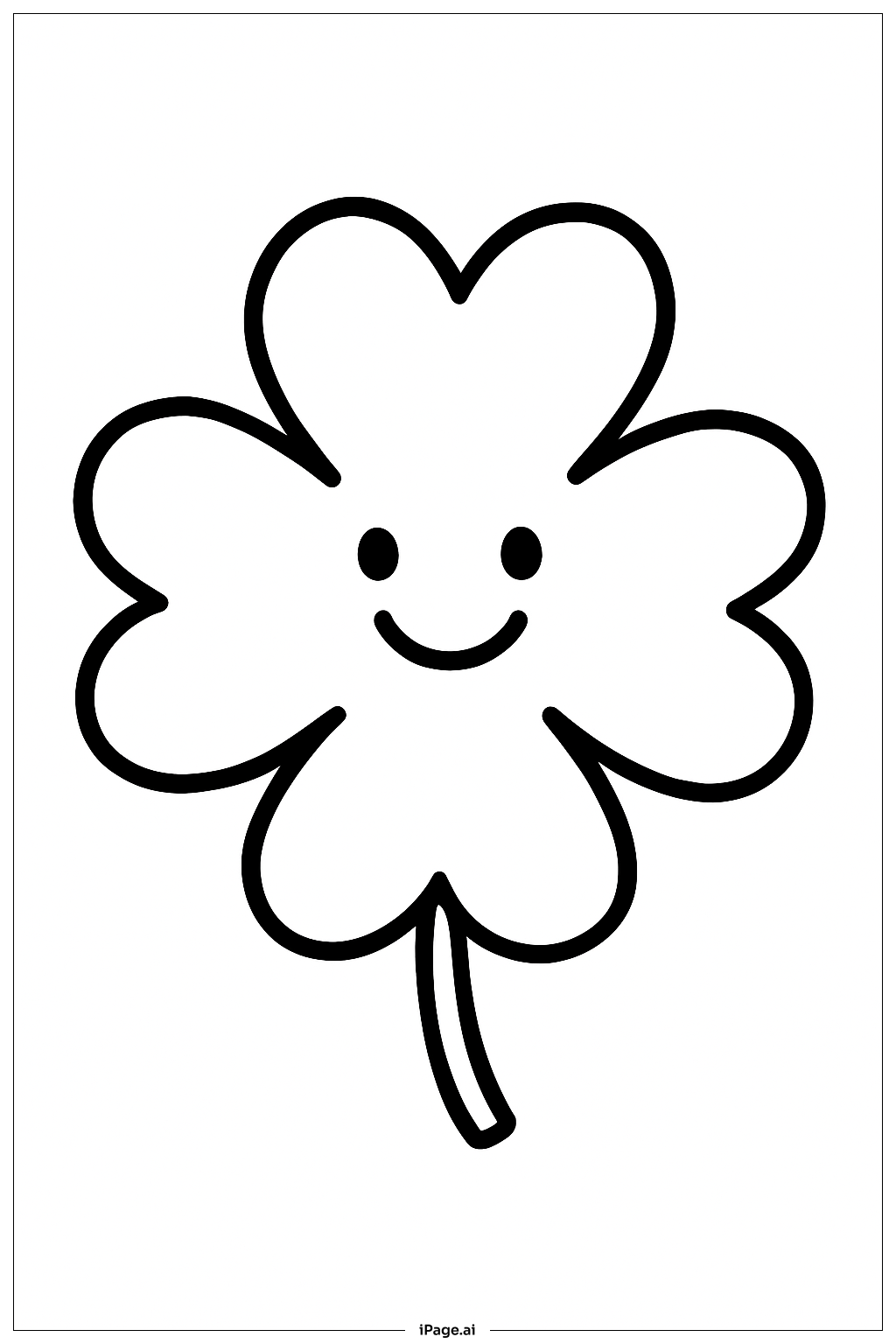
Coloring tips: How to color Happy Clover Face coloring page well?
Start by choosing a vibrant green for the clover leaves, perhaps using different shades for each leaf to add depth. You could make one leaf lighter and another darker green to create dimension. The face offers wonderful opportunities for creativity. Try soft peach or light pink for the skin tone, and color the cheeks with bright pink or rosy red to emphasize the happy expression. The eyes can be colored with blue, brown, or green, and leave the highlight dots white to make them sparkle. For the smile, use a darker shade like red or pink. The stem can be a darker forest green or brown. Consider adding yellow or gold sparkles around the clover to enhance its lucky, magical feeling. You might even add a subtle background wash in light blue or soft yellow to make the clover pop off the page.
Coloring challenges: Which parts are difficult to color and need attention for Happy Clover Face coloring page?
• Leaf Vein Details: Each clover leaf contains delicate vein lines that radiate from the center outward. Coloring these thin lines requires careful control and a steady hand. Young children may find it challenging to stay within these narrow spaces, while older colorists can use fine-tipped markers or colored pencils to create realistic shading along each vein, perhaps using darker greens in the veins and lighter greens in the spaces between.
• Maintaining Consistent Green Tones: With four separate leaves, it can be tricky to keep the green color consistent across all sections, especially when coloring with markers that may dry out or crayons that apply unevenly. Alternatively, creating intentional variation between the leaves to show natural light and shadow requires planning which leaves should be lighter or darker for a three-dimensional effect.
• Eye Highlights and Expression: The eyes contain small circular highlights that should remain white or very light to create that signature sparkle. Younger artists might accidentally color over these areas, losing the lively expression. Additionally, blending colors smoothly within the small eye spaces to create depth while preserving highlights demands precision and attention to detail.
• Smooth Cheek Blending: The round cheeks look best when colored with a gentle gradient from darker pink on the edges to lighter pink toward the center, creating a soft, rosy appearance. Achieving this smooth transition without harsh lines or streaks requires patient layering and blending techniques that may be difficult for beginners or when using less blendable coloring tools like standard crayons.
Benefits of coloring books: Advantages of drawing Happy Clover Face coloring page
Coloring this Happy Clover Face offers numerous developmental benefits for children. The clear, defined sections help young artists practice staying within lines, improving fine motor control and hand-eye coordination. The symmetrical design of the four leaves teaches visual balance and pattern recognition. Children can learn about nature and the special meaning of four-leaf clovers while expressing creativity through color choices. The friendly face encourages emotional connection and positive feelings, making coloring time enjoyable and stress-relieving. Deciding on color schemes for different elements develops planning and decision-making skills. The varying sizes of spaces, from large leaves to small facial features, accommodate different skill levels and build confidence as children successfully complete each section. This cheerful image promotes concentration and mindfulness, providing a calming activity that can improve focus and patience in young learners.