Coloring tips: How to color Clover with Smiley Bug coloring page well?
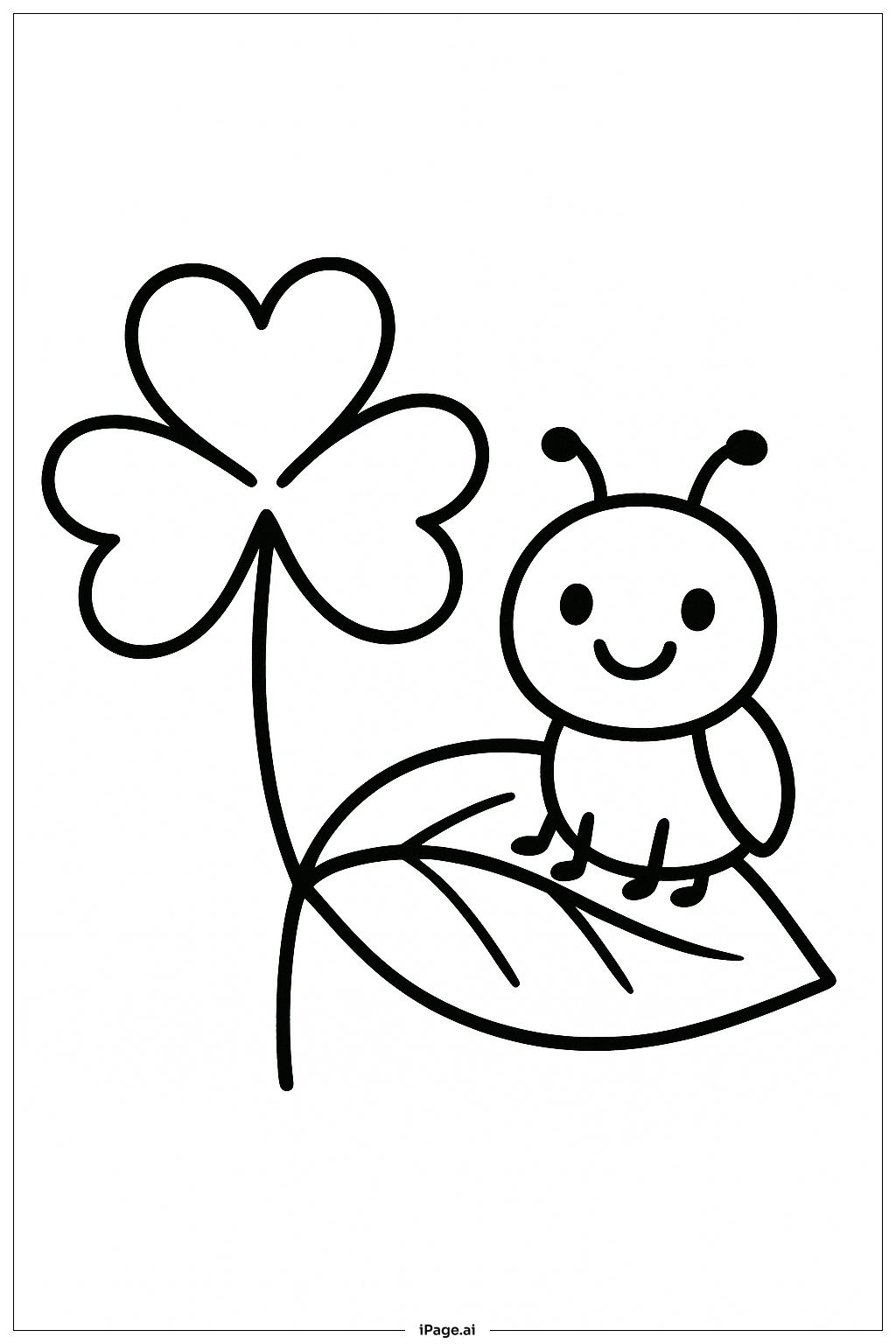
Use bright green colors for the clover and the leaf to make them look fresh. The bug can be colored in any fun colors like red, yellow, or orange. You could add details like black spots on the bug’s wings. Try to color inside the lines carefully, especially around the bug’s small legs and antennae. Use a lighter green for the leaf veins to add some contrast.
Coloring challenges: Which parts are difficult to color and need attention for Clover with Smiley Bug coloring page?
1. The small legs and antennae of the bug are thin and close to each other, making it tricky to color neatly without going outside the lines.
2. The heart-shaped leaves of the clover have curved edges that require careful coloring to keep shapes clear.
3. The veins on the leaf are narrow lines, needing steady hands to color them distinctly from the rest of the leaf.
4. Choosing colors that contrast well between the bug, clover, and leaf might be a bit challenging for younger kids.
5. Coloring the bug's face to keep the smiling expression clear while adding color is important and may need precision.
Benefits of coloring books: Advantages of drawing Clover with Smiley Bug coloring page
Coloring this image helps children practice fine motor skills by staying within the small spaces like the bug's legs and antennae. It encourages creativity in choosing colors for the bug and the clover, promoting imagination. The scene introduces them to natural elements like leaves and insects, fostering an appreciation for nature. Coloring also enhances focus and patience, especially when working on detailed parts like leaf veins and curved edges. Overall, it provides a fun way to develop artistic skills and enjoy nature-themed creativity.