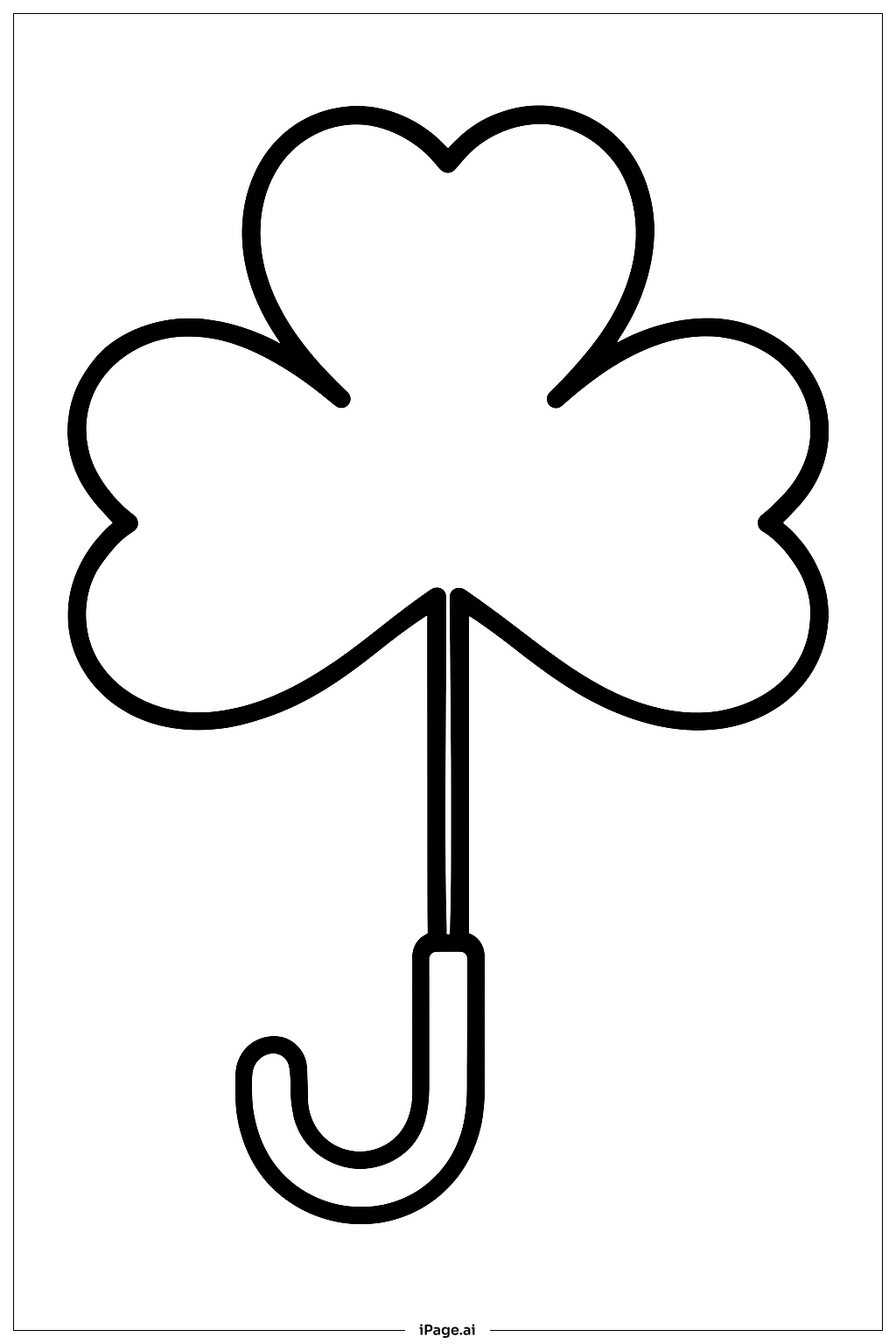
Coloring tips: How to color Clover Umbrella coloring page well?
Try using different shades of green to color the clover umbrella for a natural look. You can use light green for the leaf segments and deepen the veins with a darker green to add texture. For a fun twist, consider coloring some sections in pastel colors like soft pink or light yellow to give a magical feel. The small floating clover leaves around the umbrella can be colored in varying shades to create depth. The stem handle can be shaded brown or dark green. Feel free to add a background with soft blues or grays for a rainy day scene or sunny yellows for a bright, cheerful look.
Coloring challenges: Which parts are difficult to color and need attention for Clover Umbrella coloring page?
• Leaf Vein Details: The thin veins on each clover leaf segment require careful coloring to stay inside the lines and highlight the texture without overpowering the leaf.
• Symmetry of Leaf Segments: Each of the four leaf segments is similarly shaped, so maintaining even coloring and balance can be tricky to keep the umbrella looking neat.
• Small Floating Leaves: The tiny clover leaves scattered around could be difficult to color cleanly due to their small size.
• Shading and Depth: Adding realistic shading to the clover leaves and umbrella handle takes attention to detail, especially blending different greens smoothly.
• Curved Stem Handle: The stem handle has a subtle curve that requires smooth coloring to avoid streaks and highlight the rounded shape effectively.
Benefits of coloring books: Advantages of drawing Clover Umbrella coloring page
Coloring this Clover Umbrella image helps develop fine motor skills through detailed work on the clover leaf veins and small floating leaves. It encourages focus and patience, especially when working on symmetric shapes and subtle shading. Choosing colors and blending them teaches color theory and creativity, letting children experiment with natural and imaginative palettes. This playful design also inspires appreciation for nature by combining plant shapes with everyday objects. Overall, it’s a relaxing and educational activity that promotes hand-eye coordination and cultivates artistic expression.