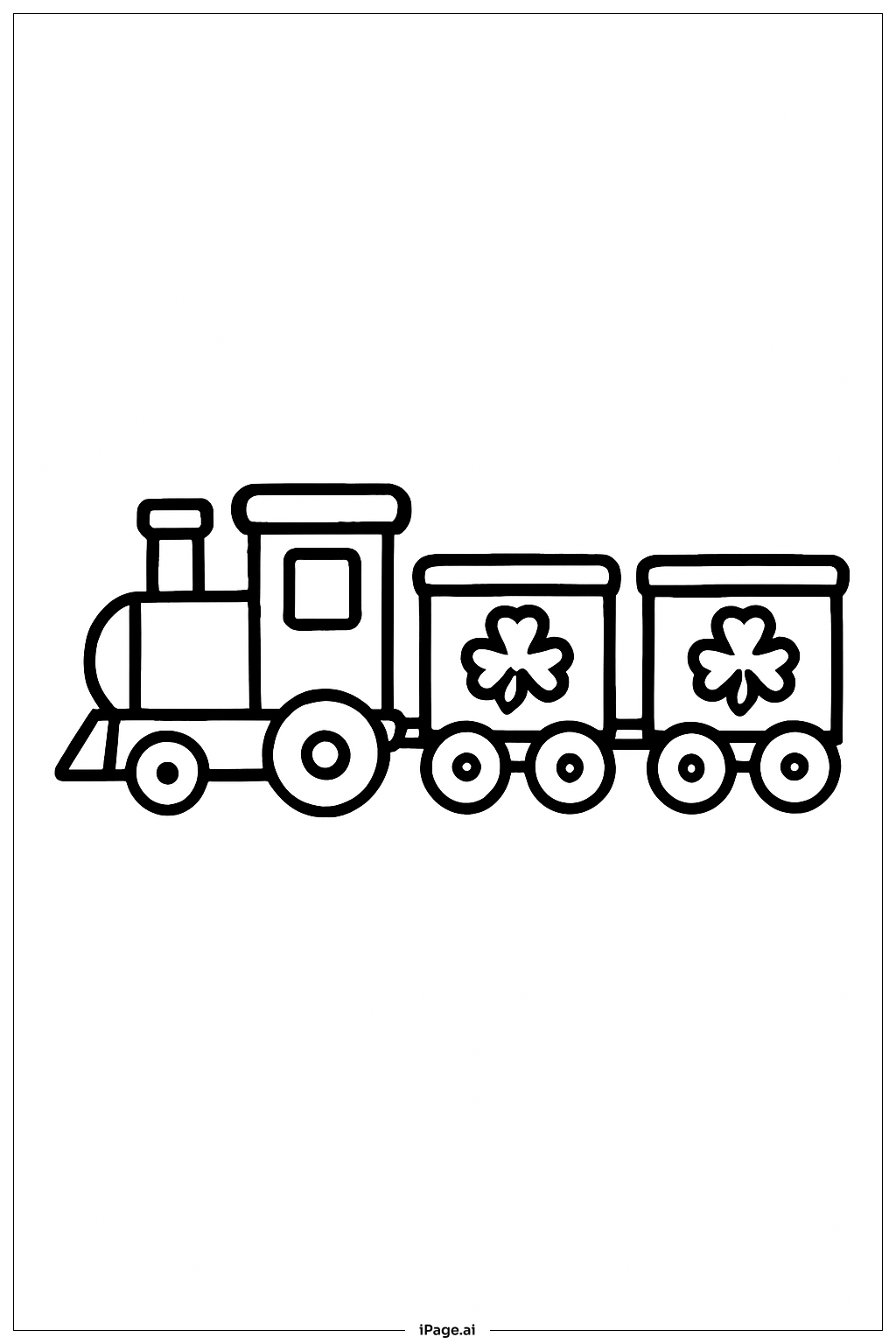
Coloring tips: How to color Clover Train Toy coloring page well?
Start with the train engine using bright, bold colors like red, blue, or green to make it stand out. Color the smokestack in contrasting shades, perhaps gray or black with a touch of yellow for the top. For the clover-filled cargo cars, use various shades of green for the shamrocks, mixing light and dark tones to create depth. Try lime green, emerald, and forest green together. The train cars themselves could be yellow, orange, or purple to complement the green clovers. Make the wheels dark gray or black, and add metallic silver or gold accents to the connecting rods for a realistic touch. Color the track brown or gray to represent wood or metal rails. Consider adding a sunny yellow background or a blue sky to complete the scene and make your lucky train truly shine.
Coloring challenges: Which parts are difficult to color and need attention for Clover Train Toy coloring page?
• Small Clover Details: The numerous four-leaf clovers filling the cargo cars present a challenge with their small, intricate leaf shapes. Each clover has four heart-shaped leaves that meet at the center, requiring careful coloring within tiny spaces. Young colorists may find it tricky to keep different shades of green separate and prevent colors from bleeding into adjacent clovers. This section demands patience and fine motor control to achieve clean, distinct shamrocks.
• Wheel Mechanisms and Connecting Parts: The train wheels feature detailed mechanical elements including circular rims, spokes, and connecting rods that link the wheels together. These small mechanical parts require precision coloring to maintain the distinction between different components. The curved connecting rods and the space between wheels and train body need steady hands to avoid crossing lines. This area helps develop hand-eye coordination but may frustrate beginners.
• Curved Track Lines: The railway track curves gently beneath the train, with parallel lines that must be colored consistently. Maintaining even coloring along these curved paths while keeping the lines uniform in width challenges spatial awareness and control. The ties or sleepers that cross the tracks also require attention to keep them evenly spaced and colored.
• Layered Train Cars: The three-dimensional aspect of the train cars, showing depth with overlapping elements and different planes, requires understanding of shading and color variation. Deciding which parts should be lighter or darker to show dimension adds complexity beyond simple flat coloring.
Benefits of coloring books: Advantages of drawing Clover Train Toy coloring page
Coloring this Clover Train Toy page offers wonderful developmental benefits for children. The intricate clover details strengthen fine motor skills and hand-eye coordination as young artists carefully fill small spaces. The repetitive nature of coloring multiple shamrocks encourages focus and concentration, building attention span in an enjoyable way. Children learn about color mixing and combinations as they experiment with different green shades for the clovers and complementary colors for the train. The mechanical elements of the train introduce basic concepts of how vehicles work, sparking curiosity about transportation and engineering. The lucky clover theme provides opportunities to discuss nature, seasons, and cultural symbols. This activity promotes patience and persistence as children work through detailed areas, building confidence with each completed section. The satisfying result of a colorful, completed train scene boosts self-esteem and provides a sense of accomplishment that encourages further creative exploration.