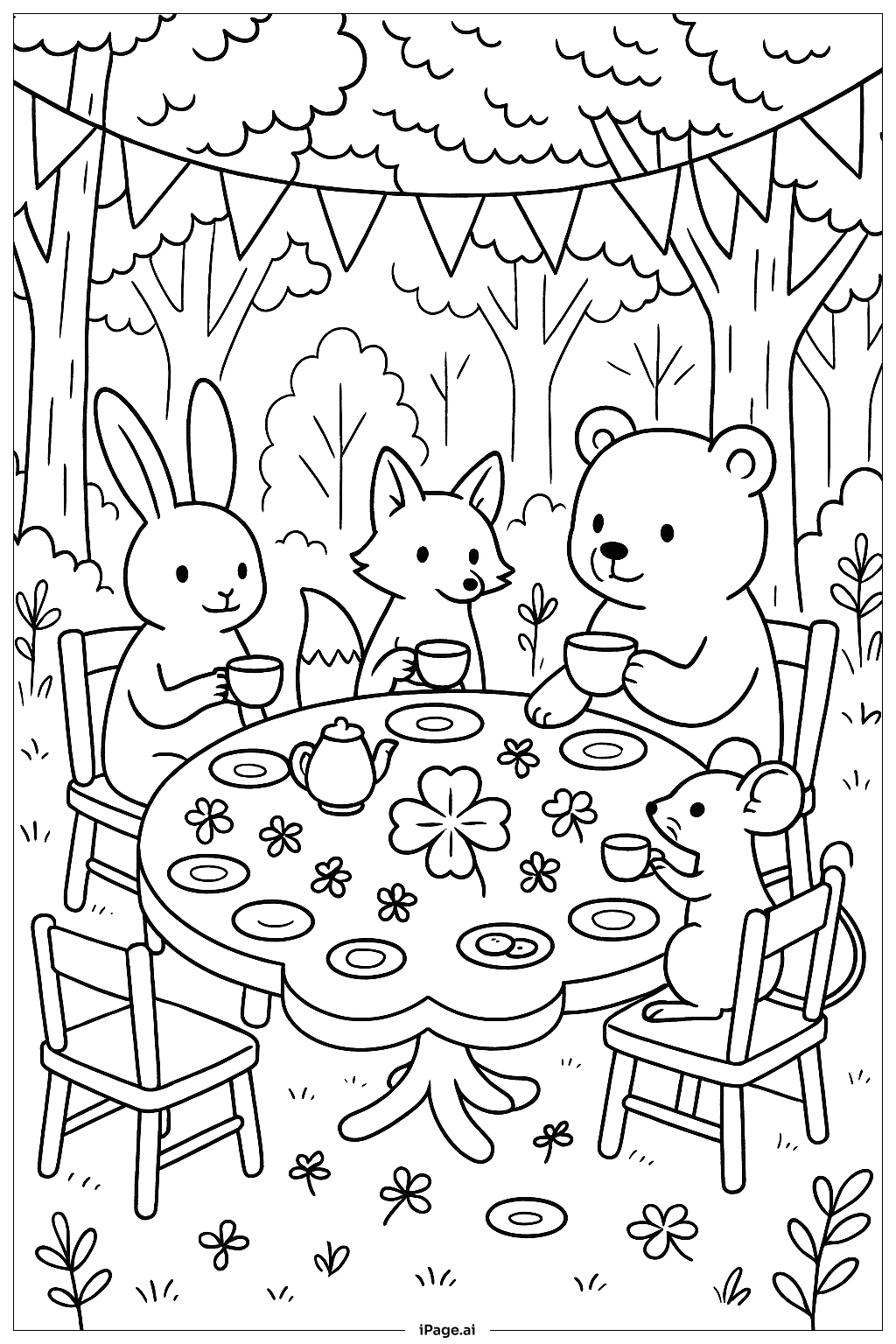
Coloring tips: How to color Clover Tea Party coloring page well?
Start with the clover leaves using various shades of green, from light lime to deep emerald, to create depth and dimension. Consider making the four-leaf clovers golden or sparkly to emphasize their special nature. For the teapot and cups, try soft pastels like lavender, mint, or cream with delicate floral accents. The clover patterns on the tea set can be colored in contrasting greens or golds. Use warm browns or tans for any cookies or treats. Add shading under the cups and around the clovers to create shadows and make elements pop. The table can be a natural wood tone or a cheerful color like sky blue. Don't forget to add light blue or gray for the steam rising from the teapot, using gentle strokes to show its wispy nature.
Coloring challenges: Which parts are difficult to color and need attention for Clover Tea Party coloring page?
• Intricate Clover Details: The multiple clover leaves with their heart-shaped leaflets require careful attention to stay within the lines. Each leaf has distinct sections that need individual coloring, and maintaining consistency across numerous clovers while adding variety can be challenging for younger colorists.
• Tea Set Ornamentation: The decorative patterns on the teapot and teacups demand precision and patience. These ornate details often include small clover motifs, delicate borders, and intricate designs that require fine motor control and a steady hand to color without bleeding into adjacent areas.
• Creating Depth and Dimension: Achieving realistic shading on the rounded surfaces of the teapot and cups requires understanding of light sources and gradual color transitions. The overlapping elements, such as clovers in front of the tea set or cups positioned at different depths, need careful color choices to create proper layering effects.
• Steam and Transparent Effects: Coloring the wispy steam rising from the teapot presents a unique challenge, as it requires light touches and blending techniques to achieve a realistic, translucent appearance that contrasts with the solid objects below.
• Color Harmony Balance: Coordinating colors between the natural green clovers and the tea party elements requires thoughtful planning to ensure the entire scene feels cohesive without appearing monotonous or chaotic.
Benefits of coloring books: Advantages of drawing Clover Tea Party coloring page
Coloring this Clover Tea Party scene offers wonderful developmental benefits for children and relaxation for all ages. The repetitive clover patterns help develop fine motor skills and hand-eye coordination through precise coloring within small spaces. The theme encourages creativity in color selection, allowing colorists to imagine their perfect tea party palette. The combination of natural and man-made elements teaches about harmonizing different textures and surfaces. For younger children, identifying and counting the three-leaf versus four-leaf clovers adds an educational element. The peaceful tea party setting promotes mindfulness and calm focus, making it an excellent stress-relief activity. The detailed patterns improve concentration span and patience. Additionally, the lucky clover symbolism can spark conversations about traditions, nature, and positive thinking, making this not just an artistic activity but also a meaningful one.



