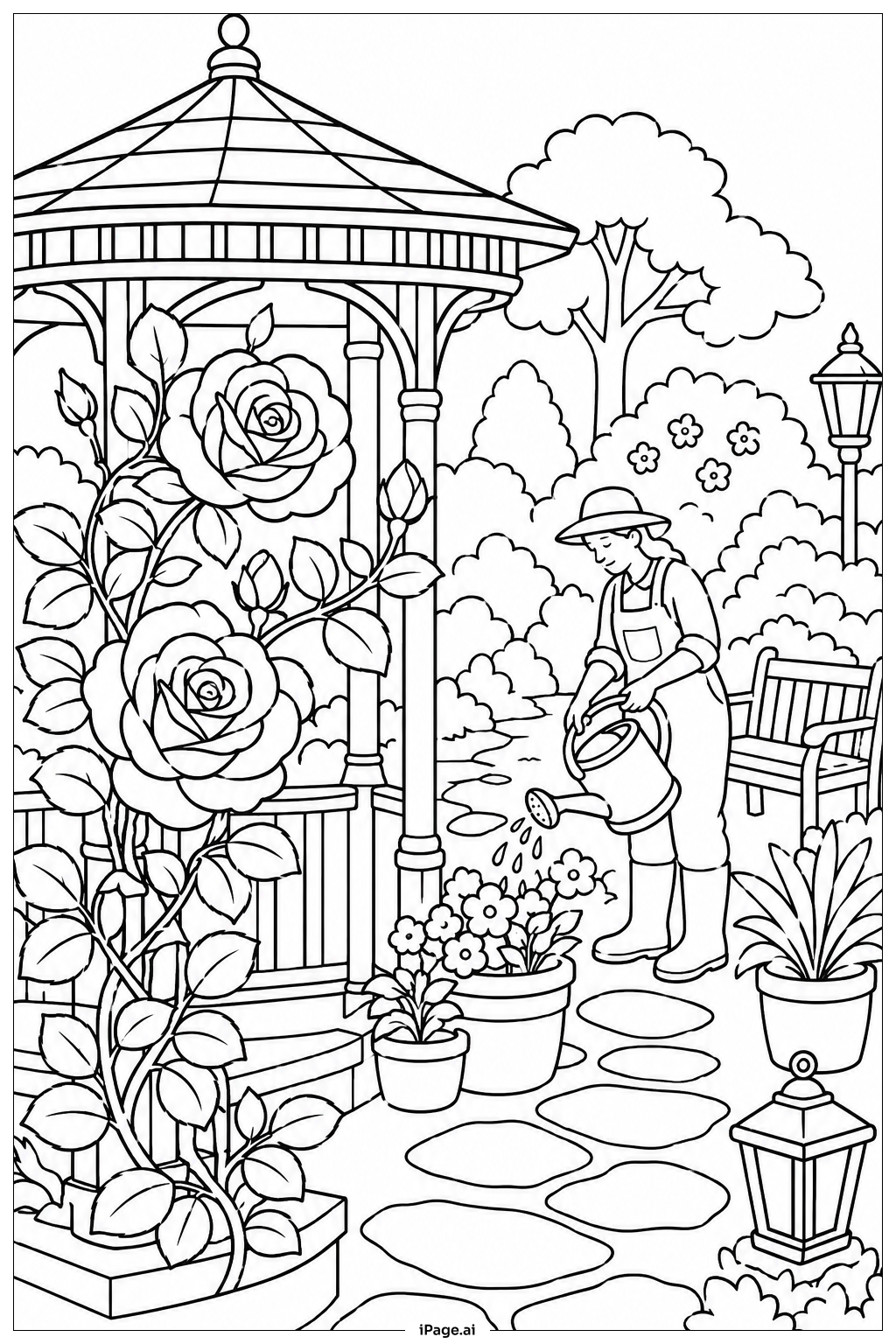
Coloring tips: How to color Clover Maze Garden coloring page well?
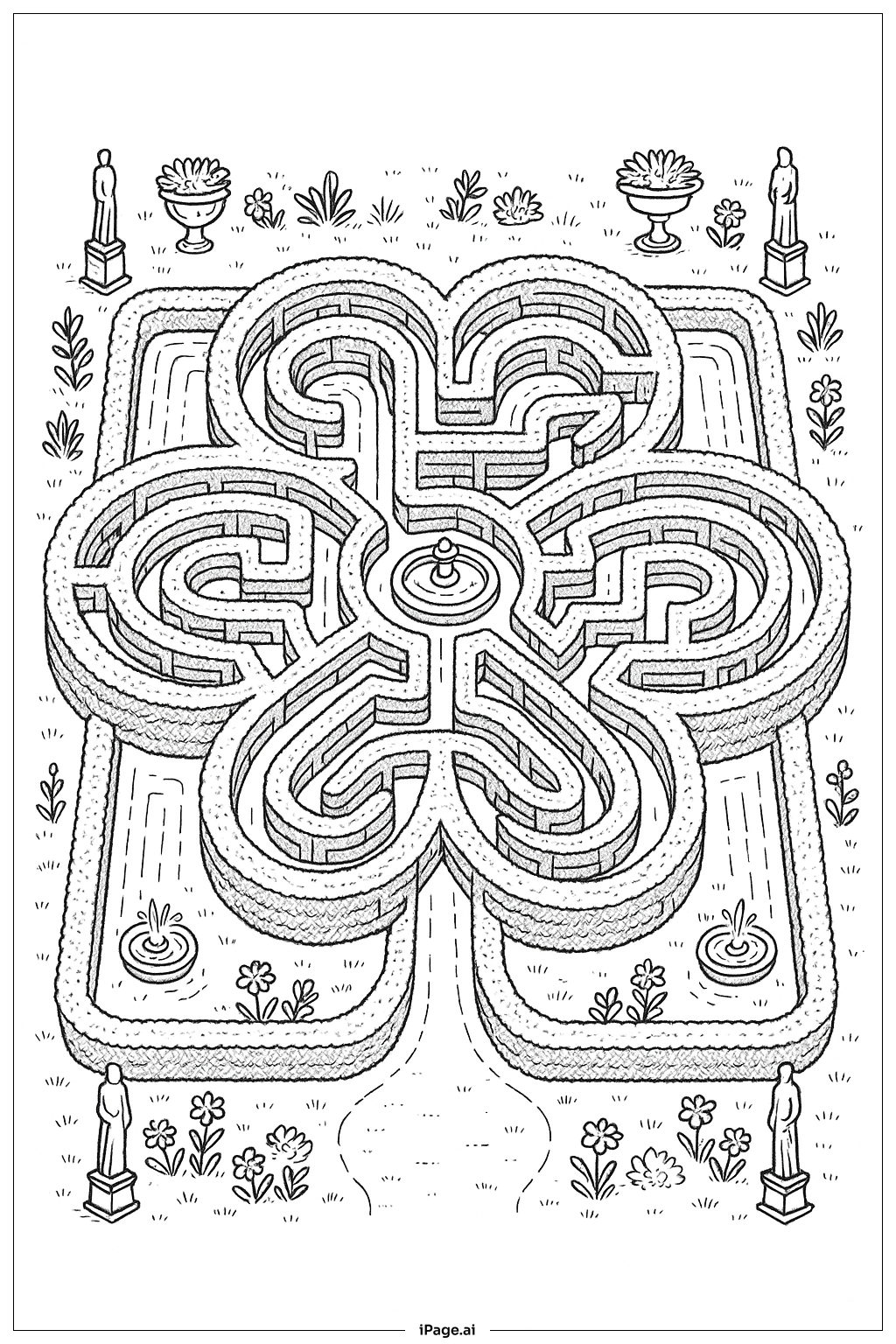
Use different shades of green for the hedges to show the texture and depth of the maze. You can use light green for the tops of the bushes and darker green for the sides to give a 3D effect. For the flowers, choose bright colors like red, yellow, pink, or purple to make them stand out. The statues can be colored stone gray or white with some shadows. Color the fountains with shades of blue and add white highlights to show flowing water. For the grass around the garden, use fresh green shades. The pathways can be colored with soft brown or beige tones to look like dirt or sand. Adding different colors will make the whole garden lively and inviting.
Coloring challenges: Which parts are difficult to color and need attention for Clover Maze Garden coloring page?
1. The maze has many small, winding paths close together, which can make it challenging to color inside the lines clearly.
2. Adding shadows and texture to the hedges requires careful blending of different shades of green.
3. The statues have detailed shapes that need careful coloring to show their form.
4. The fountains and water areas need smooth coloring to represent flowing water without making it look messy.
5. Flowers and plants are small and detailed, so coloring them neatly can be tricky for younger children.
Benefits of coloring books: Advantages of drawing Clover Maze Garden coloring page
Coloring this garden maze helps improve fine motor skills because it has many small details. It encourages creativity by letting you choose colors for plants, flowers, and statues. Coloring the pathways and maze edges helps with focus and patience. This picture also teaches about nature and garden layout while making the activity relaxing and fun. Overall, it is a wonderful way to enjoy art and learn about shapes and colors in a playful way.