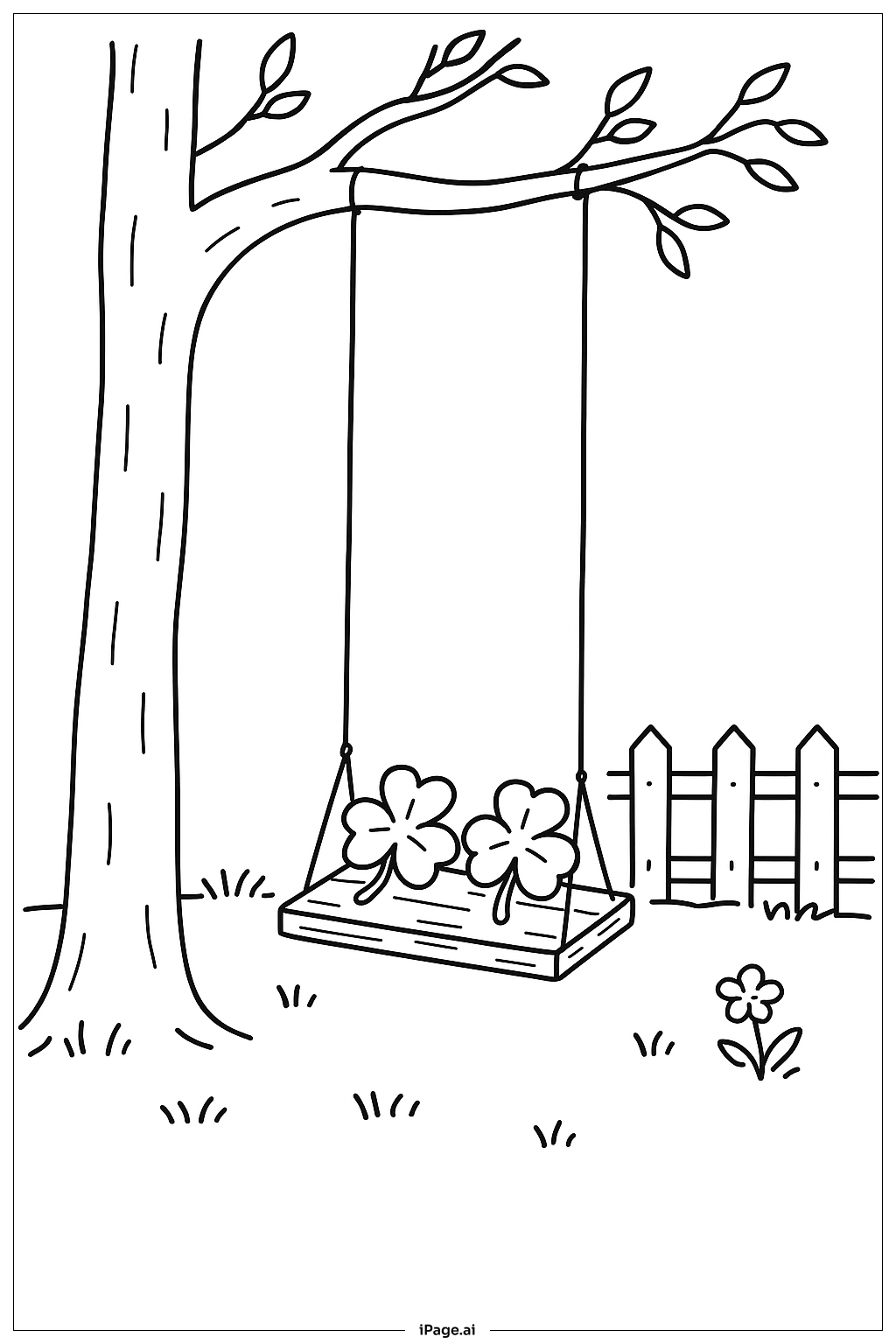
Coloring tips: How to color Clover Garden Swing coloring page well?
For this Clover Garden Swing coloring page, consider using various shades of green to bring the clover and leaves to life. Try light greens for new leaves and darker greens for shaded areas to add depth. The tree trunk and swing seat can be colored with browns, ranging from soft tan to rich mahogany, to create a natural wood look. Use soft yellows and pastels for flowers to keep the scene gentle and inviting. Feel free to experiment with blues and light purples for the sky or background to add a calm atmosphere. Mixing light and dark tones will make the image pop and look dynamic.
Coloring challenges: Which parts are difficult to color and need attention for Clover Garden Swing coloring page?
• Fine Details in Clover: The many tiny leaves of the clover can be tricky to color neatly due to their small size. Careful coloring is needed to avoid overlapping boundaries. • Textured Tree Bark: The bark has detailed lines and grooves which require patience to color realistically, needing varied strokes and shading to capture the texture. • Ropes of the Swing: The swing ropes have twists and curves that can be challenging to shade properly to show their round shape and tension. • Maintaining Balance of Light and Shadow: Since the scene depicts an outdoor garden, achieving a natural balance between sunlight areas and shadows around the swing and foliage requires thoughtful color choices. • Background Elements: The flowers, grass, and distant plants have smaller shapes that need gentle, precise strokes to avoid making the area look messy or overly crowded.
Benefits of coloring books: Advantages of drawing Clover Garden Swing coloring page
Coloring this image helps improve focus and fine motor skills as children carefully fill in detailed areas like clover leaves and textured bark. It encourages creativity in choosing color combinations for natural elements such as plants, wood, and sky. The scene offers a calming subject, promoting relaxation and mindfulness while coloring. It also builds patience and attention to detail due to the complexity of small parts like ropes and leaves. Overall, it is an engaging way for children to connect with nature through art while enhancing their hand-eye coordination and color recognition.