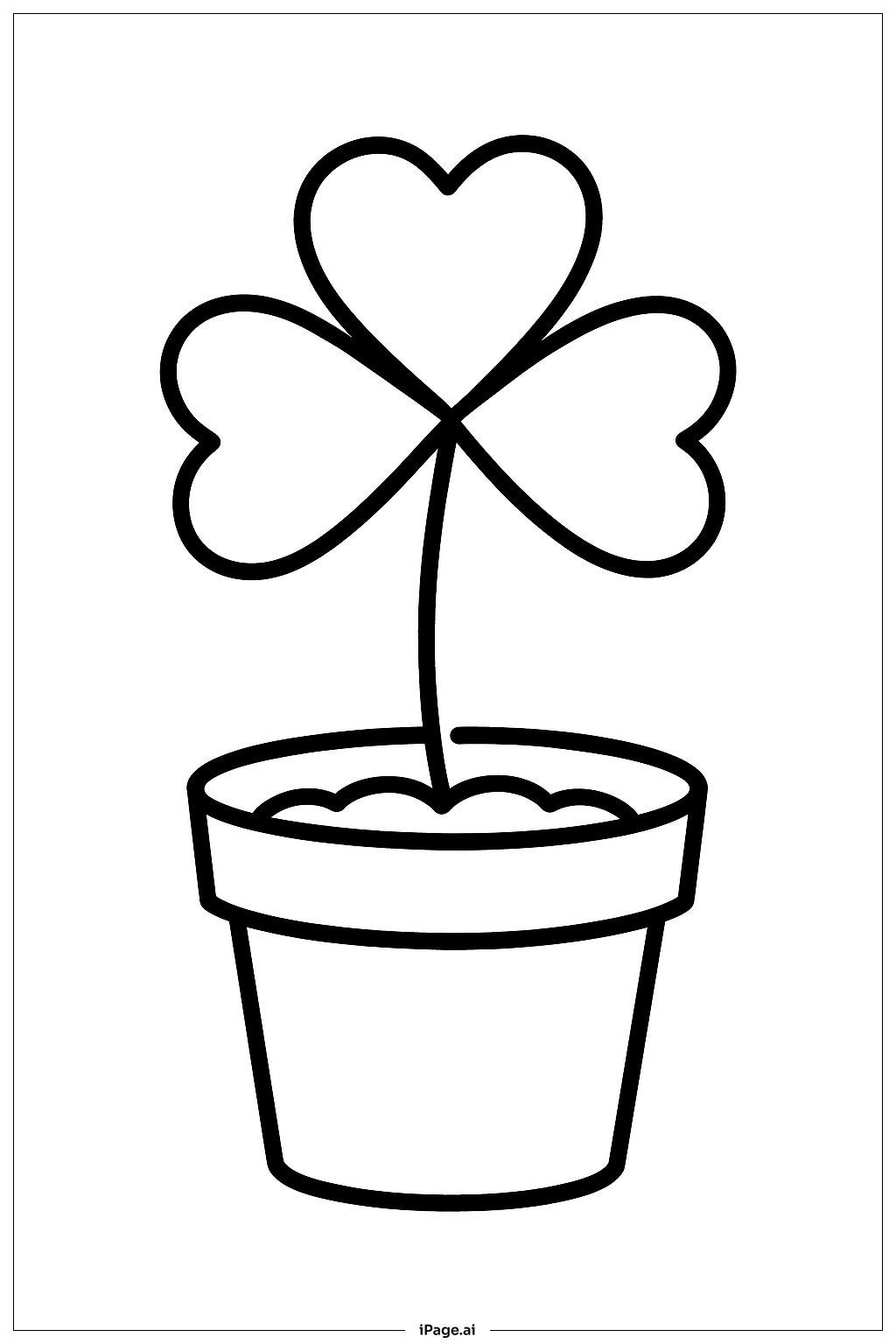
Coloring tips: How to color Clover Flower Pot coloring page well?
For coloring this Clover Flower Pot, try using shades of green to bring the clover leaves to life. Mix light and dark greens to show depth and make the leaves look fresh. You can use soft pinks or whites for the clover flowers to keep them delicate and pretty. The flower pot can be colored in warm browns, terracotta, or even bright colors like orange or yellow to make it stand out. Consider adding a shadow beneath the pot using gray or a darker color to create a sense of space. Feel free to use crayons, colored pencils, or markers to explore smooth coloring or fun textures.
Coloring challenges: Which parts are difficult to color and need attention for Clover Flower Pot coloring page?
• Leaf Shapes: The clover leaves have three small leaflets each with a curved shape. It can be tricky to color inside the lines neatly, especially around the curves and edges. Patience is needed to keep clean coloring. • Flower Petals: The flowers are small and detailed with thin petals. Coloring them without going outside the lines may challenge younger children, requiring a steady hand and fine-tip coloring tools. • Pot Details: The flower pot has subtle patterns and shading that need careful coloring to highlight the shape and depth. Adding little details without over-coloring can be difficult. • Layering: Several leaves and flowers overlap one another, so deciding the order to color these can be confusing. Highlighting which elements are in front may take some planning. • Small Elements: Tiny blades of grass and soil texture require precise coloring. These small spaces may be challenging for beginners to fill without smudging or missing spots.
Benefits of coloring books: Advantages of drawing Clover Flower Pot coloring page
Coloring this Clover Flower Pot helps improve fine motor skills as children learn to control their hand movements around small leaf and flower shapes. It encourages attention to detail and patience, especially when working on the flowers and pot patterns. This image also sparks creativity in choosing colors and experimenting with shading techniques to show depth. Engaging with natural subjects like plants promotes an appreciation for nature and growth. For children aged 4–16, it offers a fun way to practice focus while relaxing, building confidence through completing a beautiful, lively picture.