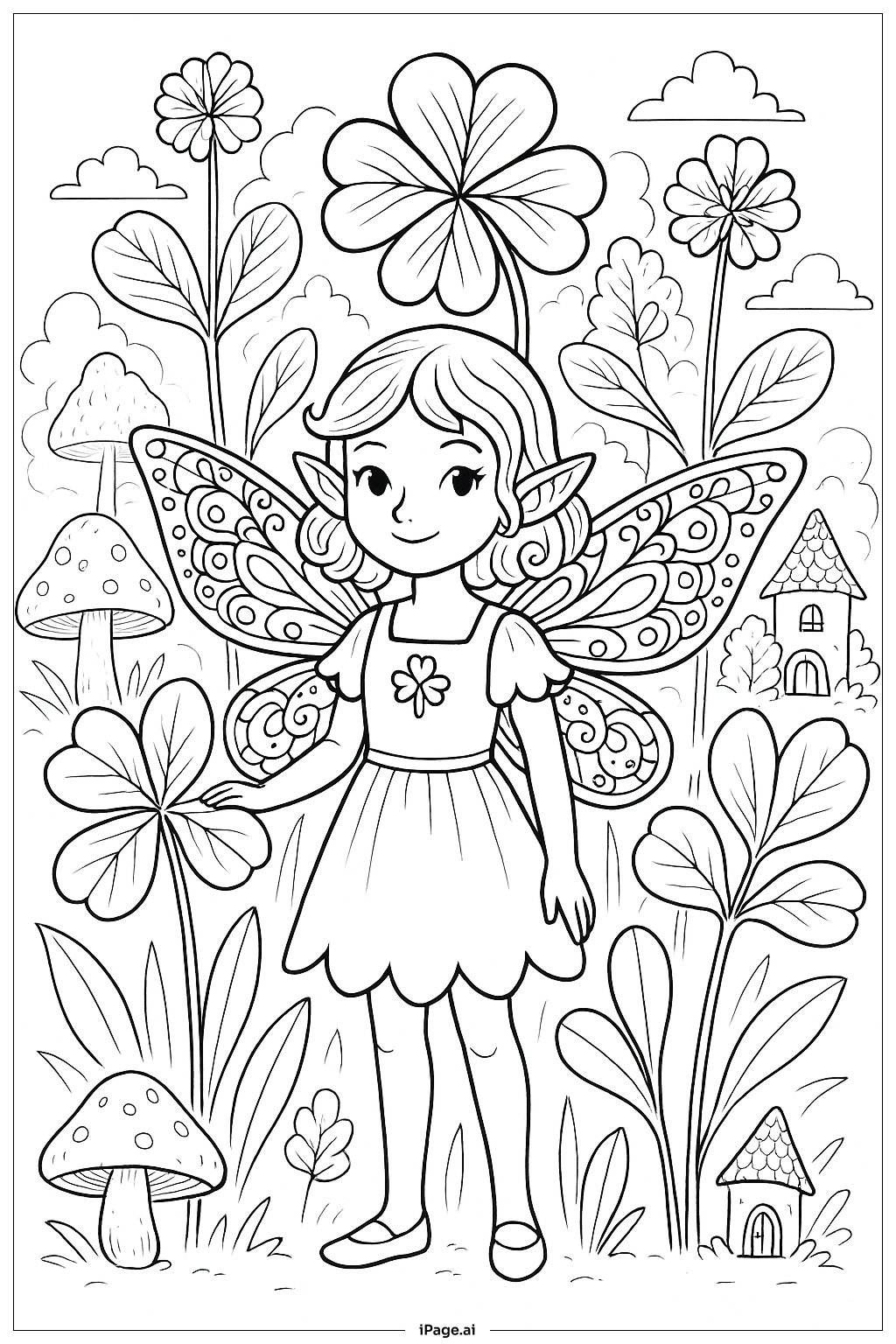
Coloring tips: How to color Clover Fairy Garden coloring page well?
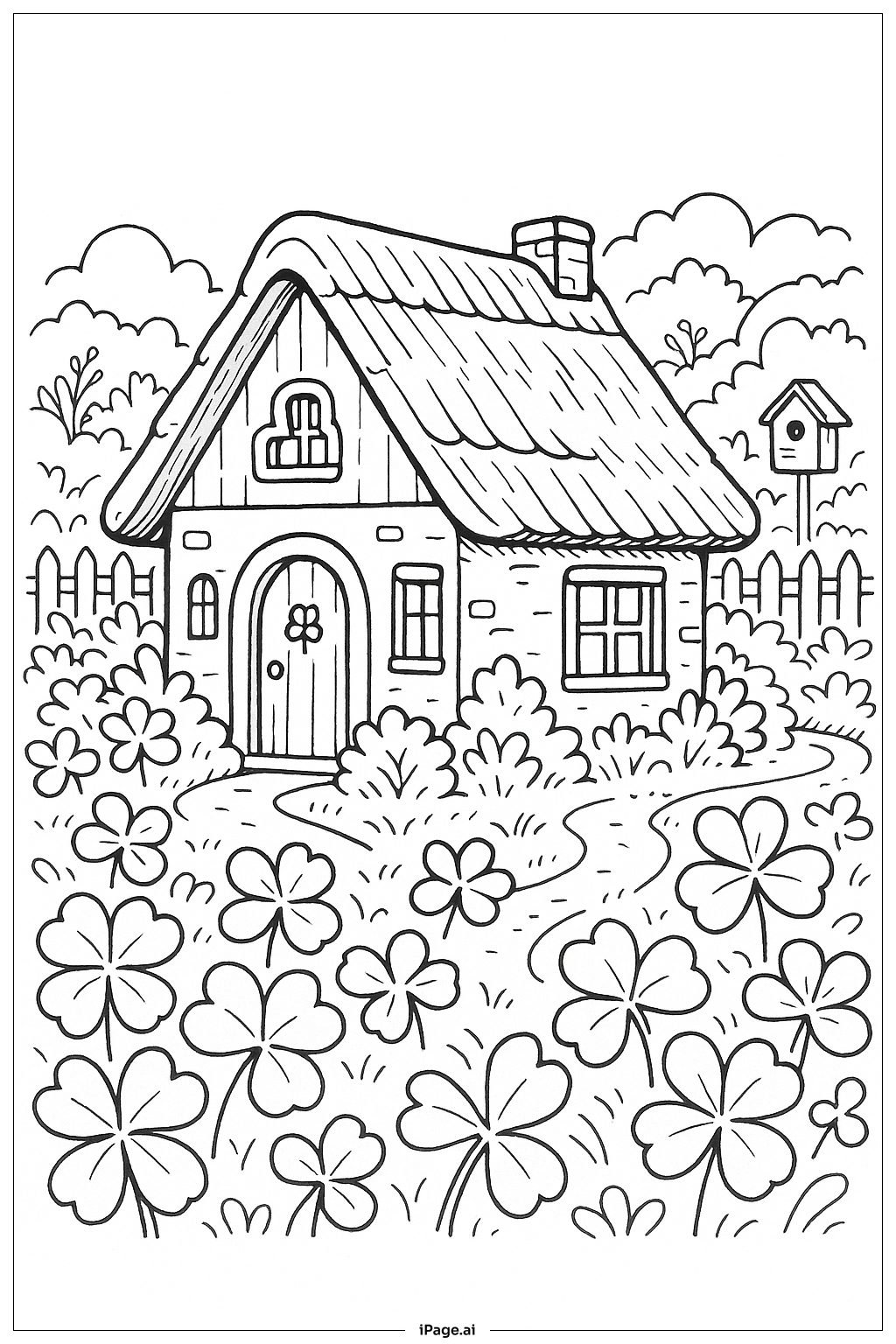
Start with the fairy's wings — try soft purples, pinks, or sky blues to give them a magical, translucent look. Use different shades of green for the clover leaves to create depth. Lighter greens work well for the tops of leaves, while darker greens suit the undersides and shadows. Color the clover blossoms in white, soft pink, or lavender. For the mushrooms, classic red with white spots looks fun, but you can also try orange or brown tones. Give the fairy's dress a warm, cheerful color like golden yellow or rose pink. Use pale blue or white with a light shimmer effect for the dewdrops. The butterfly can be colored with bright, contrasting shades to make it pop against the greens. Keep the background grasses in soft, muted tones so the main characters stand out. Take your time blending colors on the larger clover leaves for a natural feel.
Coloring challenges: Which parts are difficult to color and need attention for Clover Fairy Garden coloring page?
• Fairy Wing Details: The fairy's wings feature very fine, lacy lines and delicate vein patterns. Staying inside these tiny sections without smudging requires a sharp pencil or a fine-tipped marker. Using colored pencils with a light hand will help keep the wings looking airy and transparent rather than heavy and flat.
• Clover Leaf Shading: The clover leaves overlap in many places, creating layered sections that need different shades of green to look natural. Blending two or three greens smoothly takes patience. If the shades are too similar, the leaves can look flat; if they are too different, the image may look uneven.
• Small Floral Elements: The tiny wildflowers and petite blossoms scattered throughout the scene are very small. Coloring each petal individually without going outside the lines is tricky, especially for younger children. Fine-tipped tools and a steady hand are strongly recommended for these areas.
• Mushroom Texture: The mushrooms have curved, dome-like caps that benefit from shading to look round and three-dimensional. Applying a lighter tone at the top and a darker tone along the edges helps create this effect, but blending smoothly on a curved surface can be challenging for beginners.
• Dewdrops and Highlights: The small dewdrops on the leaves are easy to accidentally fill in completely. For the best result, leave the center of each dewdrop white or very lightly colored, and add a soft blue or gray around the edges to suggest a glassy, reflective surface. This small step makes a big difference in the final look.
Benefits of coloring books: Advantages of drawing Clover Fairy Garden coloring page
Coloring this Clover Fairy Garden page offers a wonderful mix of fun and learning for kids and adults alike. The magical fairy theme sparks imagination and encourages creative thinking as colorists choose their own palettes and bring the scene to life in their own unique way.
For younger children, working through the many small details — leaves, flowers, wings, and mushrooms — helps build fine motor skills and improves hand-eye coordination. Staying within the lines and blending colors also strengthens focus and patience over time.
For older kids and adults, the layered composition offers a satisfying challenge. Planning a color scheme, shading rounded shapes like mushroom caps, and blending greens for realistic foliage all develop a stronger understanding of color theory and artistic technique.
The calming, nature-inspired subject matter also makes this page a great tool for relaxation. Spending quiet time with colored pencils or markers helps reduce stress and supports emotional well-being. The sense of accomplishment after finishing a detailed, beautiful page builds confidence and encourages a love of art that can last a lifetime.