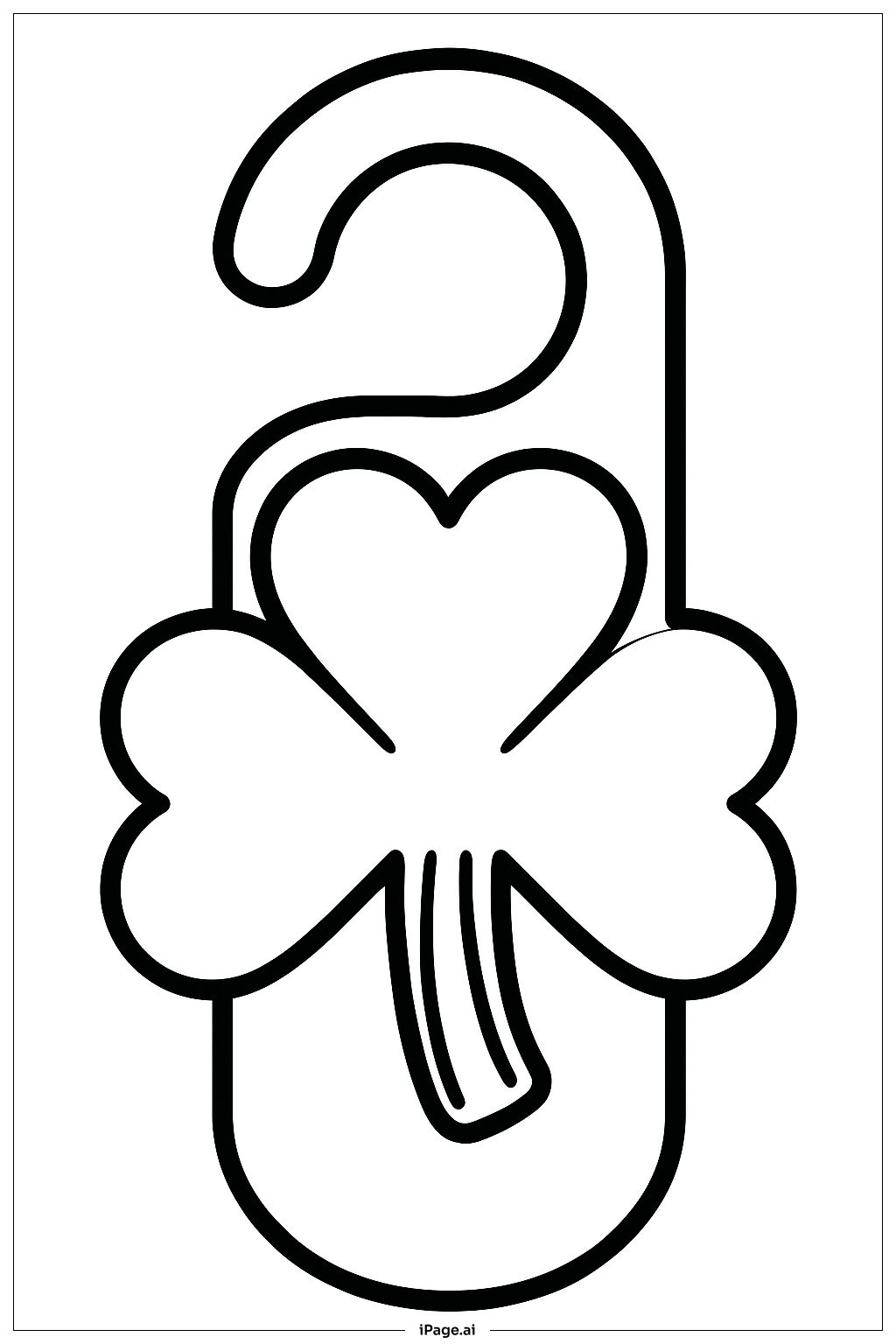
Coloring tips: How to color Clover Door Hanger coloring page well?
For this clover door hanger, consider using various shades of green to create a natural, fresh look. Try light lime green for the outer petals and darker forest green for shading near the edges to add depth. The center circle could be colored in golden yellow or soft cream to make it stand out. For a more creative approach, use gradient coloring within each petal, starting with light green at the tips and deepening toward the center. You could also add small details like tiny dots or patterns inside each petal using colored pencils. Consider using metallic gel pens to outline the edges for a decorative finish. If you prefer a non-traditional look, pastels like lavender, pink, or sky blue can create a whimsical, cheerful effect perfect for spring decorations.
Coloring challenges: Which parts are difficult to color and need attention for Clover Door Hanger coloring page?
• Smooth Color Transitions: Creating even color coverage across the large petal areas can be challenging, especially when trying to avoid streaks or patches. Young colorists may need to practice consistent pressure with crayons or colored pencils to achieve uniform results. Using circular motions or coloring in one direction helps maintain smoothness throughout each petal section.
• Symmetrical Coloring: Since the clover has four identical petals arranged symmetrically, maintaining consistent colors and shading across all four sections requires careful attention and planning. Children must remember which colors and techniques they used on the first petal to replicate them accurately on the remaining three, which exercises memory and observation skills.
• Edge Precision: The curved edges of each petal require careful coloring to stay within the lines without going over. The rounded shapes demand good hand control and fine motor coordination, particularly at the points where petals meet the center circle. Younger children may find these curves more difficult than straight edges.
• Center Circle Detailing: The small central circle presents a challenge for adding fine details or text while keeping the area neat. Coloring this compact space requires precision and a steady hand, especially if using multiple colors or patterns within this confined area.
• Shading and Dimension: Adding realistic shading to create a three-dimensional effect requires understanding light sources and gradual color changes. This advanced technique helps the flat clover shape appear rounded and dimensional, challenging older children to think about depth and visual perspective.
Benefits of coloring books: Advantages of drawing Clover Door Hanger coloring page
Coloring this clover door hanger provides excellent fine motor skill development through the precise control needed for curved edges and symmetrical shapes. The repetitive nature of coloring four similar petals helps children practice consistency and attention to detail. This design encourages color planning and decision-making as kids choose coordinating shades for a harmonious final piece. The symmetrical layout naturally teaches concepts of balance and pattern recognition. Creating a functional item like a door hanger gives children a sense of pride and accomplishment, as they can display their artwork in their own space. The simple yet engaging design is perfect for building confidence in younger colorists while offering enough detail to keep older children interested. This activity promotes focus and patience while providing a calming, meditative experience that reduces stress and anxiety.