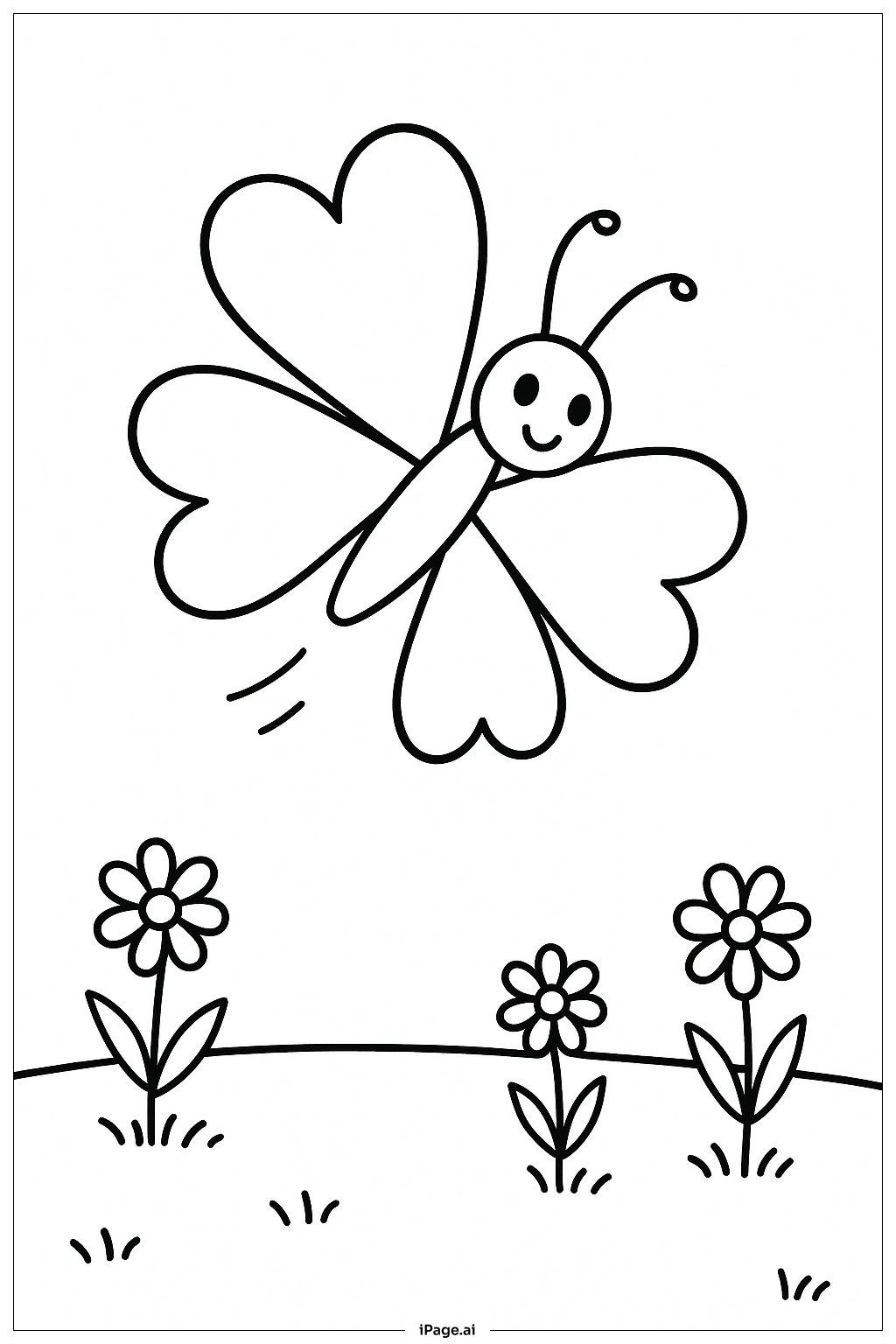
Coloring tips: How to color Clover Butterfly coloring page well?
For the butterfly wings, consider using bright and cheerful colors like orange, yellow, or purple for the main wing areas. Add contrast by using darker shades along the wing edges and patterns to make them pop. The clover leaves can be colored in various shades of green, from light lime to deep forest green, to create depth and dimension. You might add subtle yellow or brown tones to some leaves to suggest sunlight or natural variation. The butterfly's body can be dark brown or black, with the antennae in a matching shade. Consider adding small dots of white or light colors on the wings to create a sparkling effect. The background can remain uncolored or be filled with soft pastels to make the main subjects stand out beautifully.
Coloring challenges: Which parts are difficult to color and need attention for Clover Butterfly coloring page?
• Wing Pattern Precision: The butterfly wings contain intricate patterns and decorative details that require careful attention. Staying within the small curved sections and maintaining consistent color choices across symmetrical areas can be challenging for younger children. Using fine-tipped coloring tools will help achieve clean results in these delicate spaces.
• Overlapping Clover Leaves: The clover stems and leaves overlap in multiple places, creating layers that need different shading to show depth. Identifying which leaf is in front and which is behind requires careful observation. Coloring each layer with slightly different green tones will help distinguish the individual leaves and create a three-dimensional effect.
• Smooth Color Blending: To create realistic shading on both the butterfly wings and clover leaves, smooth color transitions are needed. Blending from light to dark or creating gradients requires practice and patience, especially when using colored pencils or crayons. Pressing too hard or too lightly can affect the final appearance.
• Small Detailed Areas: The butterfly's antennae, body segments, and the thin stems connecting the clover leaves are narrow spaces that demand precision. Younger children may find it difficult to color these tiny areas without going outside the lines. Taking time and using appropriately sized coloring tools will improve accuracy in these challenging spots.
Benefits of coloring books: Advantages of drawing Clover Butterfly coloring page
Coloring this Clover Butterfly page offers numerous developmental benefits for children. It enhances fine motor skills as they carefully navigate the intricate wing patterns and small leaf shapes, improving hand-eye coordination and pencil control. The symmetrical nature of the butterfly wings helps children understand balance and pattern recognition while encouraging attention to detail. This nature-themed image provides an opportunity to learn about butterflies and clovers, fostering curiosity about the natural world and ecosystems. The varying complexity levels, from larger clover leaves to detailed wing patterns, make it suitable for different age groups and skill levels. As children choose colors and make creative decisions, they develop artistic confidence and self-expression. The calming, repetitive motions of coloring promote relaxation and mindfulness, helping reduce stress and improve focus and concentration skills that benefit academic learning.