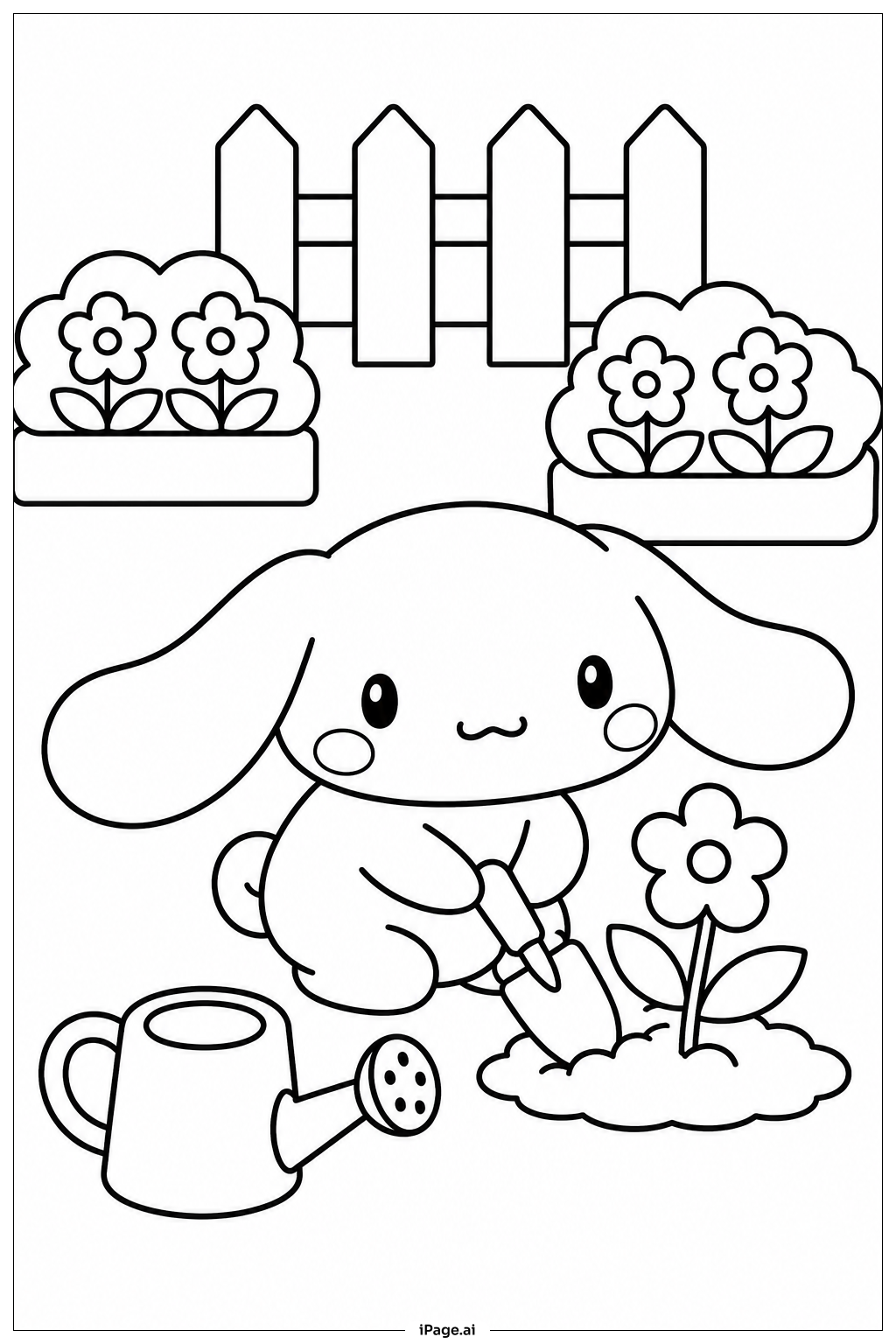
Coloring tips: How to color Cinnamoroll Gardening Time coloring page well?
Start with Cinnamoroll's body using soft white or very light cream. His big eyes look best in pale sky blue with dark pupils. Use a warm light pink for the inner ears and cheeks to give him a cute, rosy glow. His tail can be a warm beige or sandy tone.
For the garden, use a variety of bright and cheerful colors. Try yellow and orange for sunflowers, pink and purple for small blooms, and different shades of green for leaves and stems. Use brown for soil and wooden tool handles.
The watering can or shovel can be any fun color you like, such as red, blue, or yellow. Add light blue for any water droplets to make the scene feel fresh and lively.
Keep the sky or background soft with pale blue or yellow to let Cinnamoroll and the flowers stand out. Use light, gentle strokes for a dreamy, storybook feel that matches Cinnamoroll's sweet personality.
Coloring challenges: Which parts are difficult to color and need attention for Cinnamoroll Gardening Time coloring page?
• Cinnamoroll's White Fur: Keeping Cinnamoroll's body looking clean and soft is tricky. His white fur needs very light shading to show depth without losing that bright, fluffy look. Using pale cream or very light gray only in shadow areas can help. Pressing too hard or using dark colors by mistake can ruin the soft effect.
• Small Facial Features: Cinnamoroll has tiny, delicate facial details like his round blue eyes, small pink nose, and rosy cheeks. These areas are very small and easy to color outside the lines. Using a sharpened pencil or a thin-tipped marker will help you stay precise and keep his expression looking cute and correct.
• Overlapping Flowers and Leaves: The garden scene is filled with many flowers, petals, and leaves that overlap each other. It can be hard to tell which part belongs to which plant. Look carefully at the outlines and plan your colors before you start. Using contrasting colors for neighboring plants helps each element stand out clearly.
• Gardening Tool Details: Small tools like the watering can or shovel have tiny details including handles, spouts, and edges. These tight spaces are difficult to fill neatly. Take your time and use a fine-tipped coloring tool for better control in these narrow areas.
• Balancing the Overall Color Palette: With so many elements in one scene, it is easy for the image to look too busy or unbalanced. Try to spread warm and cool colors evenly across the page so that no single area feels too heavy or too dull compared to the rest.
Benefits of coloring books: Advantages of drawing Cinnamoroll Gardening Time coloring page
Coloring this Cinnamoroll Gardening Time page brings a wide range of benefits for kids and fans of all ages.
For younger children, staying inside the lines and handling small details like petals and tiny tools helps build fine motor skills and hand-eye coordination. These skills support everyday tasks like writing and drawing.
Choosing colors for the flowers, plants, and Cinnamoroll's accessories encourages creative thinking. Kids get to make their own color choices, which builds confidence and self-expression. There is no wrong answer, and every finished page is unique.
The peaceful garden scene is naturally calming. Focusing on coloring helps quiet busy thoughts and reduce stress, making it a great activity after school or before bedtime. It teaches children to slow down and enjoy a simple, quiet moment.
Learning about different shades of green for leaves or mixing warm tones for flowers introduces basic color theory in a fun and hands-on way. Kids naturally start to understand how colors work together.
Completing the full page also gives children a real sense of accomplishment. Seeing their finished artwork builds pride and motivation to keep creating. Sharing it with family or friends makes the experience even more rewarding.
Overall, this coloring page combines fun, creativity, and learning in one delightful activity.