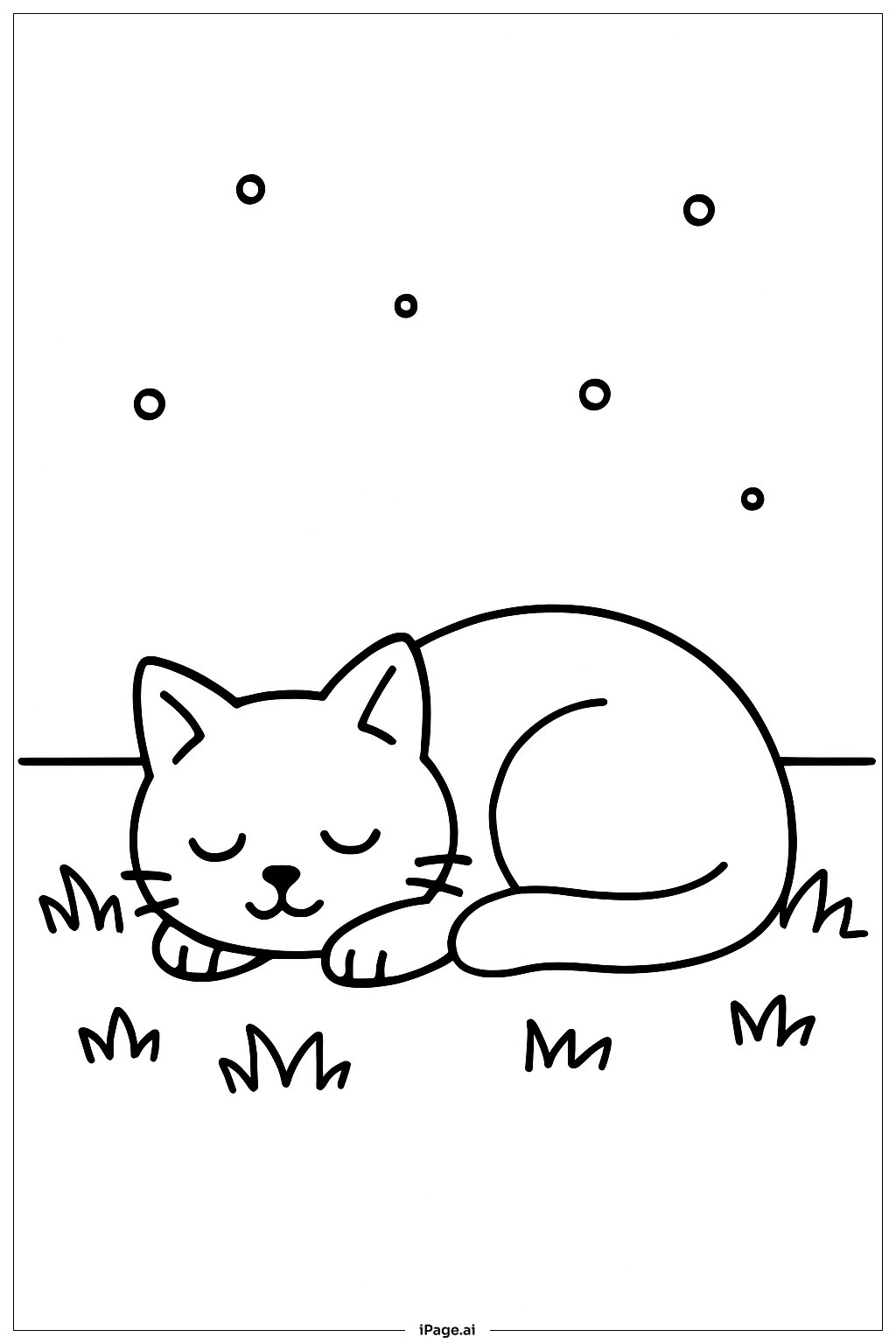
Coloring tips: How to color Catnap Watching Fireflies coloring page well?
For Catnap, choose soft purples and lavenders for the body to create a dreamy nighttime appearance. The night sky can be colored in deep navy blues or midnight purples, gradually lightening toward the horizon. Use bright yellows or golden tones for the fireflies' glowing bodies, and add a light yellow halo around each one to emphasize their magical glow. The grass can be shaded with various greens, from dark forest green at the base to lighter spring green at the tips. Color the stars with white, yellow, or silver, and give the crescent moon a pale yellow or cream tone. Consider using darker shades at the edges of the page and lighter colors in the center to create depth and draw attention to Catnap and the fireflies.
Coloring challenges: Which parts are difficult to color and need attention for Catnap Watching Fireflies coloring page?
• Firefly Glow Effect: Creating the illusion of glowing fireflies requires careful color blending and layering. Children may find it challenging to make the light appear to radiate outward from each firefly's body. Using lighter colors in the center and gradually transitioning to darker shades around the edges can help achieve this effect, but it demands patience and control with coloring tools.
• Night Sky Gradients: A realistic night sky needs smooth color transitions rather than flat, uniform coloring. Blending from deep blues at the top to lighter purples or blues near the horizon creates atmospheric depth. This gradient technique can be difficult for younger children who are still developing fine motor control and color blending skills.
• Grass Texture and Layering: The individual grass blades require attention to directional strokes and varying shades to create natural texture. Coloring each blade separately while maintaining consistent direction and avoiding gaps between them takes concentration. Layering different green tones to show depth and dimension adds another level of complexity.
• Small Details and Precision: The fireflies' delicate wings and tiny star shapes require steady hands and precise coloring to stay within the lines. These small elements can be frustrating for children with developing fine motor skills or those using thicker coloring tools like chunky crayons.
• Color Harmony and Balance: Choosing colors that work well together for a nighttime scene while keeping Catnap visible and the fireflies prominent requires planning. Too many bright colors can overwhelm the peaceful mood, while too many dark colors might make details hard to see.
Benefits of coloring books: Advantages of drawing Catnap Watching Fireflies coloring page
Coloring this peaceful nighttime scene helps children develop patience and focus as they work on creating the magical atmosphere. The varying levels of detail, from large areas like the sky to tiny elements like stars and fireflies, allow children to practice both broad strokes and precise control. This image encourages creativity in choosing colors for a nighttime palette, helping children understand how colors create mood and atmosphere. The calming subject matter of Catnap quietly watching fireflies can have a relaxing effect, making this an excellent choice for quiet time or before bedtime activities. Children also practice hand-eye coordination and fine motor skills while coloring the intricate grass blades and small firefly details. The scene's natural beauty can inspire appreciation for the outdoors and nighttime wonders, connecting art with nature observation.