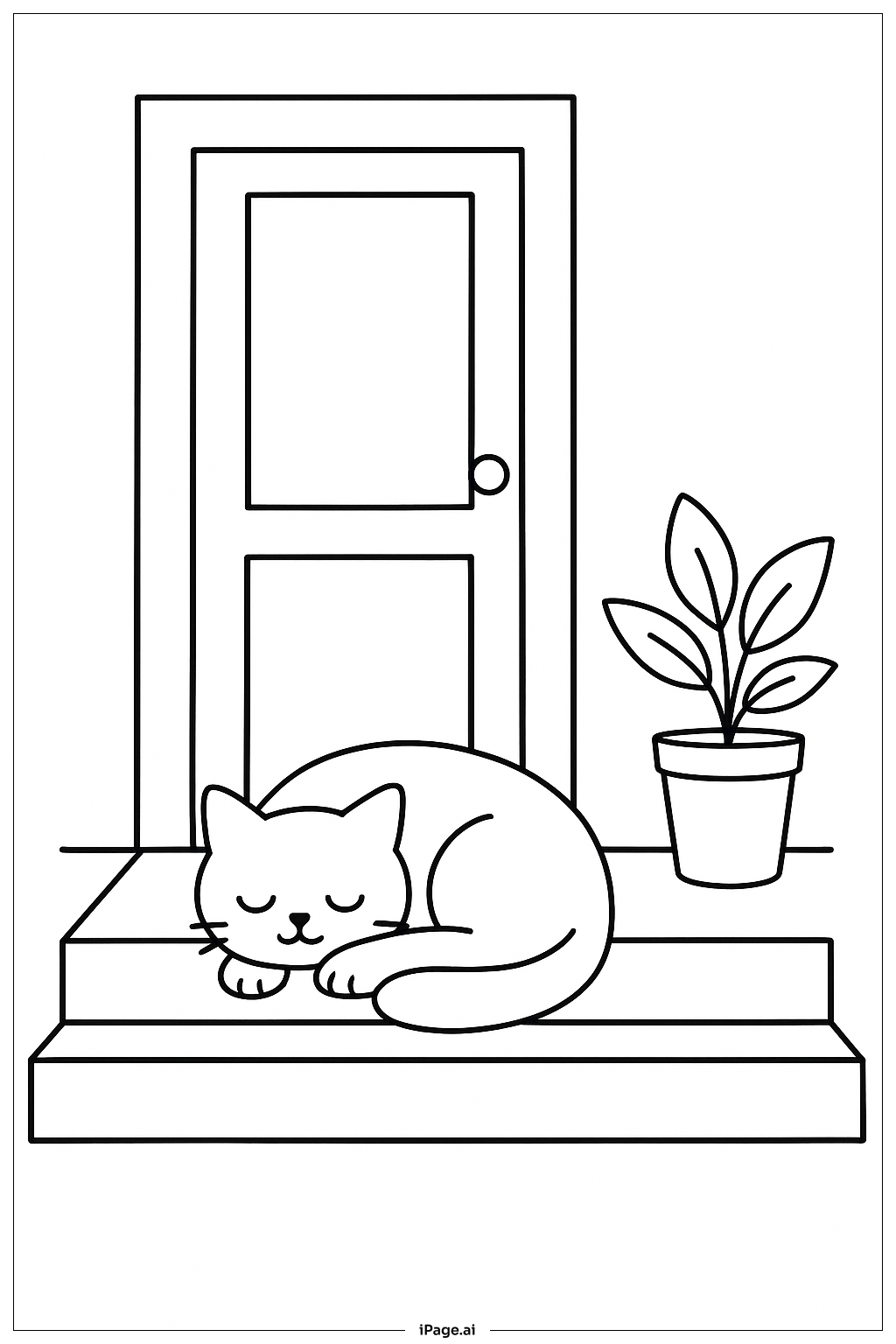
Coloring tips: How to color Catnap On Porch Steps coloring page well?
For the sleeping cat, try warm colors like orange, brown, or gray to create a cozy feeling. You could make a tabby pattern with stripes, or keep it simple with solid colors. Add pink to the nose and inner ears for a sweet touch. The wooden porch steps look great in natural wood tones like light brown, tan, or honey colors. You can add darker brown lines to show the wood grain texture. Paint the porch railing white or cream for a classic look, or try soft blue or green for a cottage style. The pillow or cushion can be any bright color you like - red, blue, purple, or patterned with stripes or flowers. Consider using colored pencils to create soft shadows under the cat and in the corners of the steps to add depth and make your picture more realistic.
Coloring challenges: Which parts are difficult to color and need attention for Catnap On Porch Steps coloring page?
• Fur Texture and Direction: Creating realistic cat fur requires careful attention to the direction of your coloring strokes. The fur flows in different directions across the cat's body - from head to tail, and around the curved surfaces. Young colorists may find it challenging to follow these natural fur patterns consistently. Using short, light strokes in the proper direction will create a more lifelike appearance, but this technique requires patience and practice.
• Wood Grain Details: The wooden porch steps and boards present a unique challenge because real wood has natural grain patterns, knots, and color variations. Simply filling the wood with one flat color will look plain and unrealistic. To make the wood look authentic, you need to add darker lines running lengthwise, vary the color slightly between boards, and perhaps add small knots or imperfections. This level of detail requires planning and a steady hand.
• Creating Depth and Shadows: This image has multiple layers - the cat in front, the steps beneath, and the railing behind. To make these elements look three-dimensional rather than flat, you need to add shadows and highlights. The areas where the cat touches the steps should be darker, and the underside of each step should have shadow. The top surfaces that would catch sunlight should be lighter. Understanding where light comes from and how it creates shadows is an advanced coloring skill.
• Small Detailed Areas: The cat's face has tiny features like closed eyes, whiskers, nose, and mouth that require precision coloring. The porch railing has narrow balusters and rails that need to stay within the lines. The spaces between the railing posts are small and can be tricky to color without going over the edges. These detailed sections may frustrate younger children or those still developing fine motor control.
Benefits of coloring books: Advantages of drawing Catnap On Porch Steps coloring page
Coloring this peaceful scene helps children practice patience and focus, just like the calm cat in the picture. The repetitive motion of coloring the wooden steps and railing can be very relaxing and helps reduce stress. This image teaches kids about different textures - soft fur versus hard wood - and how to show these differences using color and technique. Working on the detailed areas like the cat's face and the narrow railing posts improves hand-eye coordination and fine motor skills, which are important for writing and other precise tasks. Children also learn about architectural elements and outdoor spaces while coloring the porch setting. Choosing colors for the cat, wood, and decorations encourages creativity and personal expression. Completing this detailed coloring page gives a strong sense of accomplishment and builds confidence in artistic abilities.