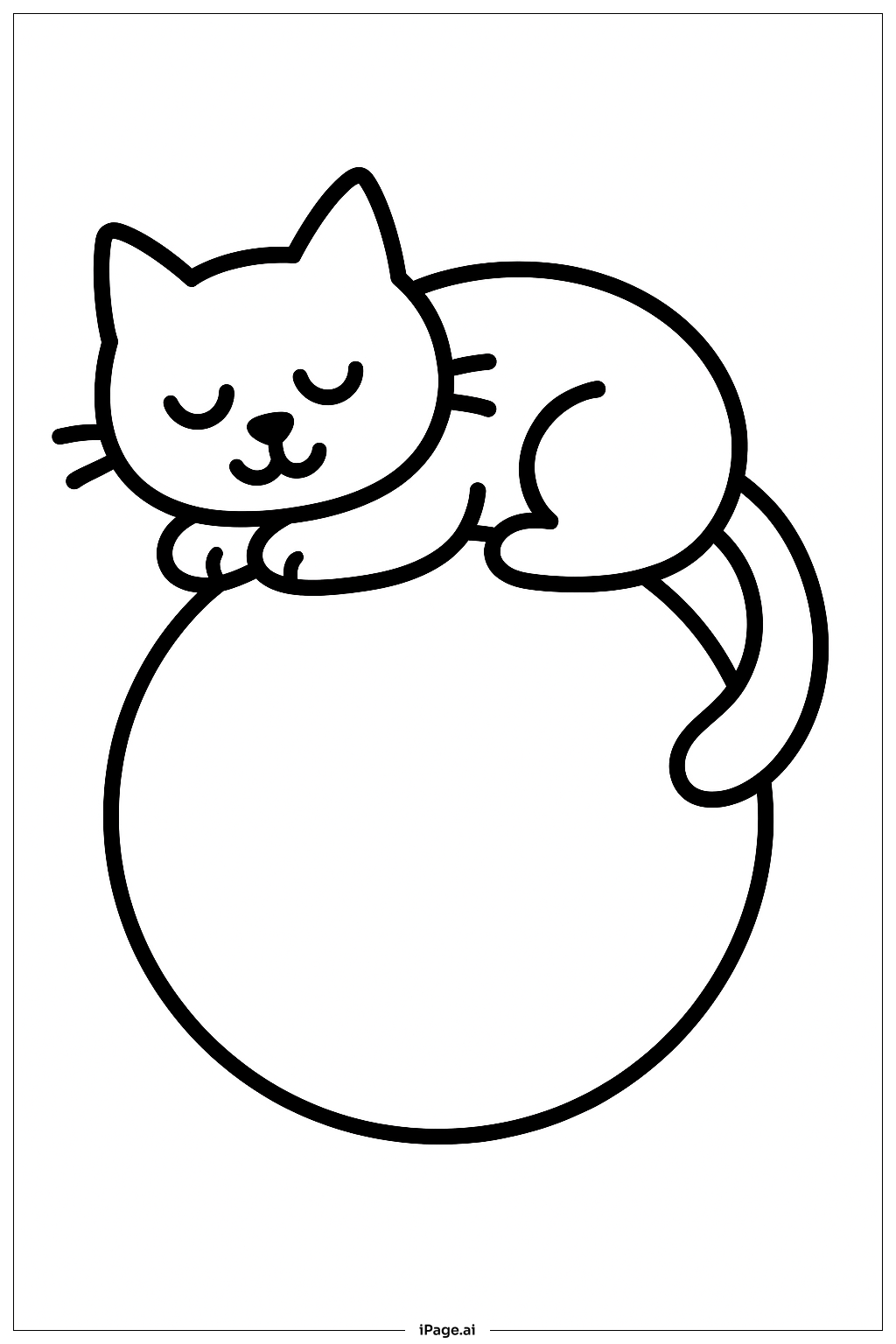
Coloring tips: How to color Catnap on a Ball coloring page well?
For Catnap, consider using soft purple or lavender shades for the main body, which matches the character's signature look. The inner ears and paw pads could be colored in lighter pink or cream tones for contrast. The eyes can be white with black pupils, or you might add a gentle yellow or green for a more vibrant look. For the ball, bright colors like red, blue, yellow, or green work wonderfully. You could also try a rainbow pattern or stripes across the ball's panels. Consider adding shading by pressing harder with your coloring tool along the bottom curves of Catnap's body and the ball to create depth. Use lighter strokes on the top areas where light would naturally hit. Don't forget to color the background with a soft sky blue or leave it white for a clean, simple appearance.
Coloring challenges: Which parts are difficult to color and need attention for Catnap on a Ball coloring page?
• Curved Body Contours: Catnap's body follows the round shape of the ball, creating multiple curved surfaces that flow together. Children may find it challenging to color smoothly along these curves without going outside the lines. The key is to turn the page as you color and use short, gentle strokes that follow the direction of the curves. Younger children might need to take their time with these organic shapes.
• Small Detail Areas: The character features several small spaces such as the gaps between the paws and the ball, the inner ear areas, and around the facial features. These tight spaces require careful control and precision, especially for younger colorists. Using fine-tipped markers or sharpened colored pencils can help navigate these small areas more easily.
• Smooth Color Blending: To achieve a three-dimensional look, colorists may want to create gradual shading from light to dark across Catnap's body and the ball. This technique requires patience and practice, as it involves layering colors and adjusting pressure. Children who are new to shading might find it challenging to create smooth transitions without visible lines or patches.
• Maintaining Consistent Colors: With several distinct sections including the body, ears, paws, tail, and ball, keeping colors consistent throughout each area requires focus and planning. Younger artists should choose their color scheme before starting and perhaps test colors on scrap paper first to ensure they are happy with their choices.
Benefits of coloring books: Advantages of drawing Catnap on a Ball coloring page
Coloring this Catnap on a Ball image offers wonderful developmental benefits for children. It helps improve fine motor skills and hand-eye coordination as they carefully navigate the curved lines and small details. The activity promotes focus and concentration, encouraging children to work patiently on a single task. This particular image teaches about balance and composition as children see how the character rests on the ball. It also provides an opportunity to practice color theory by choosing complementary colors for Catnap and the ball. The playful, peaceful nature of the scene can have a calming effect, helping children relax and express their creativity. Additionally, coloring familiar characters like Catnap builds confidence and gives children a sense of accomplishment when they complete their artwork. This activity can be enjoyed independently or shared with friends and family, promoting social interaction and creative discussion.