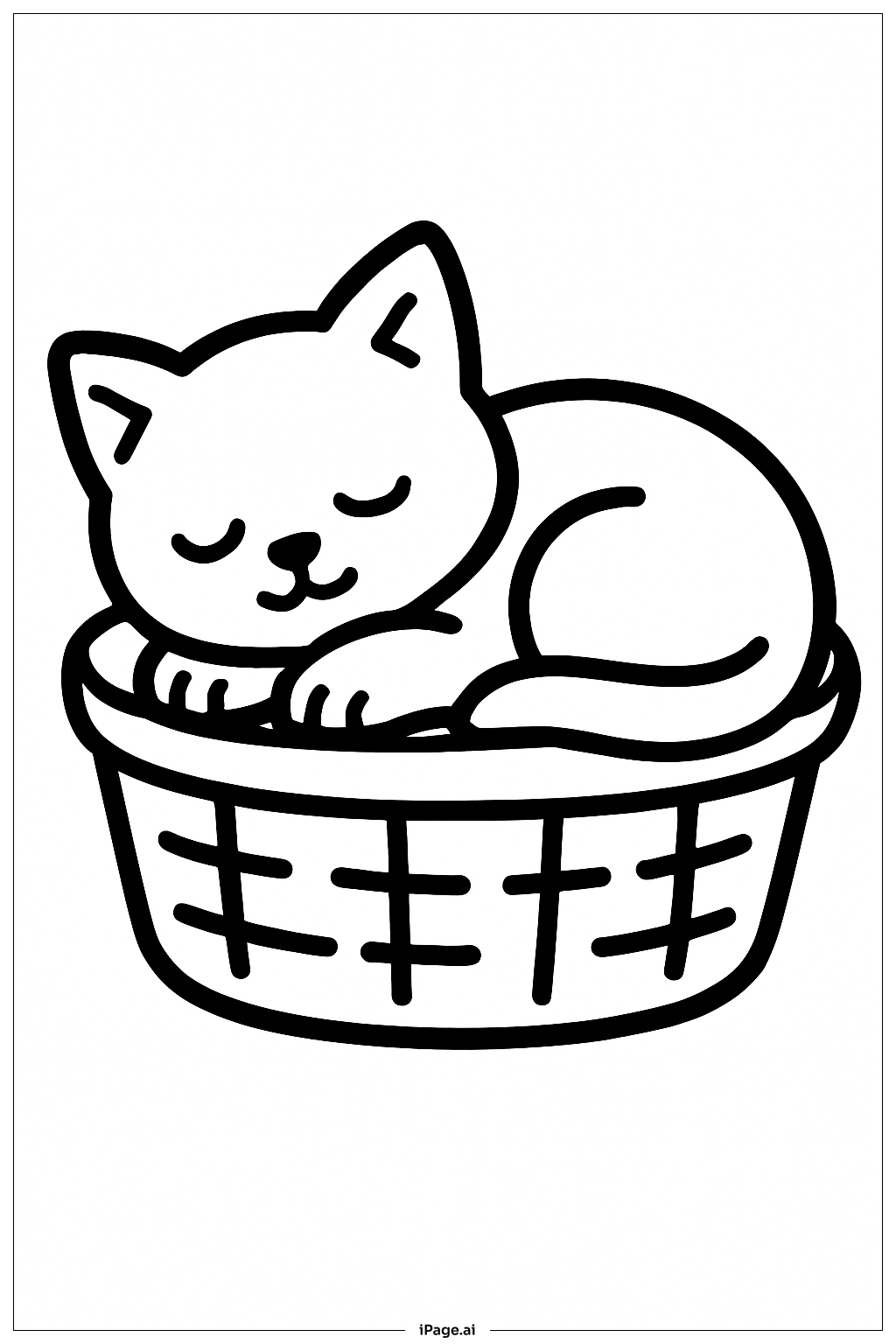
Coloring tips: How to color Catnap In Basket coloring page well?
For the cat, consider using soft grays, warm oranges, gentle browns, or classic tabby patterns with stripes. You could also choose cream, white, or even calico patterns with patches of different colors. The basket offers wonderful opportunities to create realistic wicker textures using various shades of brown, tan, beige, or golden yellow. Try using lighter tones for the raised portions of the weave and darker shades in the recessed areas to create depth and dimension. The basket handle can match the body or be slightly darker for contrast. Consider adding subtle shadows beneath the cat and around the basket's interior to enhance the three-dimensional effect. A light background color like pale blue, soft pink, or gentle lavender can make the main subjects stand out beautifully.
Coloring challenges: Which parts are difficult to color and need attention for Catnap In Basket coloring page?
• Woven Basket Texture: The intricate wicker weaving pattern presents a significant challenge, requiring careful attention to create the over-under pattern of the woven strands. Each strand must be colored consistently while maintaining the sense that some pieces pass over others. Using multiple shades of brown or tan can help distinguish individual strands and create realistic depth, but this requires patience and precision to avoid a muddled appearance.
• Fur Texture and Direction: Capturing the soft, fluffy quality of cat fur demands thoughtful coloring techniques. The fur flows in different directions across the cat's body, and coloring along these natural lines creates realism. Blending colors smoothly or using light, feathery strokes can simulate fur texture, but this takes practice. Adding subtle highlights and shadows helps define the cat's rounded form and makes it appear three-dimensional rather than flat.
• Creating Depth and Shadows: Making the cat appear nestled inside the basket rather than simply placed on top requires understanding where shadows naturally fall. The interior of the basket should be darker than the exterior, and shadows should appear beneath the cat's body, around its paws, and where the basket curves inward. These shadow areas need gradual transitions from light to dark to look natural.
• Small Details and Fine Lines: The cat's facial features, individual toes, whiskers, and the fine details of the basket weave all contain small spaces that can be challenging to color neatly. Staying within these tiny areas without going over the lines requires steady hands and possibly finer coloring tools like colored pencils or fine-tipped markers.
Benefits of coloring books: Advantages of drawing Catnap In Basket coloring page
Coloring this peaceful scene offers wonderful relaxation benefits, as the calm subject matter encourages a meditative, stress-free coloring experience. The repetitive pattern of the woven basket provides a soothing, rhythmic coloring activity that many find calming. This image helps develop fine motor skills and hand-eye coordination, especially when working on the detailed basket weave and small facial features. Children learn about textures by differentiating between smooth fur and rough wicker through their color choices. The page also encourages creative decision-making as young artists choose realistic or imaginative color schemes for their cat. Completing this detailed image builds patience, concentration, and the satisfaction of finishing a rewarding project. It's an excellent opportunity to practice shading techniques and color blending, valuable artistic skills that transfer to other creative activities.