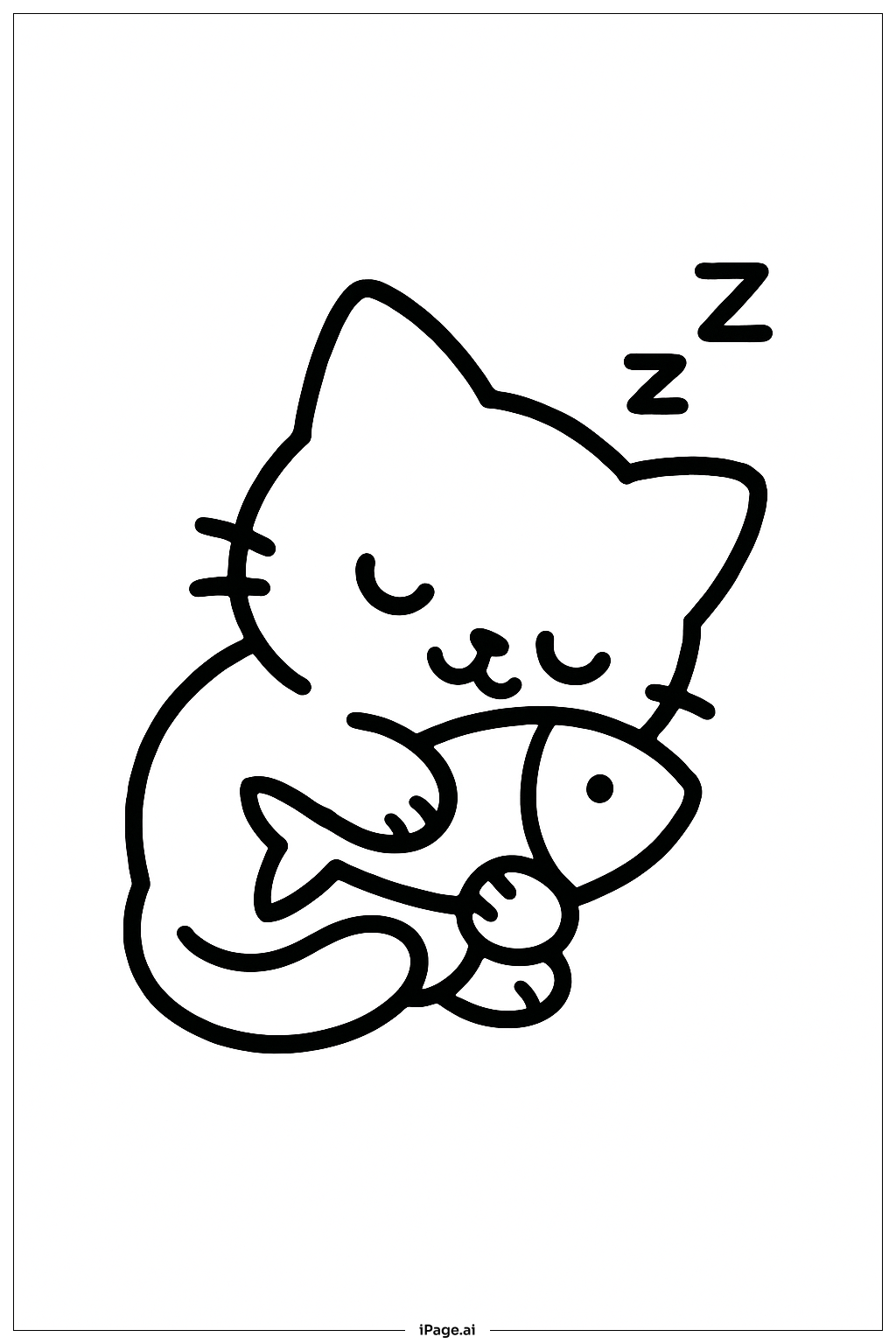
Coloring tips: How to color Catnap Holding A Fish Toy coloring page well?
Start with Catnap's fur using soft purple or lavender tones, as this character is traditionally shown in those colors. You can add darker purple shading along the edges to create depth. The fish toy can be colored in bright, cheerful colors like orange, yellow, or even blue to make it stand out as a special plaything. Use silver or gray for the fish scales with a touch of shimmer if you have metallic crayons. Color Catnap's eyes with bright colors like green, blue, or yellow to make them sparkle with excitement. The inner ears can be a lighter shade of pink or cream. Consider adding subtle shading under Catnap's body and around the fish toy to create shadows and make the image more three-dimensional. Use lighter pressure for highlights on the fur to show where light hits.
Coloring challenges: Which parts are difficult to color and need attention for Catnap Holding A Fish Toy coloring page?
• Fur Texture Details: The flowing lines representing Catnap's fur require careful attention to create a realistic texture. Children may find it challenging to color within these curved lines while maintaining consistent direction and pressure. The key is to follow the natural flow of the fur lines with strokes that move in the same direction, which helps develop fine motor control and patience.
• Small Eye Features: The large expressive eyes contain multiple elements including pupils, highlights, and possibly eyelashes that require precision coloring. Staying within these tiny spaces can be difficult for younger children and demands steady hand control. Using sharp colored pencils or fine-tipped markers will help achieve clean results in these detailed areas.
• Fish Toy Scale Pattern: The fish toy features a repeating scale pattern that needs individual attention to each scale. This repetitive work requires patience and consistency to make each scale look uniform while potentially alternating colors to create an interesting pattern. Children must maintain focus throughout this somewhat tedious process.
• Overlapping Elements: Where Catnap's paws overlap with the fish toy, there are areas where different sections meet and boundaries must be respected. Determining which parts are in front and which are behind requires spatial understanding. Carefully coloring these overlapping areas without bleeding between sections helps develop visual perception skills.
Benefits of coloring books: Advantages of drawing Catnap Holding A Fish Toy coloring page
Coloring this adorable image of Catnap helps children develop essential fine motor skills through careful hand movements and pencil control. The varying sizes of spaces, from large fur areas to tiny eye details, provide practice opportunities for different skill levels. Children learn color selection and combination as they decide which hues work well together for the character and toy. The repetitive scale pattern on the fish toy teaches patience and attention to detail while building focus and concentration abilities. This image encourages creativity as children can experiment with realistic or fantasy color choices. The cute, friendly nature of Catnap creates an emotional connection that makes the coloring experience enjoyable and stress-relieving. Completing this page gives children a sense of accomplishment and pride in their artistic work, boosting confidence and self-esteem.