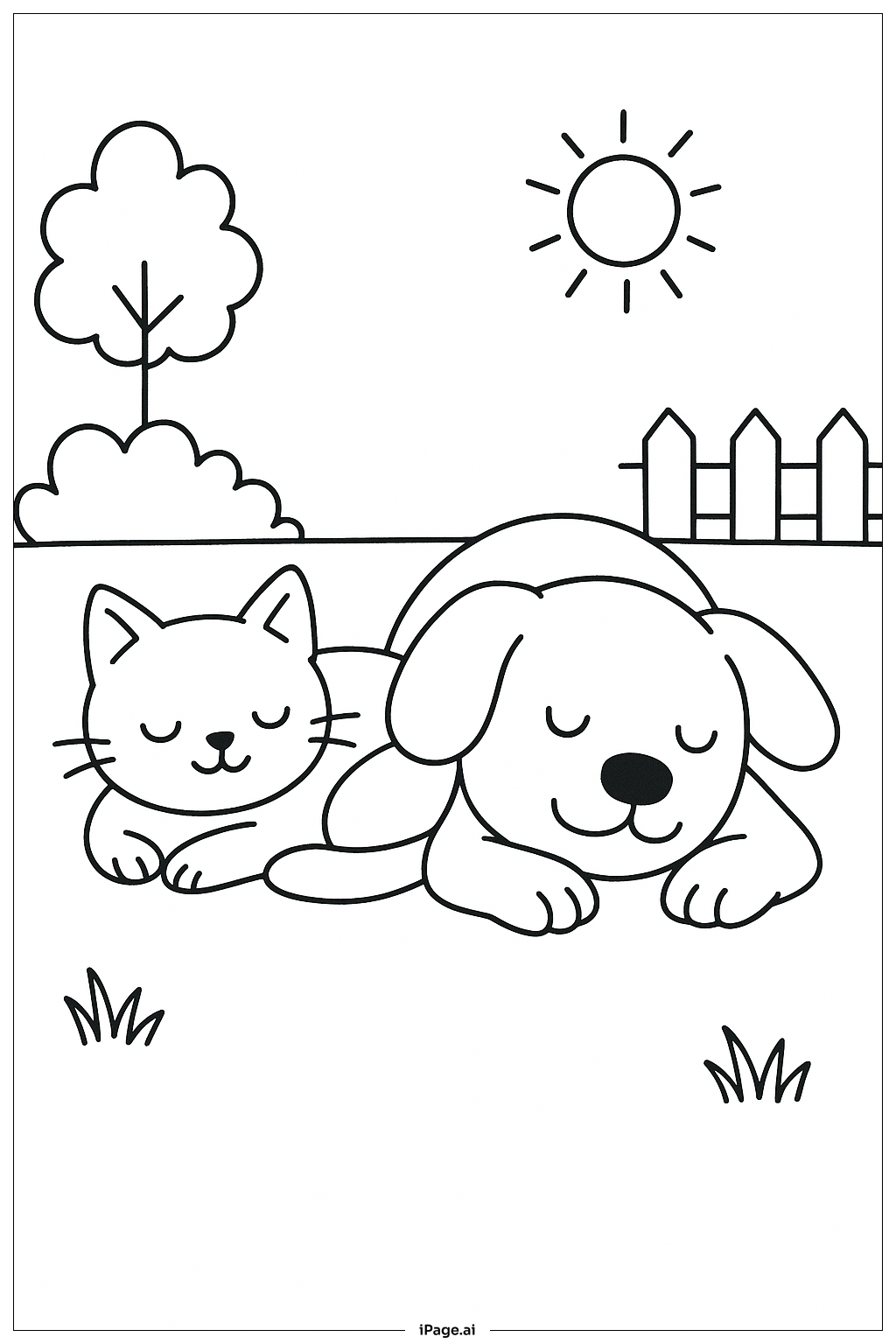
Coloring tips: How to color Catnap Beside Sleeping Dog coloring page well?
Use soft, warm colors to bring the scene to life. Color the cat with gentle shades like light gray, beige, or orange to make it look warm and friendly. The dog can be colored with browns or cream colors to show its soft fur. For the sun, use bright yellow to make the scene sunny and cheerful. The tree can be green, and the bushes a darker green to create contrast. Use light blue or white to fill the sky for a calm daytime look. The grass patches should be green shades but can vary to add interest. Use a brown or gray for the fence to keep it natural. Try coloring lightly first and then add darker shades to create depth.
Coloring challenges: Which parts are difficult to color and need attention for Catnap Beside Sleeping Dog coloring page?
1. Coloring the cat and dog evenly without leaving white gaps can be tricky, especially around their small legs and faces. 2. The smooth round shapes of the animals may require careful coloring to keep lines clean and neat. 3. Coloring the background details like the tree and bushes with different greens might be challenging to make them look realistic without blending colors too much. 4. Adding shading to show the sunlight effect on the animals and ground may be difficult but adds depth and interest. 5. The small grass patches require careful smaller strokes to keep the shapes clear and well-defined.
Benefits of coloring books: Advantages of drawing Catnap Beside Sleeping Dog coloring page
Coloring this peaceful scene helps children practice fine motor skills and control as they stay within the lines of the animal shapes. It encourages creativity by choosing colors and shading ideas. The simple nature and animal subjects can create a calming effect, helping kids relax. It also teaches them about animals and outdoor environments, making it educational as well as fun. Overall, the process builds focus and patience.