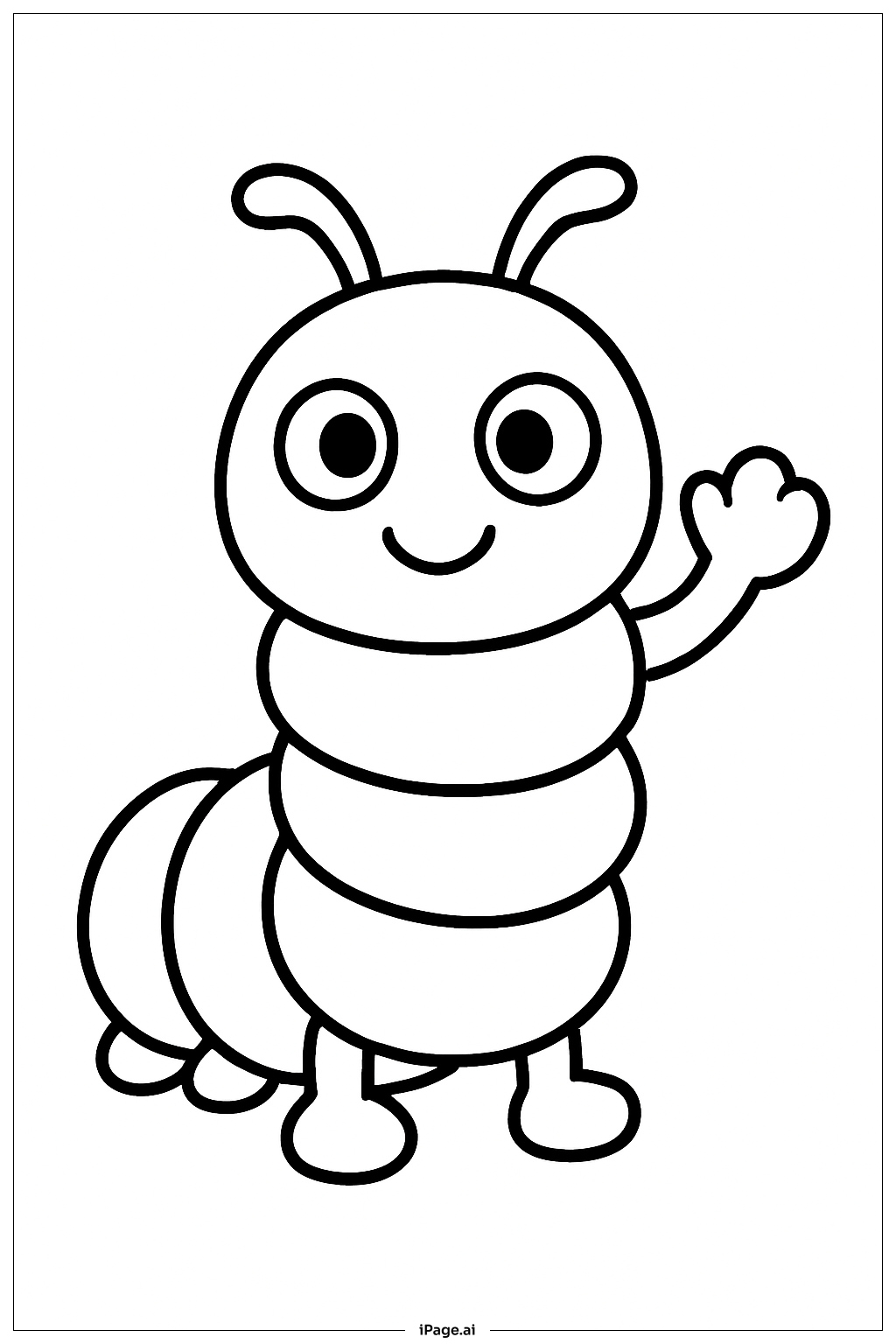
Coloring tips: How to color Caterpillar Waving Paw coloring page well?
Start with the caterpillar's body segments. Try using two or three colors and alternate them across each round section to create a fun, rainbow-like pattern. Green and yellow work great together, but feel free to pick your favorite colors. Use a light pink or peach for the face to give it a warm, friendly look. Color the big eyes with a bright iris and leave a small white dot to make them sparkle. For the tiny waving paw, use a slightly lighter shade than the body. The leaves in the background look best in different shades of green, while the flowers can be any bright color you like. Use a light blue or soft yellow for the background to make the caterpillar pop. Take your time on the small details, like the smile and the antennae, and enjoy every step of bringing this little character to life.
Coloring challenges: Which parts are difficult to color and need attention for Caterpillar Waving Paw coloring page?
Coloring this image is a lot of fun, but there are a few tricky spots to watch out for. Here are the main challenges you may face:
• Segmented Body Sections: The caterpillar's body is made up of several round segments placed close together. Keeping each segment neatly colored without the colors bleeding into the next one requires a steady hand and careful attention to the boundary lines between each section.
• Small Facial Details: The caterpillar's face includes tiny features like the eyes, pupils, smile, and cheeks. These details are small and closely packed, making it easy to accidentally color outside the lines. Using a fine-tipped coloring tool works best here to stay accurate.
• Tiny Waving Paw: The small raised paw is one of the narrowest areas on the page. Filling it in neatly without smudging the surrounding outlines can be a real challenge, especially for younger colorists who are still developing fine motor control.
• Background Leaves and Flowers: The decorative leaves and flowers around the caterpillar have curved, overlapping edges. It can be tricky to color each one separately and cleanly, especially where they sit close to the caterpillar's body or each other.
• Color Consistency Across Segments: If you choose to alternate colors across the body segments, keeping that pattern looking intentional and balanced from one end of the caterpillar to the other takes a bit of planning before you start. Deciding on your color order ahead of time will help a lot.
Benefits of coloring books: Advantages of drawing Caterpillar Waving Paw coloring page
Coloring this friendly caterpillar page offers a wonderful range of benefits for kids and beginners alike. First, working on the small segments and tiny facial details helps build fine motor skills and improves hand-eye coordination. Carefully staying within the lines strengthens the precise muscle control that children need for writing and other daily tasks. Second, choosing colors for each body segment encourages creative thinking and color awareness. Kids learn how different colors interact and how to create pleasing combinations on their own. Third, the repetitive, calming motion of coloring helps reduce stress and anxiety. It gives children a quiet, focused activity that lets them slow down and feel at ease. Fourth, completing the image from start to finish gives a real sense of achievement and builds self-confidence. Seeing a finished, colorful caterpillar that they created themselves makes kids feel proud and motivated to try more. Finally, coloring a cheerful character like this one can spark imaginative storytelling. Children may invent a name for the caterpillar, create a story about where it is waving, and share that story with friends or family. Overall, this page is a simple but powerful tool for growth and joy.



