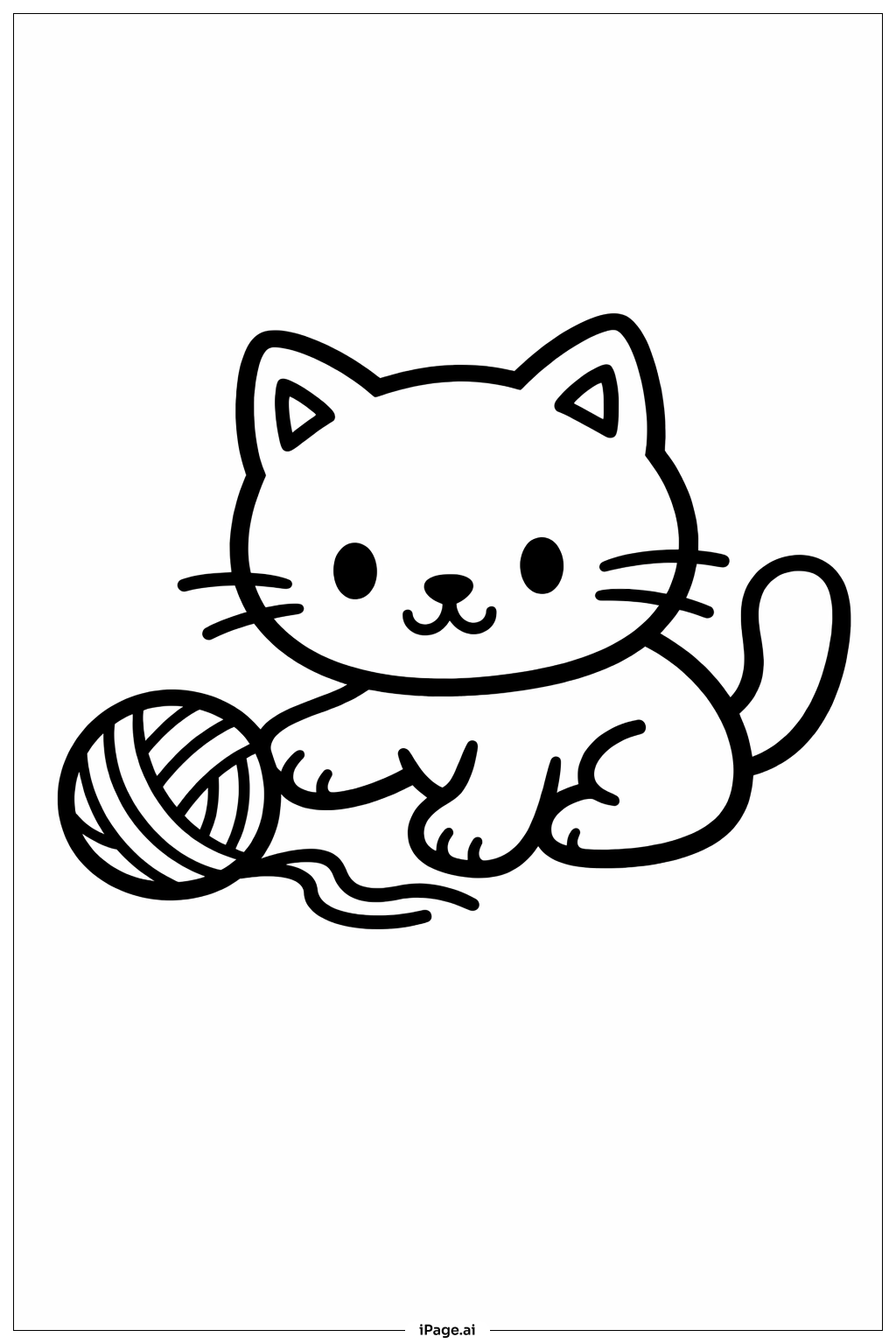
Coloring tips: How to color Cat Playing With Yarn coloring page well?
Start with the cat's body using warm tones like orange, tan, golden yellow, or soft gray — classic cat colors that look great on paper. Add darker shades of the same color along the edges of the fur to create depth and a fluffy look. Use light brown or cream for the belly area. For the yarn ball, pick a bright, fun color like red, blue, purple, or pink to make it pop against the cat. Color the loose yarn strands the same shade so everything ties together. Use green or amber for the cat's eyes to give them a lifelike glow. Keep the background simple — a light pastel color or plain white works well so the cat stays the star of the page. This image is great for experimenting with blending colors on the fur.
Coloring challenges: Which parts are difficult to color and need attention for Cat Playing With Yarn coloring page?
• Fur Texture and Layering: Recreating the look of soft, realistic fur is one of the trickiest parts of this image. You need to use short, feathery strokes that follow the direction of the fur. Layering two or three shades of the same color family helps create depth, but blending them smoothly takes patience and a light hand with your coloring tool.
• Yarn Strands and Loops: The yarn has many overlapping strands and curling loops that travel across the page. Keeping track of which strand goes over or under another is challenging. Coloring each strand consistently and leaving small gaps or shadows where they cross each other will make the yarn look three-dimensional and realistic.
• Small Facial Details: The cat's face has fine details like whiskers, the delicate outline of the nose, and expressive eyes. These tiny areas require a very sharp pencil or a fine-tipped marker. Staying inside the lines without smudging nearby colors is difficult, especially around the eyes where you may want to blend multiple shades.
• Dynamic Body Pose: The cat is in motion, which means its body has angled limbs and foreshortened shapes. Shading a moving pose correctly — especially the raised paw and curved tail — requires understanding where light falls and where shadows form, which can be a challenge for younger or less experienced colorists.
Benefits of coloring books: Advantages of drawing Cat Playing With Yarn coloring page
Coloring this playful cat image offers a wide range of benefits for kids and beginners alike. First, it helps build fine motor skills. Carefully coloring the cat's fur, tiny facial features, and winding yarn strands trains the small muscles in the hand and improves pencil control — skills that support handwriting and other detailed tasks.
Second, it encourages creative thinking. Choosing colors for the cat's coat, the yarn, and the background gives children the freedom to express themselves. There is no single right answer, which builds confidence and imagination.
Third, it supports focus and patience. Following the curves of the yarn and staying within the lines of the fur requires concentration. This kind of mindful activity helps children practice sitting still and working carefully toward a finished goal.
Fourth, it introduces basic art concepts. Kids naturally begin to explore shading, color blending, and contrast as they work on a detailed image like this, giving them an early foundation in visual art without any formal instruction.
Finally, completing the page gives a real sense of accomplishment. Seeing a finished, colorful artwork that you created yourself is a genuine confidence boost for children of all ages.