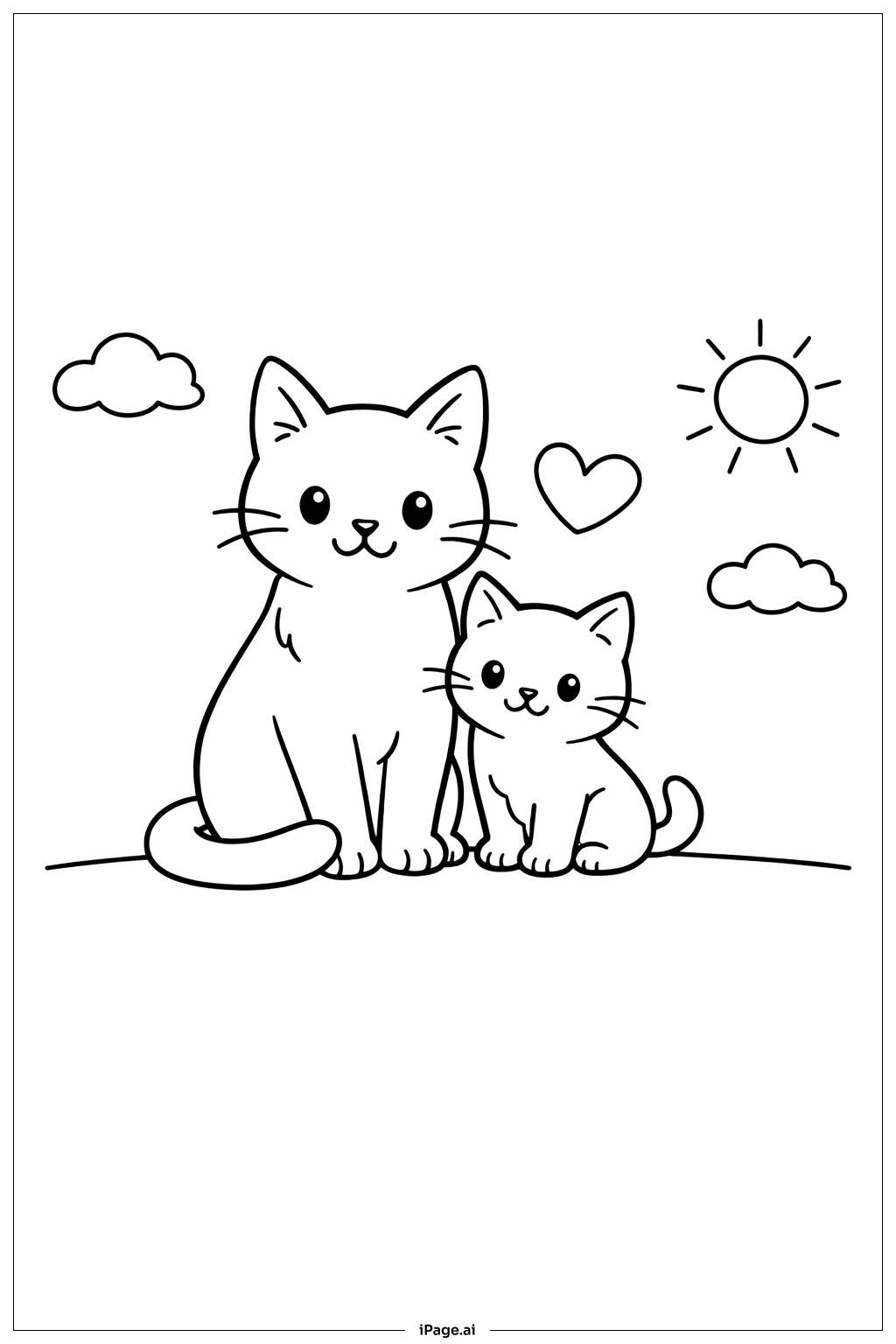
Coloring tips: How to color Cat And Kitten coloring page well?
Start with the lightest colors first and work your way to the darker shades. For the mother cat, try warm golden or orange tones to give her a cozy, soft look. You can also use gray or cream tones for a classic tabby feel. For the kitten, choose lighter versions of the same colors to show that they are related. Use a pale pink for the inner ears, the nose, and the paw pads. The eyes can be colored bright green, amber, or blue to make them stand out. Add gentle shading along the edges of the fur to give the cats a fluffy, three-dimensional look. Use short, light pencil strokes that follow the direction of the fur for a more realistic effect. Feel free to use your imagination and create a completely unique color combination that feels personal and fun.
Coloring challenges: Which parts are difficult to color and need attention for Cat And Kitten coloring page?
• Fur Texture Details: Both the mother cat and the kitten have fine, layered fur lines drawn throughout their bodies. Staying within these tiny lines while applying color is tricky, especially for younger colorists. Using a sharp pencil tip or a fine-tipped marker will help you fill in each section neatly without going outside the lines.
• Consistent Color Matching: Since the kitten and the mother cat are meant to look related, keeping their colors harmonious can be a challenge. You need to choose shades that are similar but slightly different to show the size and age difference. Planning your color palette before you begin will make this step much easier.
• Facial Details and Expressions: The faces of both cats include small, closely spaced features such as the eyes, nose, mouth, and whiskers. These areas require a very steady hand and careful attention. Using thin markers or sharpened colored pencils works best in these tight spaces to avoid smudging or overlapping colors.
• Shading and Depth: Creating the illusion of fluffy, three-dimensional fur requires layering light and dark tones carefully. Beginners may find it hard to blend colors smoothly without creating harsh lines. Practicing a gentle circular or feathering motion when applying color can help achieve a softer, more natural look.
• Small Paw and Ear Areas: The paws and inner ears are small sections that need delicate, precise coloring. These areas are easy to accidentally color over or miss entirely. Take your time with these parts and use the tip of your coloring tool to fill them in with care.
Benefits of coloring books: Advantages of drawing Cat And Kitten coloring page
Coloring this Cat And Kitten page offers a wide range of wonderful benefits for children and beginners alike. First, it helps build fine motor skills. Carefully coloring within the detailed fur lines and small facial features strengthens the small muscles in the hands and fingers, which supports better handwriting and hand control over time. Second, it encourages focus and patience. Because this image has many detailed areas, children learn to slow down, concentrate, and work carefully toward a finished result. This kind of focused activity can also feel calming and reduce everyday stress. Third, it sparks creativity and self-expression. Choosing colors for the cats allows each child to make unique decisions and express their own personality through art. There is no single right answer, which builds confidence. Fourth, it introduces children to the concept of color harmony and shading in a fun, pressure-free way. Finally, coloring a scene of a mother and kitten can also inspire conversations about love, family, and caring for animals, making this page both an artistic and an emotional learning experience.