Coloring tips: How to color Cat In The Hat On Swing coloring page well?
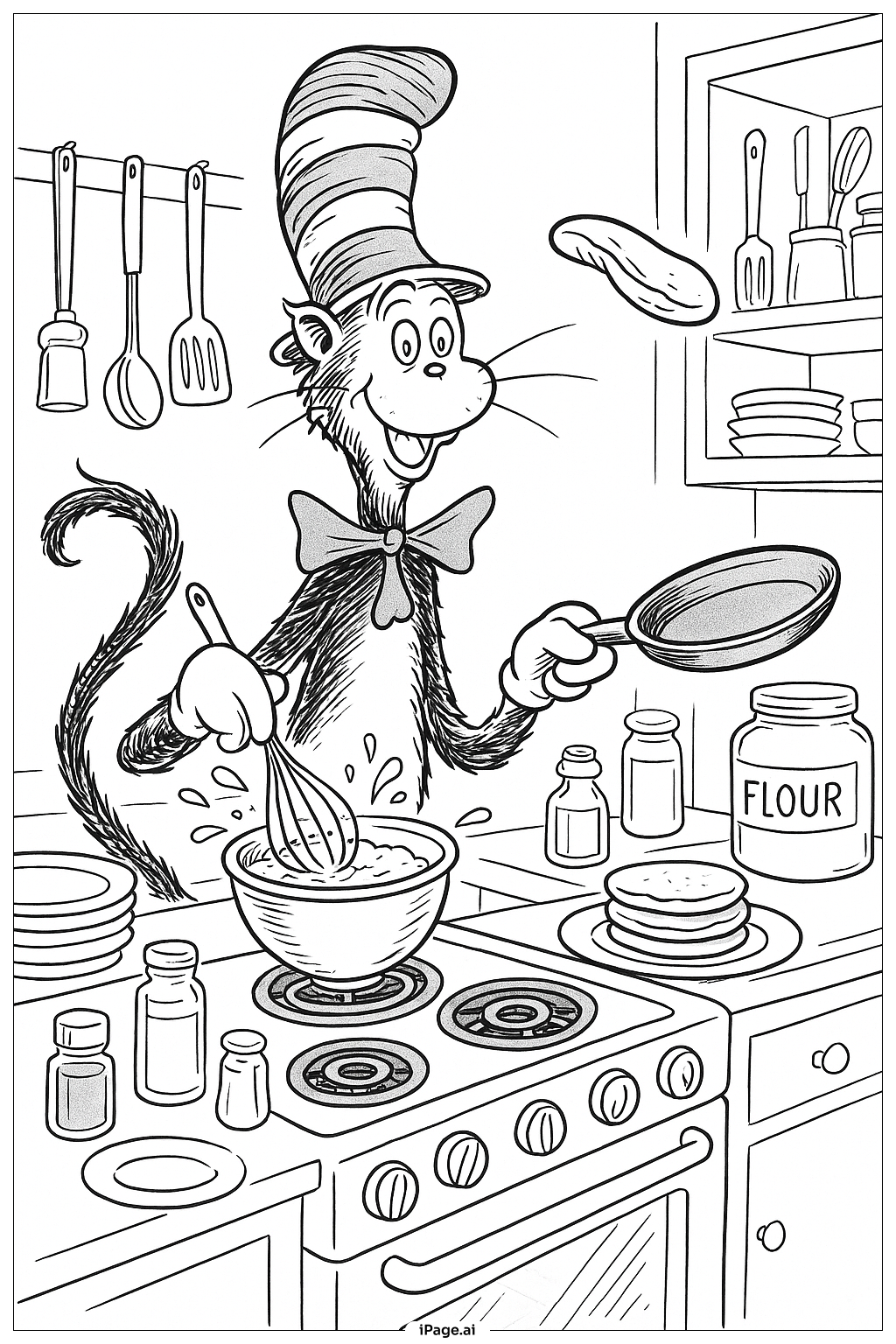
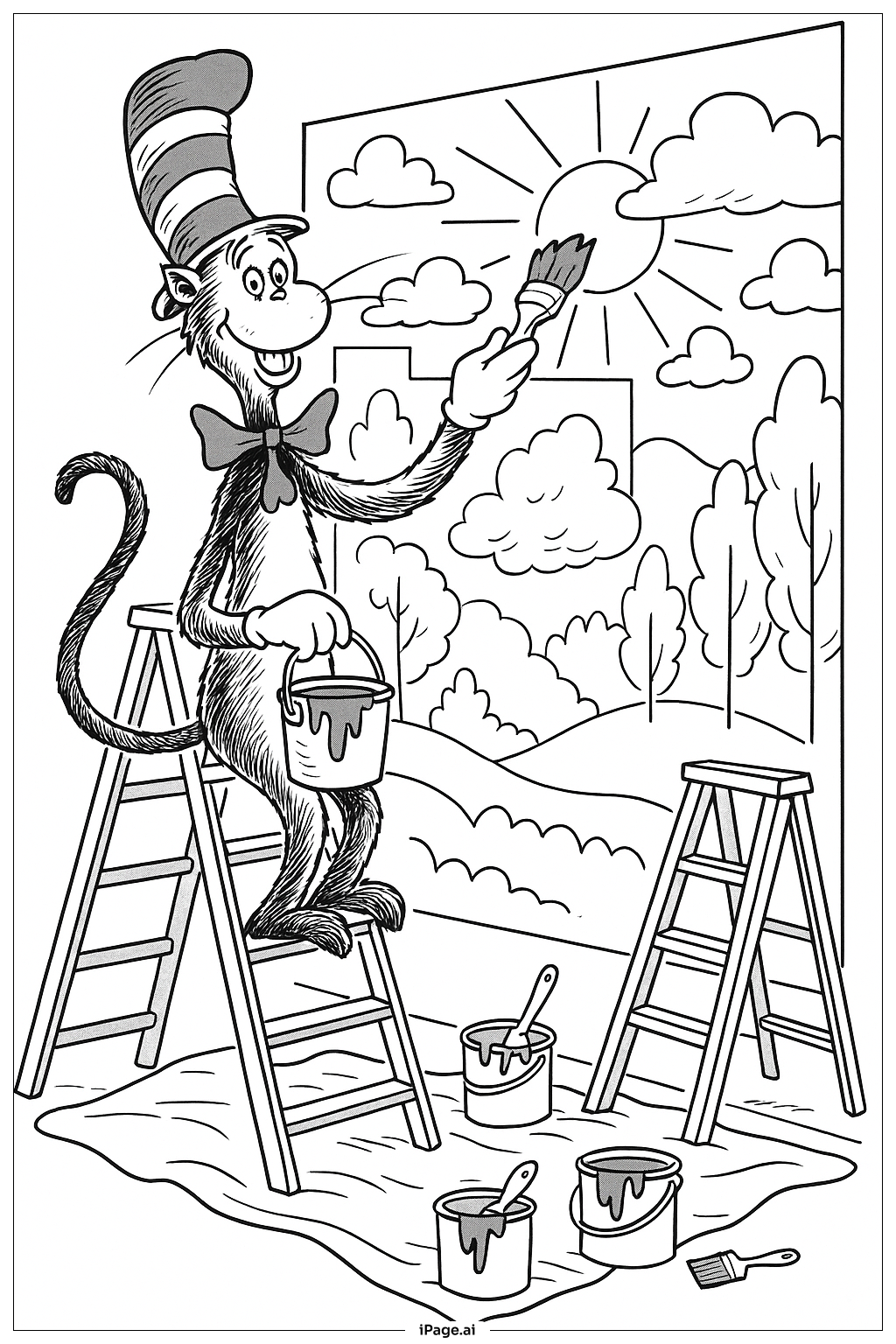
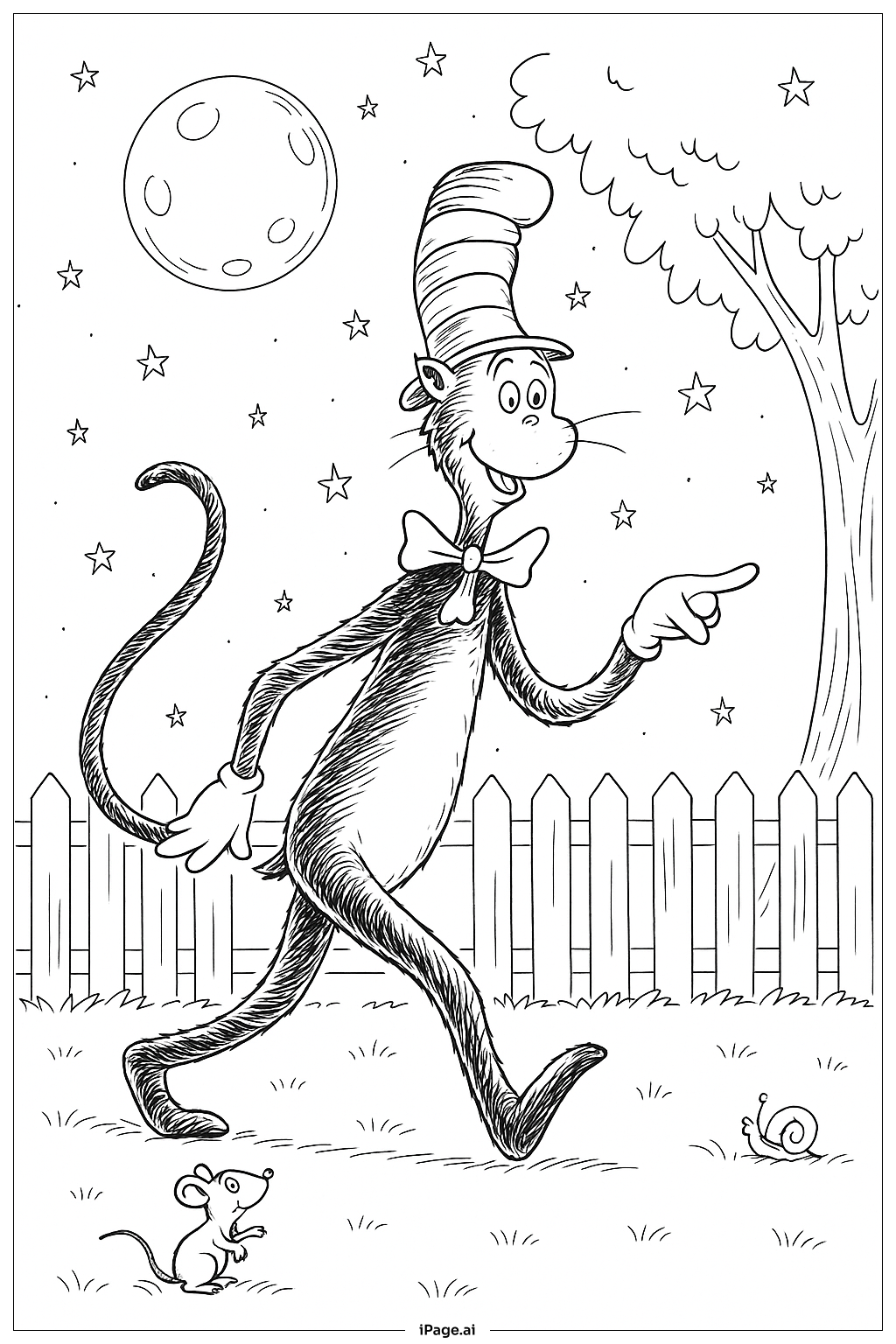
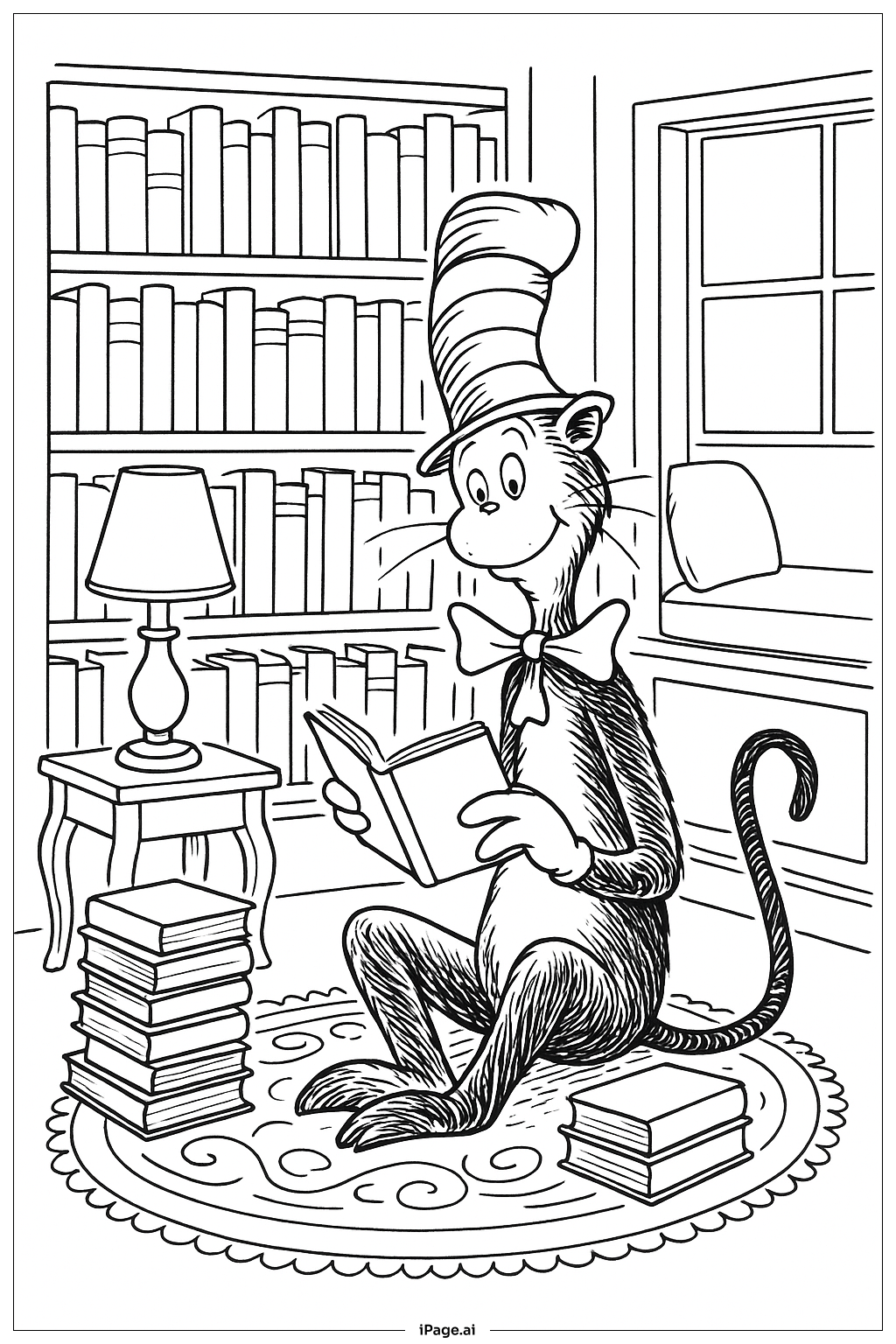
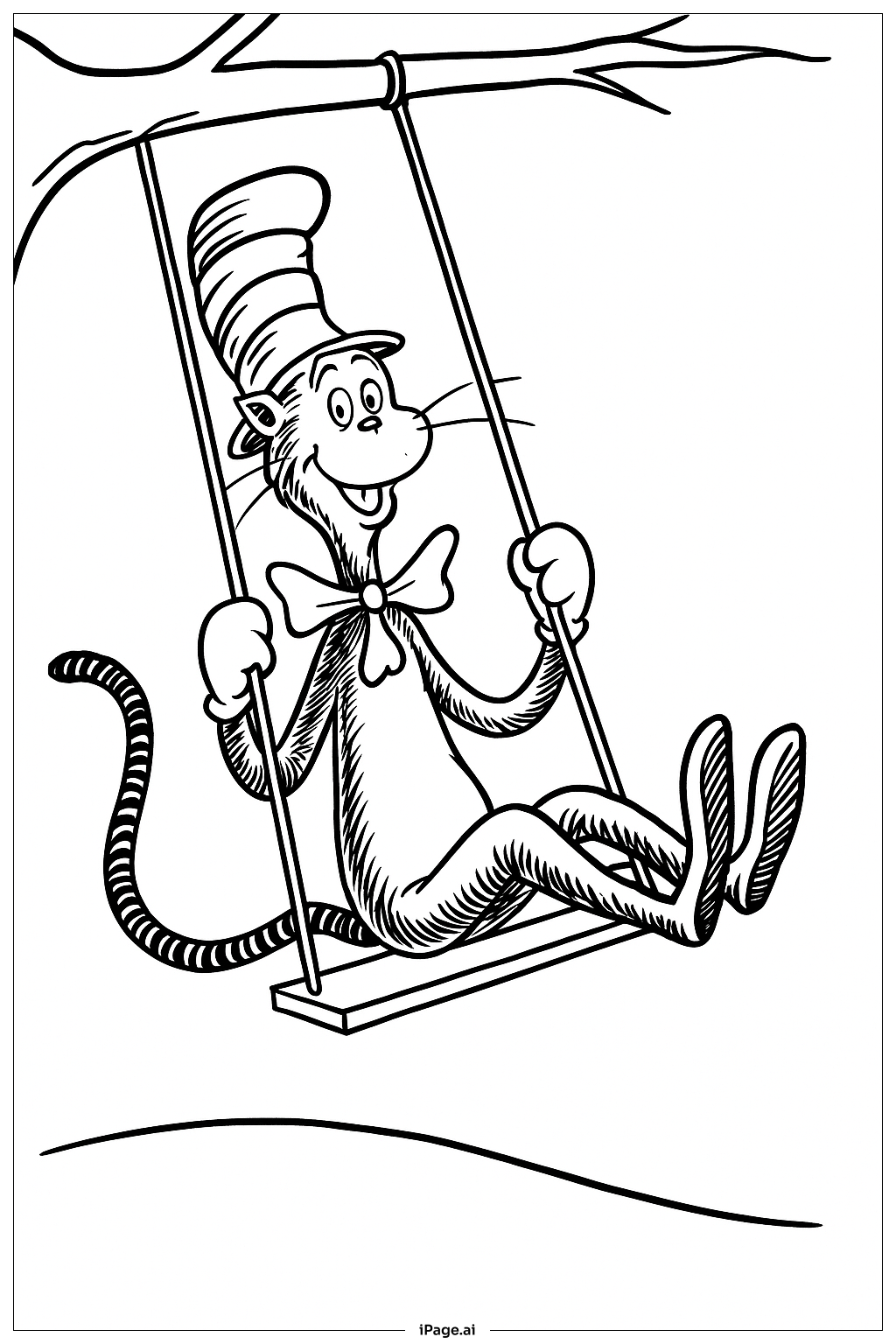
Start with the Cat's famous red and white striped hat, alternating bold red stripes with white spaces. Use a bright red for the bow tie to match the hat. The Cat's fur can be colored in soft white or light gray, with pink for the inner ears and nose. His eyes should be vibrant and expressive, using blues or greens. Add depth to the whiskers with gray or black. For the swing ropes, use natural browns or tans to create a realistic wood texture effect. The background offers endless creative possibilities: try a sunny blue sky with fluffy white clouds, a green garden setting with colorful flowers, or even a whimsical rainbow backdrop. Consider adding yellow sunshine rays or butterflies to enhance the playful atmosphere. Use colored pencils for fine details and markers for larger areas.
Coloring challenges: Which parts are difficult to color and need attention for Cat In The Hat On Swing coloring page?
• Striped Hat Pattern: The Cat's iconic tall hat features alternating red and white stripes that require careful attention to maintain consistent spacing and parallel lines. Young colorists may find it challenging to stay within the narrow stripe boundaries, especially as the hat curves and tapers toward the top. Using a ruler or straight edge can help maintain clean lines, and taking breaks between stripes prevents hand fatigue and color bleeding.
• Fine Facial Features: The Cat's expressive face includes small details such as whiskers, eyes, eyebrows, and the distinctive smile that require precision coloring. The whiskers are particularly delicate thin lines that need a steady hand to color around without accidentally covering them. Younger children may struggle with the small spaces around the nose, mouth, and eye areas, requiring extra patience and fine motor control.
• Rope Texture Details: The swing ropes contain twisted or braided texture lines that create a realistic rope appearance. Coloring these requires attention to the direction of the twists and maintaining consistent shading to create a three-dimensional effect. Colorists must decide whether to color each strand separately or blend colors to show rope texture, which can be complex for beginners.
• Tail Curvature: The Cat's long, curved tail requires smooth color application along its flowing shape. Maintaining even color saturation around the bends and curves without leaving white gaps or creating dark patches takes practice. The tail's graceful arc also means working at different angles, which can be awkward for small hands.
Benefits of coloring books: Advantages of drawing Cat In The Hat On Swing coloring page
Coloring this Cat in the Hat swing scene offers wonderful developmental benefits for children. It strengthens fine motor skills and hand-eye coordination through precise coloring within detailed lines. The striped hat pattern teaches children about repetition, patterns, and spatial awareness. Following the curved lines of the tail and ropes improves pencil control and prepares hands for writing. This beloved character also encourages focus and concentration as children work to bring the familiar figure to life with their color choices. The playful subject matter makes the activity enjoyable rather than feeling like work, promoting longer engagement periods. Children practice decision-making skills when selecting colors for different elements. The swinging motion depicted can spark conversations about physics, playground safety, and outdoor play. Completing this coloring page builds confidence and provides a sense of accomplishment, especially when displaying the finished artwork proudly.