Coloring tips: How to color Sleeping Capybara coloring page well?
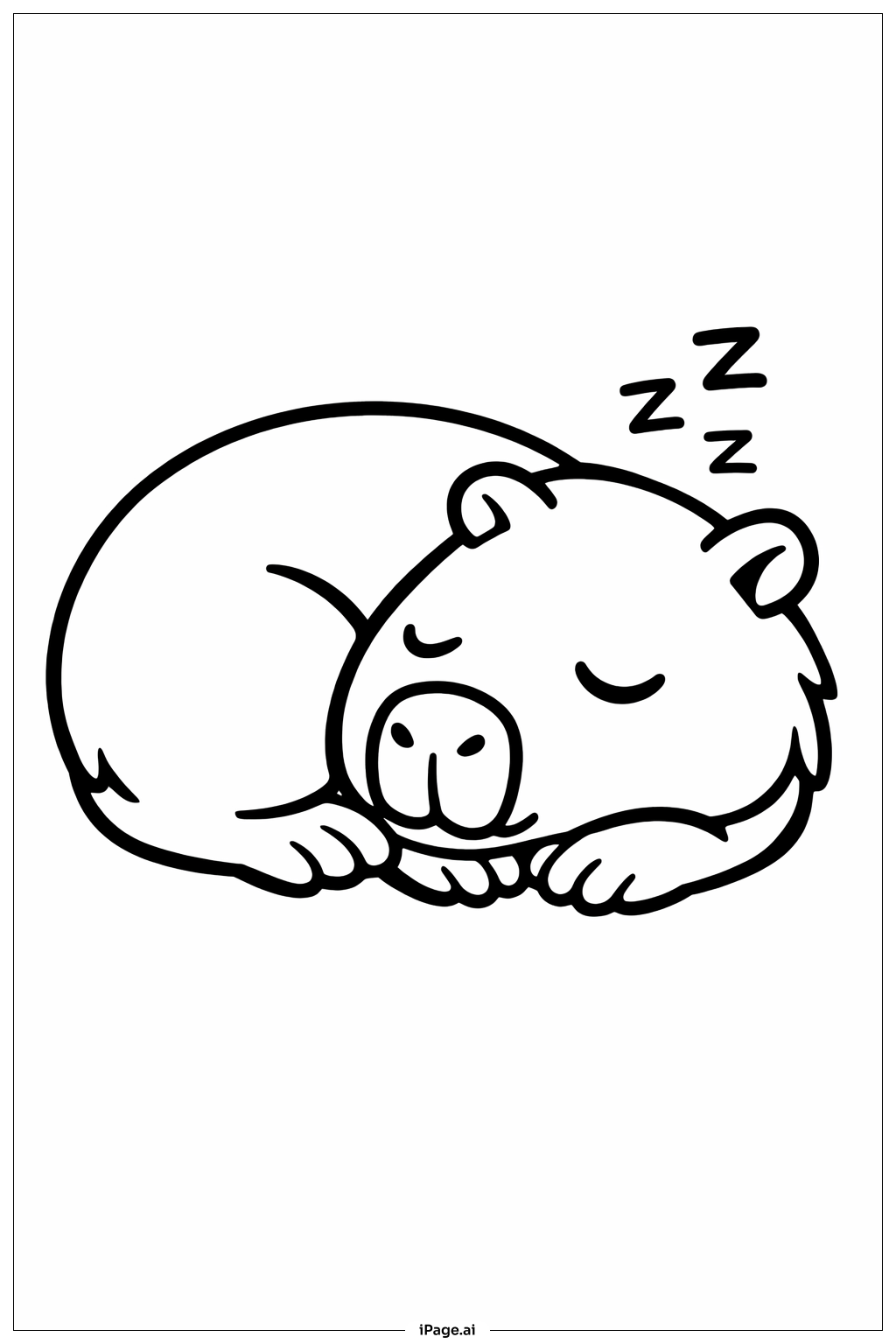
For coloring this sleeping capybara, you can use soft and warm colors like light brown, beige, or tan for the body to make it look cozy. Use a slightly darker brown or gray for the nose and ears to add depth. The background can be colored light blue or green to create a calm, sleeping environment. You can make the "Z" symbols bright colors like blue or purple to show it is sleeping. Try to blend colors gently to keep the peaceful mood.
Coloring challenges: Which parts are difficult to color and need attention for Sleeping Capybara coloring page?
1. Small details like the capybara's nose and fingers can be hard to color neatly because they are tiny. 2. The curved lines of the sleeping capybara need careful coloring to avoid going outside the lines. 3. Coloring the "Z" symbols requires precision to keep their shape clear and visible. 4. The smooth body curves may be difficult to keep shaded evenly without streaks. 5. Creating soft shadows can be a challenge to keep the peaceful, calm feeling while adding depth.
Benefits of coloring books: Advantages of drawing Sleeping Capybara coloring page
Coloring this sleeping capybara helps improve focus and hand control for young artists. It encourages calmness and relaxation as the scene shows a peaceful moment. Working on gentle curves and small details boosts fine motor skills. It also allows children to practice blending and shading softly, which improves artistic techniques. Overall, it is a fun way to connect with nature and express creativity.