Coloring tips: How to color Capybara With Friends coloring page well?
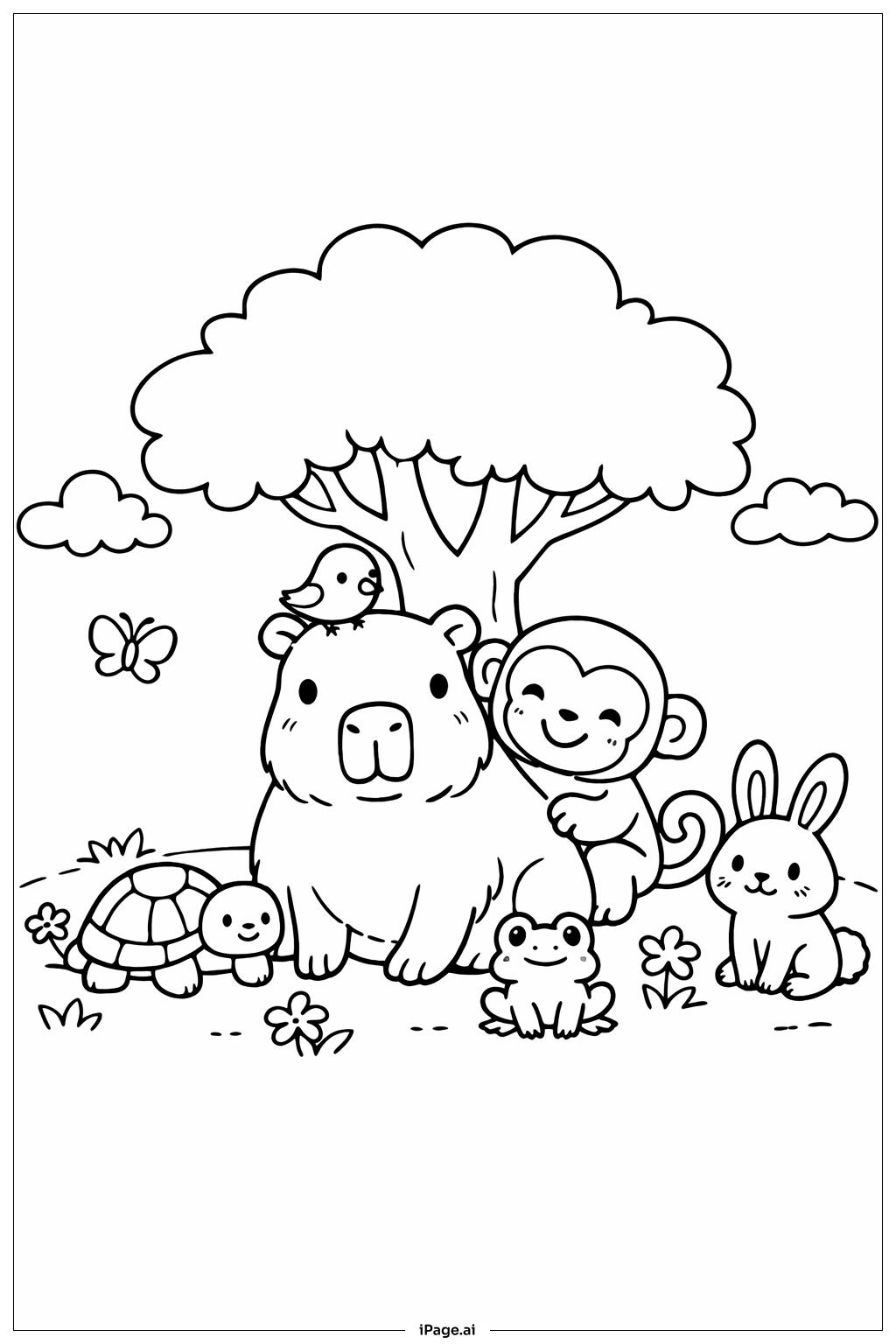
Start with the capybara's body using warm earthy tones like light brown or tan. Add darker brown shading along the belly and legs to give it depth. For the birds, try bright colors like yellow, red, or blue to make them pop against the capybara's neutral fur. Give the turtle a rich forest green shell with darker green patterns on top. Color the duck in classic yellow and orange, or go bold with your own creative palette. The frog looks great in bright lime green with darker spots. Use different shades of green for the leaves and add pops of color to the flowers — pink, purple, orange, or red all work well. The mossy rock can be colored in gray and muted green. Encourage kids to mix light and dark shades of the same color to create a sense of texture and volume. There are no strict rules — let your imagination guide your color choices and make the scene come alive!
Coloring challenges: Which parts are difficult to color and need attention for Capybara With Friends coloring page?
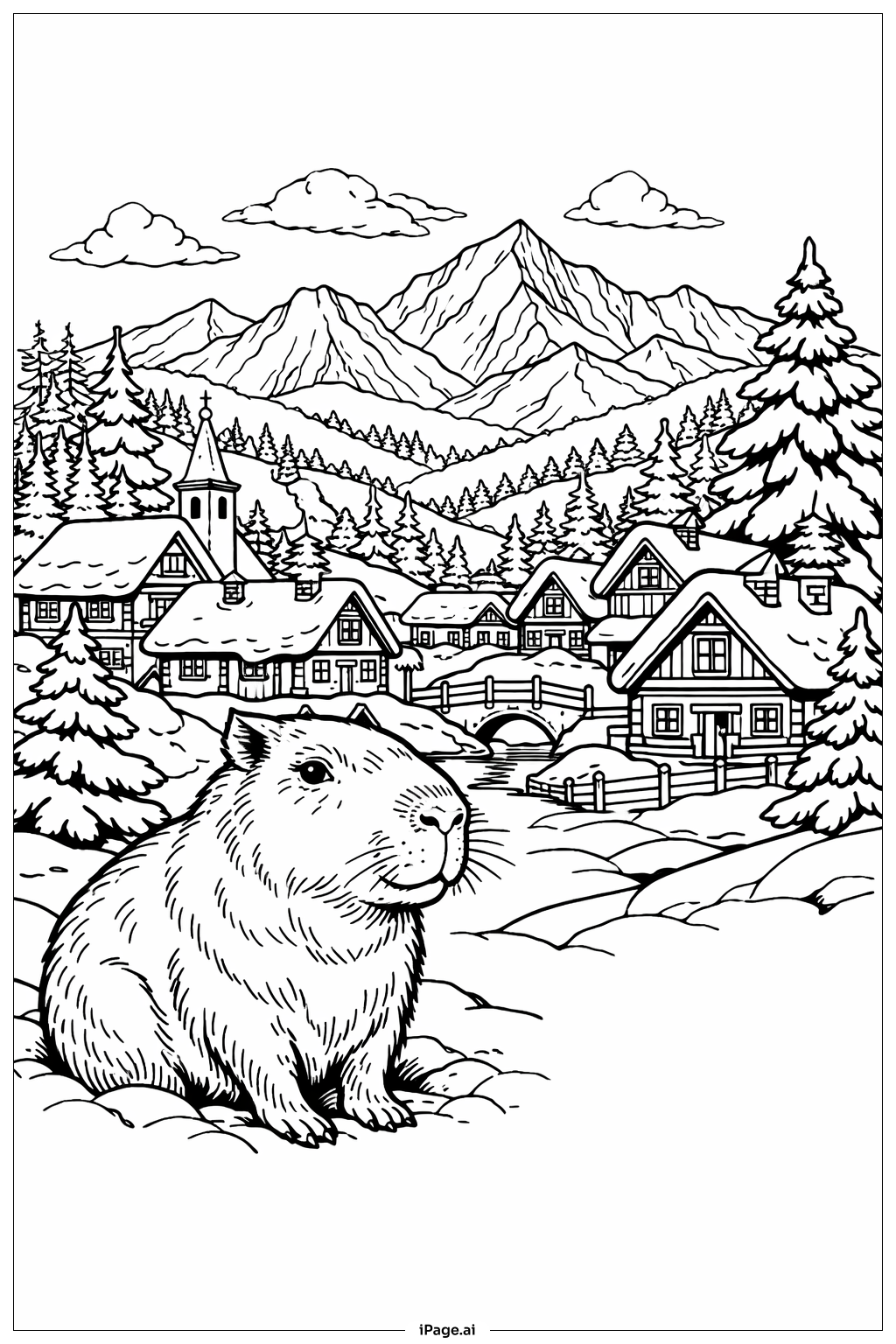
• Capybara Fur Texture: The capybara's large body has a rough, short-haired coat that can be tricky to represent with color. To show texture, use short, light pencil strokes in the direction the fur grows. Layering a darker brown over a base of light tan helps create a more realistic look without making the body look flat.
• Small Animal Details: The birds, frog, turtle, and duck all have tiny features like eyes, beaks, shell patterns, and toes. These small details require a steady hand and a fine-tipped coloring tool. A sharp colored pencil or a fine-tip marker works best for filling in these areas without going over the outlines.
• Overlapping Figures: Several animals are close together or overlapping in the scene. Keeping each animal's colors distinct from its neighbor is important so the figures do not blend into each other. Choosing colors that contrast well — for example, a yellow duck next to a brown capybara — helps each character stand out clearly.
• Background Leaves and Plants: The tropical leaves and flowers fill the background with lots of overlapping shapes. Varying the shades of green — using light green, medium green, and dark green — prevents the background from looking like one flat mass of color. Adding yellow-green highlights on leaf edges adds a nice finishing touch.
• Balancing Bright and Neutral Tones: The bright, colorful animals need to feel balanced against the capybara's warm, neutral brown tones. If too many bold colors are used everywhere at once, the scene can look busy. Keeping the background slightly more muted helps the characters in the foreground remain the focal point of the page.
Benefits of coloring books: Advantages of drawing Capybara With Friends coloring page
Coloring this Capybara With Friends page offers a wonderful mix of fun and learning for kids of all ages. The scene features multiple animals, which gives young colorists a great chance to practice using a wide variety of colors and experiment with blending and shading techniques.
Working on the different textures — from the capybara's coarse fur to the turtle's patterned shell and the smooth duck feathers — helps children develop fine motor skills and hand-eye coordination. Choosing which colors to use for each animal encourages creative thinking and decision-making.
The friendly, peaceful setting promotes a sense of calm and focus. Spending time coloring a relaxed nature scene can help reduce stress and anxiety, making it a great quiet-time activity after a busy day at school.
For younger children, this page introduces the idea that different animals can be kind to one another, gently teaching values of friendship and acceptance. Older kids can challenge themselves by adding detailed shading and realistic colors, turning the page into a more advanced art project.
Overall, this coloring page is a joyful, engaging, and enriching activity that supports creativity, emotional well-being, and artistic skill development — all while spending time with a lovable capybara and its adorable animal companions.