Coloring tips: How to color Capybara With Butterfly coloring page well?
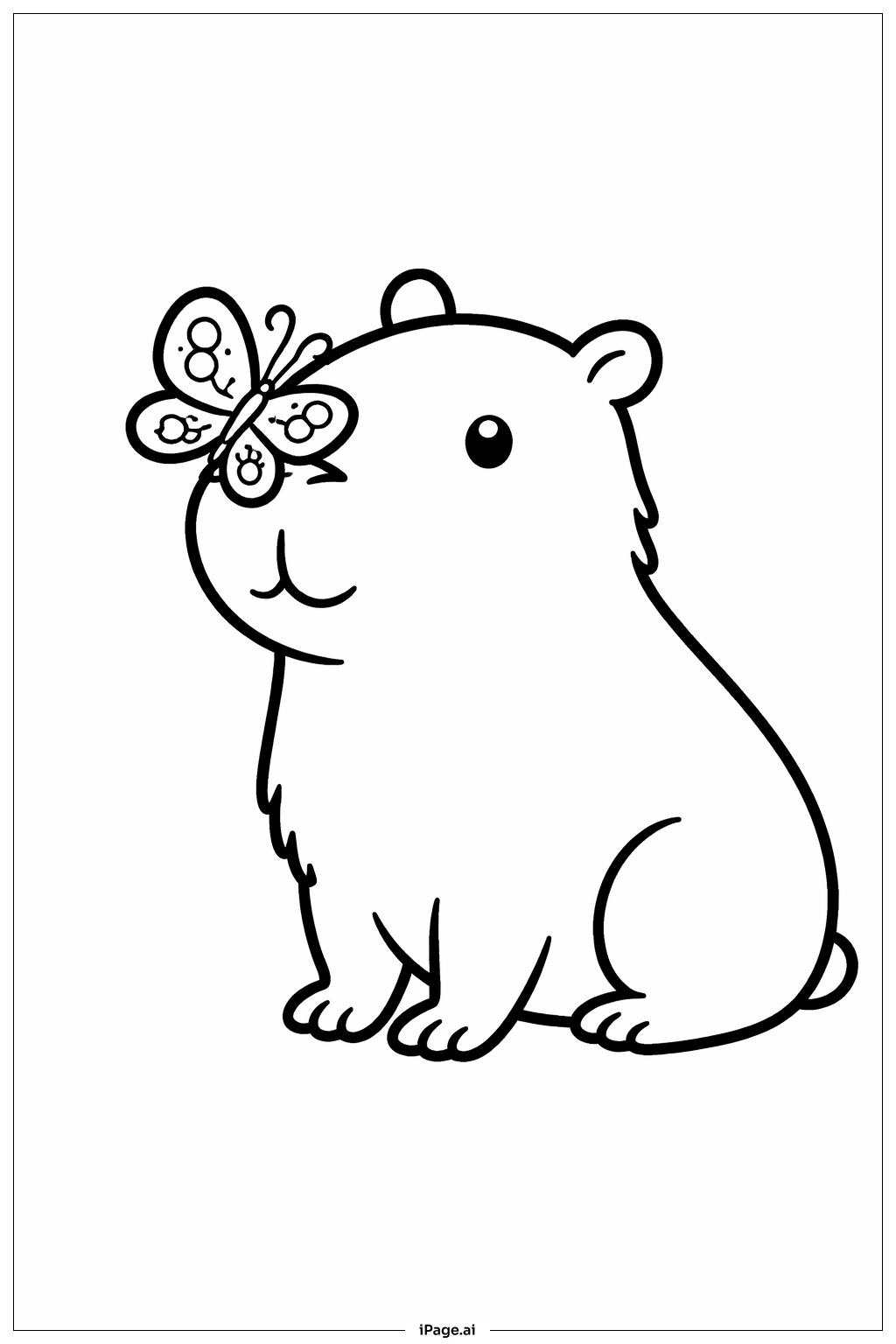
Use soft browns or light grays for the capybara's body to make it look natural. For the butterfly, bright colors like orange, yellow, or blue will stand out well against the capybara. You can color the butterfly’s wing patterns with different shades to show details. Try coloring the capybara’s eyes shiny black or dark brown to express its friendly nature. Add light pink to the ears and nose for a cute effect. You can also color the background with light greens or blues to create a peaceful outdoor feel.
Coloring challenges: Which parts are difficult to color and need attention for Capybara With Butterfly coloring page?
1. Coloring the small details on the butterfly's wings may be tricky because of the tiny patterns. Take your time and use fine-tipped crayons or colored pencils.
2. Keeping the capybara’s body color smooth and even requires careful and gentle coloring, especially around the edges.
3. Coloring the eyes to look shiny and alive can be challenging—try to blend dark and light shades carefully.
4. The butterfly on the nose might be hard to color without coloring outside the lines, so work slowly.
5. Balancing bright colors on the butterfly with soft colors on the capybara needs attention to avoid too much contrast.
Benefits of coloring books: Advantages of drawing Capybara With Butterfly coloring page
Coloring this page helps improve fine motor skills, especially when working on the butterfly’s small wing patterns. It encourages creativity by allowing kids to choose bright colors for the butterfly and natural colors for the capybara. The image promotes focus and patience because of the details that require careful coloring. Also, it introduces children to nature and animals through art, helping them appreciate gentle and calm moments in wildlife.