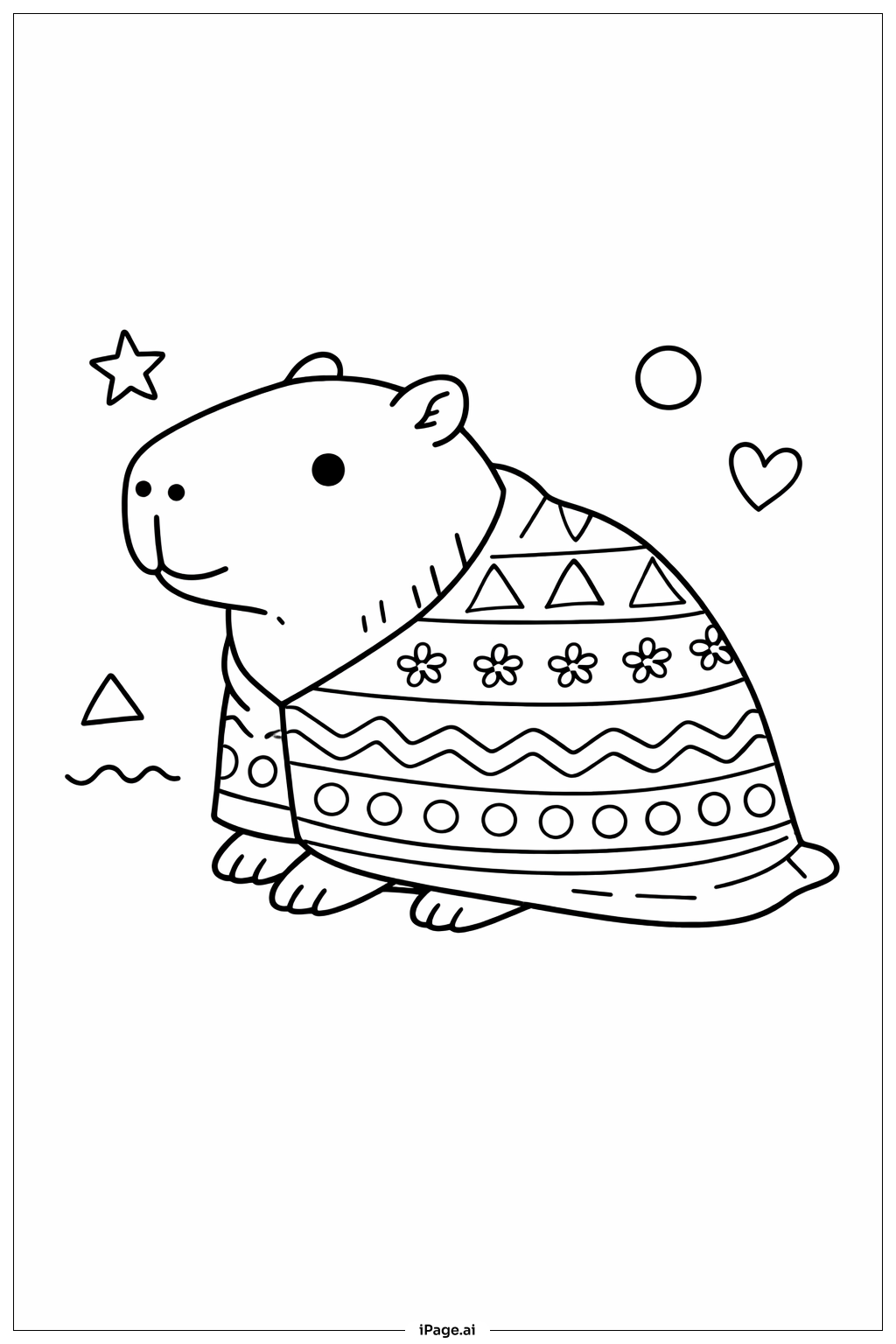
Coloring tips: How to color Capybara With Blanket coloring page well?
Start by coloring the capybara's body in warm, earthy tones. Browns, tans, and golden yellows all work great for its fur. You can add a slightly darker shade along the edges to give the body a rounded, fluffy feel. For the blanket, let your imagination go wild! Try soft pastels like light blue, lavender, or mint green for a cozy look. If the blanket has a pattern, use two or three contrasting colors to make the design pop. Color the capybara's nose and inner ears in a soft pink or peach. The eyes can be done in dark brown or black with a tiny white dot to make them look shiny and alive. For the background, light sky blue or soft yellow creates a warm and cheerful mood. Boys and Girls of all ages can enjoy mixing colors to create their own unique version of this sweet scene.
Coloring challenges: Which parts are difficult to color and need attention for Capybara With Blanket coloring page?
• Fur Texture and Shading: The capybara's body has a large, rounded surface that can be tricky to shade evenly. Beginners may find it hard to blend darker and lighter tones smoothly to show the roundness of the animal's form without leaving streaks or uneven patches of color.
• Blanket Pattern Details: If the blanket features small repeating shapes, stripes, or motifs, carefully staying within each tiny section can be challenging. Keeping colors neat and consistent across the pattern requires a steady hand and fine-tipped coloring tools like colored pencils or thin markers.
• Facial Features: The capybara's face includes small, closely placed details such as the eyes, nose, and mouth. Coloring these delicate features without accidentally smudging or overlapping into neighboring areas takes patience and precision, especially for younger colorists using thicker crayons.
• Color Transitions: Creating a smooth gradient between the lighter belly area and the darker back of the capybara can be difficult. Achieving a natural-looking blend requires layering colors gradually, which takes practice and works best with colored pencils or soft pastels rather than markers.
• Balancing the Overall Color Palette: Choosing colors that look good together for both the capybara and the blanket without making the image feel too busy or clashing can be a creative challenge. It helps to plan your color choices ahead of time and test them on a spare sheet of paper before applying them to the final page.
Benefits of coloring books: Advantages of drawing Capybara With Blanket coloring page
Coloring this sweet Capybara With Blanket image offers a wonderful range of benefits for children and Adults alike. For younger colorists, it helps develop fine motor skills as they carefully fill in fur textures, blanket patterns, and small facial details. Staying within the lines builds hand control and pencil grip strength, which supports early writing development.
The cozy, calming theme of the image encourages a sense of relaxation and emotional comfort. Focusing on a peaceful scene like a snuggly capybara can help reduce stress and anxiety, making it a great mindfulness activity after a busy school day.
For Boys and Girls who love animals, this page sparks curiosity and creativity. Choosing colors for the fur, blanket, and background encourages imaginative thinking and personal expression. There are no wrong answers — every color choice tells a unique story.
For older children and Adults, the more detailed elements like the blanket pattern and fur shading provide a satisfying creative challenge. Completing a detailed coloring page builds concentration, patience, and a sense of accomplishment.
Overall, this charming coloring page makes screen-free time fun, educational, and deeply enjoyable for the whole family.





